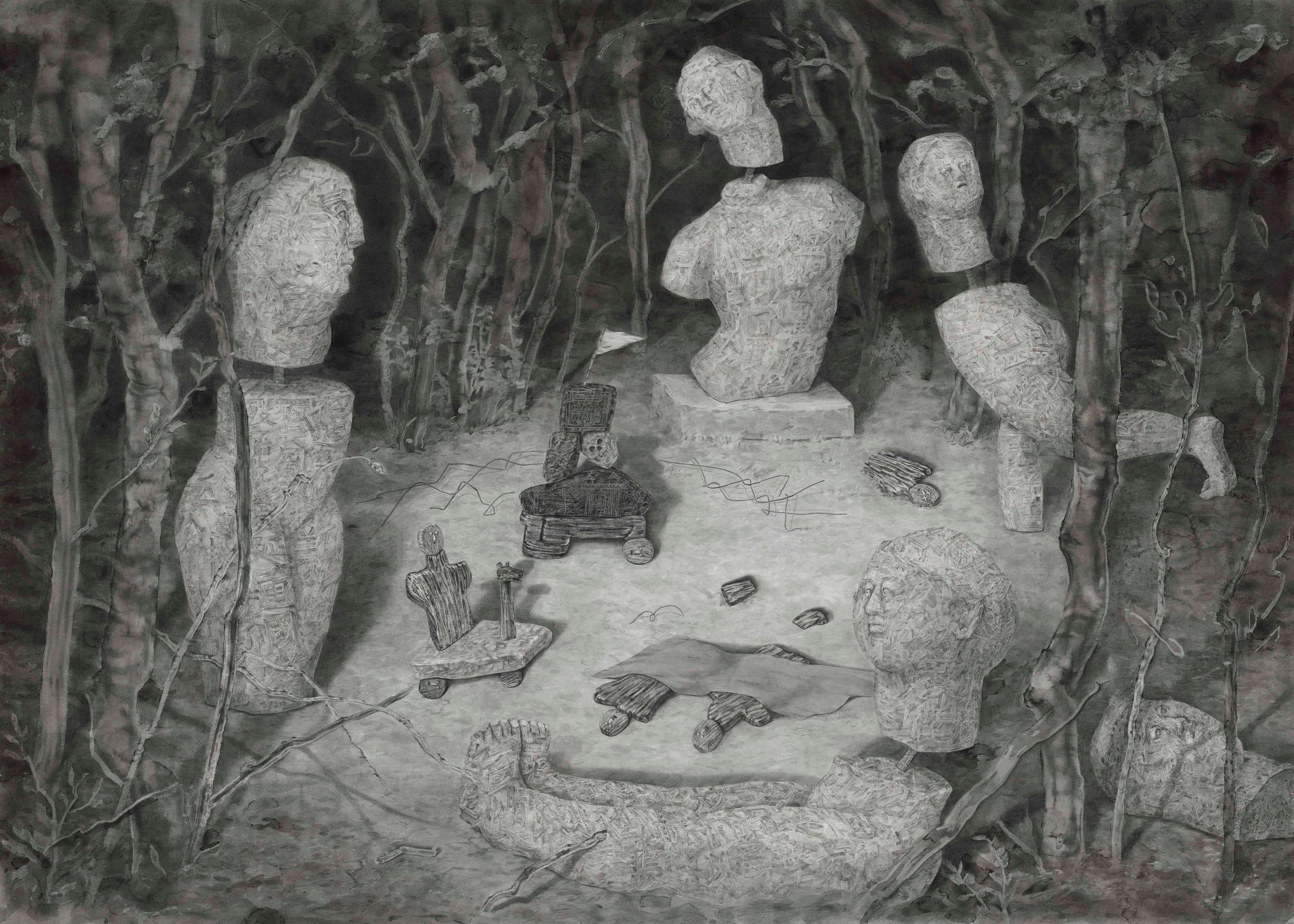
《夜拾 Nocturnals》延續顏妤庭自 2020 年以來對新聞訊息、記憶與水墨繪畫的思考。他透過反覆抄寫日常新聞,將資訊帶入畫面,使文字在層層覆蓋與沉積之中逐漸失去可讀性,轉化為近似拓片、石痕與時間風化後留下的視覺質地。這樣的繪畫方式轉化自傳統水墨中的「皴法」,但在他的作品中,這種融合了新聞與書寫的皴法,不再只是描繪山石肌理的筆法,而是承載資訊、時間與心理狀態的繪畫語言。
相較於前幾個系列中,他對書寫與繪畫、文字與圖像、紀錄與覆蓋等創作途徑的整理與實驗,《夜拾》更進一步將這些累積的痕跡推向場景的生成。枯樹、殘碑與夜行物在畫面中反覆出現,像是從不同時空與文化中被拾起的碎片。它們既帶有歷史遺跡的重量,也像是被任意棄置、失去原有脈絡的物件,在夜色中重新嫁接,構成一處介於記憶、廢墟與想像之間的夜間現場。
系列名稱中的「拾」,指向撿拾、辨認與重新組合。顏妤庭在畫面中拾起那些被時間與資訊沖散的事件、物件與感受,使它們在錯置與重組之中形成新的關係,並以似是而非的姿態映照現實。《夜拾》所指向的並非某段確定的過去,而是歷史、記憶與觀看如何在時間之中被建構,也持續被改寫。
Nocturnals extends Yu-Ting Yen's ongoing exploration of news, memory, and ink painting since 2020. Through the repeated transcription of daily news, Yen brings information into the pictorial surface, allowing words to gradually lose their readability through layers of covering and sedimentation. They are transformed into a visual texture reminiscent of rubbings, stone traces, or marks weathered by time. This painting method is derived from the traditional ink technique of cunfa, or texture strokes. In Yen's work, however, this form of cunfa, which merges news and writing, is no longer simply a way to depict the texture of mountains and rocks, but becomes a painterly language that carries information, time, and psychological states.
Compared with earlier series, in which Yen organized and experimented with the relationships between writing and painting, text and image, recording and covering, Nocturnals further pushes these accumulated traces toward the generation of scenes. Withered trees, remnants of monuments, and nocturnal beings repeatedly appear in the paintings, like fragments picked up from different times and cultures. They carry the weight of historical ruins, while also resembling discarded objects that have lost their original contexts. Grafted together again in the night, they form a nocturnal site between memory, ruins, and imagination.
The Chinese title Ye Shi contains the idea of picking up, identifying, and recombining. In the paintings, Yen gathers events, objects, and sensations scattered by time and information, allowing them to form new relationships through displacement and reassembly, and to reflect reality in an ambiguous, almost-but-not-quite recognizable form. Nocturnals does not point toward a specific past, but toward the ways history, memory, and looking are constructed in time, and continually rewritten.
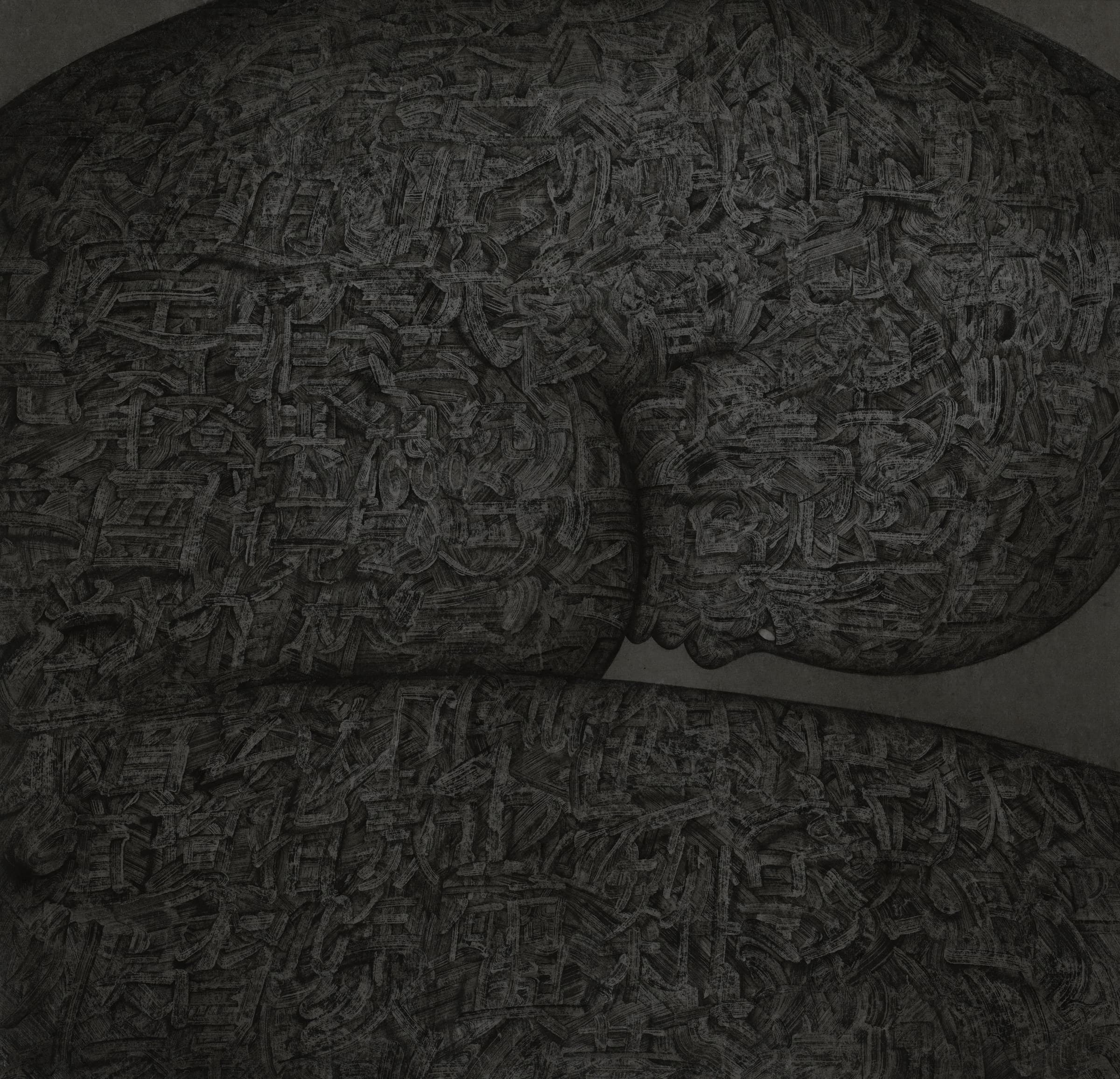
如果《夜拾 Nocturnals》將由書寫轉化而來的皴法推向物件的嫁接與場景的生成,《碎語 Whispers from the Past》則更聚焦於這種皴法本身的量感與體感。這個系列延續顏妤庭近年對新聞、記憶與水墨繪畫的思考,同時結合他在陶瓷創作中的經驗,進一步實驗反覆書寫所形成的筆畫痕跡,如何從平面的肌理轉化為具有重量、厚度與身體感的形體。
在這個系列中,皴法來自文字的層層書寫與覆蓋。新聞訊息在反覆抄寫中逐漸失去可讀性,筆畫則像是被自身累積的重量所加壓,逐漸形成球體、柱體與盤繞扭轉的人形。近距離觀看時,畫面中物體的表面仍保有書寫當下的筆畫痕跡,以及依稀可辨的訊息片段;遠看時,這些筆畫又凝聚成帶有重量的複合物,呈現出介於書寫、肌理與形體之間的狀態。
《碎語》也引入靜物畫的形式,嘗試結合西方繪畫中對光影、透視與物件結構的描繪,以及東方水墨中的書寫性筆法。畫面中的物件看似安靜地被擺放,卻又帶著被壓縮、塑形後的身體感。它們無動於衷地存在於畫面之中,顯得歸順而無奈,也映照出人在社會秩序與日常結構中的狀態。
系列名稱中的「碎語」,像是從過去傳來的微弱聲響。那些被反覆書寫的新聞、記憶與個人感受,沒有以清楚的句子被保留下來,而是在筆觸、量體與物件表面之間斷續顯現。它們在繪畫中暫時凝聚成形,像是訊息經過時間、材料與身體經驗反覆擠壓之後,留下的一些低聲、模糊卻仍可感知的痕跡。
If Nocturnals pushes the form of cunfa transformed through writing toward the grafting of objects and the generation of scenes, Whispers from the Past focuses more closely on the sense of volume and bodily presence within this form of cunfa itself. The series extends Yu-Ting Yen's recent reflections on news, memory, and ink painting, while also drawing on his experience with ceramic practice. It further experiments with how the traces of repeated writing might shift from flat textures into forms with weight, thickness, and bodily presence.
In this series, cunfa emerges from the layering of written words and repeated covering. As news text is transcribed again and again, it gradually loses its readability. The brushstrokes seem compressed by the weight of their own accumulation, gradually forming spheres, cylinders, and coiled, twisting human figures. Viewed up close, the surfaces of these objects still retain the marks of writing, along with fragments of information that remain faintly legible. From a distance, these marks gather into weighted composites, forming a visual state between writing, texture, and form.
Whispers from the Past also introduces the format of still life, bringing together the Western pictorial treatment of light, perspective, and object structure with the calligraphic quality of Eastern ink painting. The objects in the paintings appear quietly arranged, yet they also carry a bodily presence shaped by compression and molding. They exist in the picture with a kind of indifference, appearing compliant and helpless, while reflecting the condition of the individual within social order and everyday structures.
The title Whispers from the Past suggests faint voices arriving from another time. The news, memories, and personal sensations that have been repeatedly written are not preserved as clear sentences, but appear intermittently among brushstrokes, volume, and the surfaces of objects. They temporarily gather into form within the paintings, like quiet, blurred, yet still perceptible traces left behind after information has been repeatedly compressed by time, material, and bodily experience.
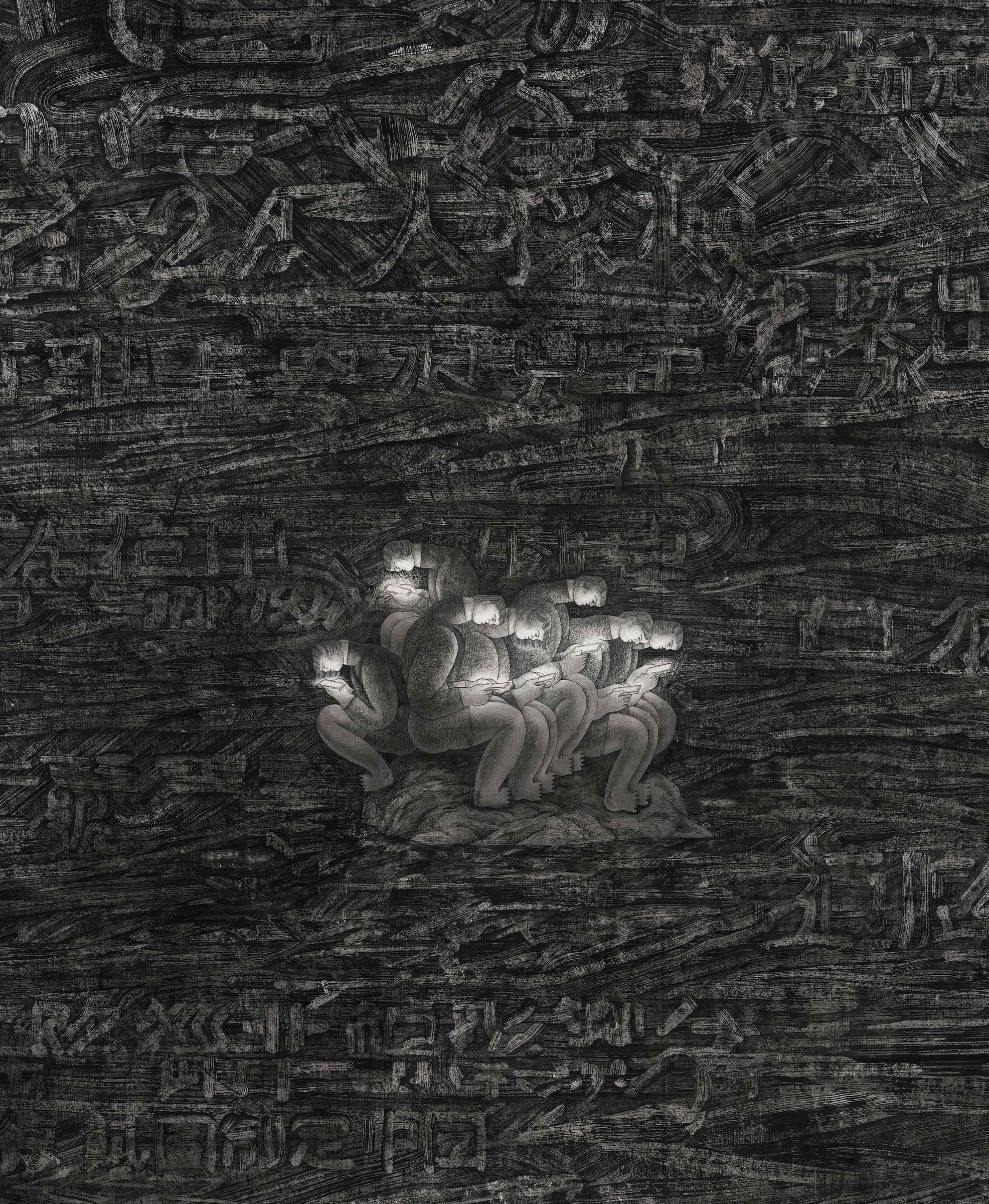
《殘章與斷片 Fragments and Remnants》是顏妤庭逐步建構個人皴法語言的重要系列。自 2018 年以來,他開始將日常新聞、熱門事件與社會訊息帶入水墨繪畫之中,透過反覆書寫、覆蓋與拆解,使文字逐漸脫離原本傳遞訊息的功能,轉化為畫面中的筆觸、肌理與視覺痕跡。
在這個系列中,皴法脫離了傳統山水中描繪山石表面的功能,轉向處理資訊、時間與記憶的方法。新聞文字在層層書寫與墨色交疊之中逐漸失去可讀性,有些筆畫依然保有清晰的輪廓,有些則被覆蓋、磨損,成為模糊而斷續的殘影。這些痕跡既像石刻風化後殘留下來的紋理,也像事件在時間中被記憶保存、遮蔽與改寫後留下的片段。
「殘章」與「斷片」指向皴法形成的過程:文字被拆開,訊息被覆蓋,事件被轉化為局部的痕跡。顏妤庭以不同的途徑回溯水墨繪畫中「書畫同源」的傳統,使書寫不僅承載文字內容,也成為生成畫面肌理的方法。那些被反覆抄寫的新聞標題,原本來自短暫聚集的大眾注意力;當事件熱度消退,留下的則是被擷取、重複、覆蓋後的新聞殘餘物。它們在畫面中無法再被完整閱讀,卻仍以筆畫、墨痕與層層殘影的形式存在,讓皴法逐漸從傳統山水的程式化筆法,轉向一種承載當代資訊、集體感知與心理狀態的繪畫語言。
Fragments and Remnants is an important series in which Yu-Ting Yen gradually constructs his own language of cunfa. Since 2018, Yen has brought daily news, trending events, and social information into ink painting. Through repeated writing, covering, and dismantling, words gradually move away from their original function of transmitting information, transforming instead into brushstrokes, textures, and visual traces within the painting.
In this series, cunfa moves beyond its traditional function of depicting the surfaces of mountains and rocks in landscape painting, and becomes a method for working with information, time, and memory. As news text is layered through writing and ink, it gradually loses its readability. Some strokes still retain clear outlines, while others are covered and worn away, becoming blurred and fragmented afterimages. These traces resemble the textures left behind by weathered stone inscriptions, as well as fragments of events preserved, obscured, and rewritten by memory over time.
The "fragments" and "remnants" in the title point to the process through which this form of cunfa takes shape: words are broken apart, information is covered, and events are transformed into partial traces. Yen revisits the ink painting tradition of "the shared origin of calligraphy and painting" through different approaches, allowing writing not only to carry textual content, but also to generate the texture of the image. The news headlines repeatedly transcribed in these works originally come from moments of briefly gathered public attention. As the intensity surrounding each event fades, what remains are residues of news that have been selected, repeated, and covered over. They can no longer be fully read, yet they continue to exist in the painting as strokes, ink marks, and layered afterimages. Through this process, cunfa gradually shifts from a codified technique of traditional landscape painting into a painterly language that carries contemporary information, collective perception, and psychological states.
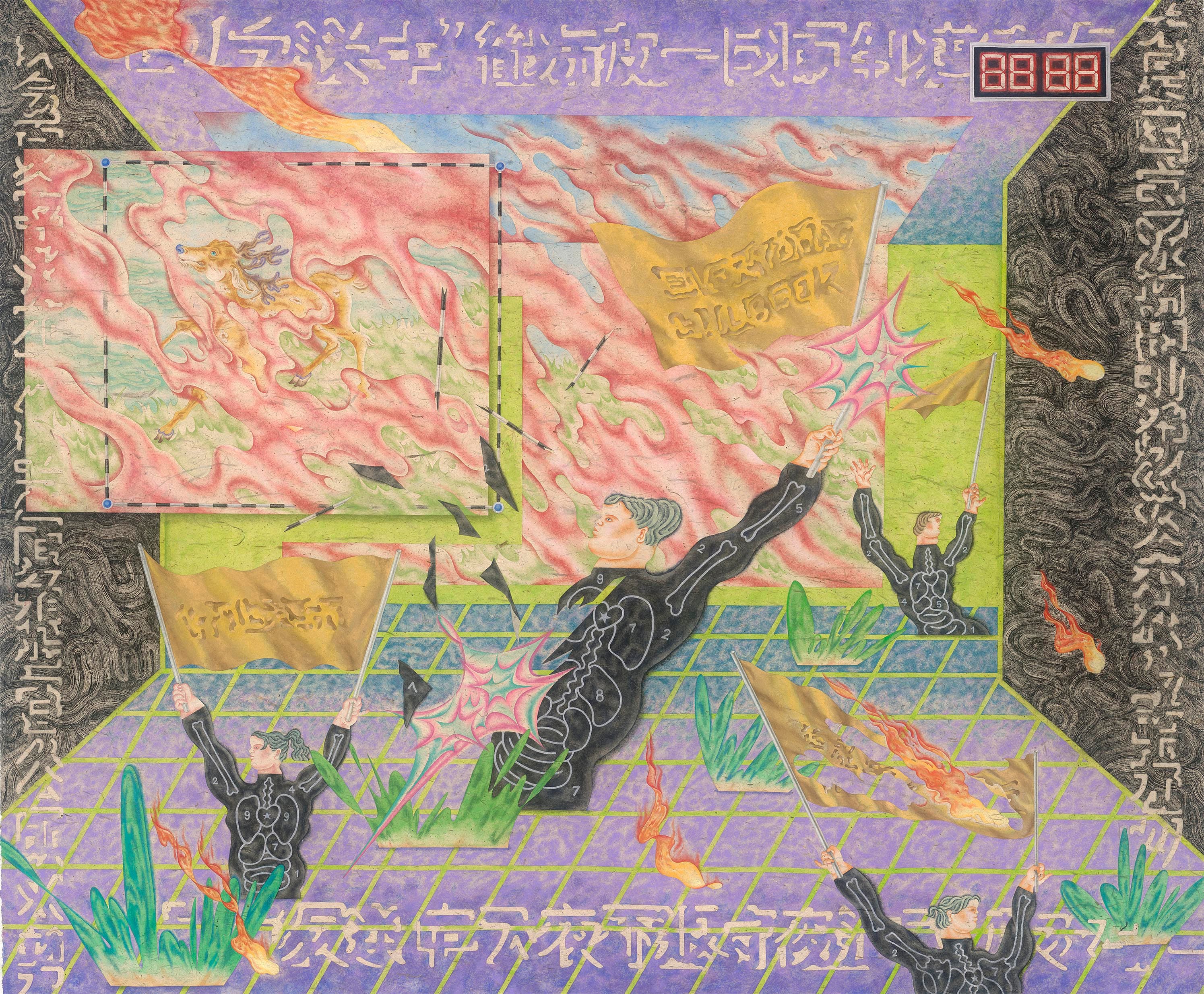
《Screenshot》系列是顏妤庭在膠彩、水墨與皴法之間進行轉換的重要階段。這個系列受到藝術史學者巫鴻對屏風的研究啟發,從「screen」一詞出發,將傳統屏風與當代螢幕、視窗互相對映,思考繪畫如何回應當代人快速切換影像、資訊與時空的觀看經驗。
在傳統水墨繪畫中,屏風具有組織空間、分隔視線與轉換時空的功能。到了《Screenshot》中,這樣的結構被轉化為近似螢幕介面的畫面形式:螢光色的邊框、層層交錯的區塊與摺頁般的構圖,使畫面像是多個視窗同時開啟。人物、物件與場景在不同區塊之間穿梭,形成一個難以理清的混亂時空。
顏妤庭也在這個系列中嘗試將逐漸發展中的皴法,放回早期較熟悉的膠彩繪畫脈絡。新聞圖像、文字與熱門事件被分類、剪輯與重組,成為人物、道具與場景的一部分。那些曾經被觀看與討論的事件,隨著記憶逐漸模糊,也在繪畫過程中產生敘事上的偏移。
《Screenshot》保留了顏妤庭早期作品中較強的敘事性與戲劇感,也開啟了文字、新聞與皴法進入畫面結構的可能。它像是一個介於舊有膠彩語言與後續水墨實驗之間的中間狀態:畫面承載故事,也呈現記憶與資訊在切換、疊加與失序之中的狀態。
The Screenshot series marks an important stage in Yu-Ting Yen's transition between gouache, ink painting, and cunfa. Inspired by art historian Wu Hung's research on screens, the series begins with the word "screen," drawing connections between traditional folding screens and contemporary screens or windows. It considers how painting might respond to the contemporary viewing experience of rapidly switching between images, information, and different senses of time and space.
In traditional ink painting, screens serve to organize space, divide lines of sight, and shift temporal and spatial perspectives. In Screenshot, this structure is transformed into a pictorial form that resembles a screen interface. Fluorescent borders, overlapping sections, and folding-screen-like compositions make the image appear as if multiple windows have been opened at once. Figures, objects, and scenes move through different sections, forming a chaotic time-space that is difficult to fully untangle.
In this series, Yen also attempts to place his gradually developing use of cunfa back into the earlier context of gouache painting, a medium more familiar to him at the time. News images, text, and trending events are categorized, edited, and recombined, becoming part of the figures, props, and scenes. As memories of these once-viewed and discussed events begin to blur, they also undergo narrative shifts through the process of painting.
Screenshot retains the strong sense of narrative and theatricality found in Yen's earlier works, while also opening up the possibility for text, news, and cunfa to enter the structure of the image. It exists as an intermediate state between an earlier gouache-based visual language and the later experiments in ink painting: the image carries stories, while also presenting a state in which memory and information are constantly switching, layering, and falling into disorder.
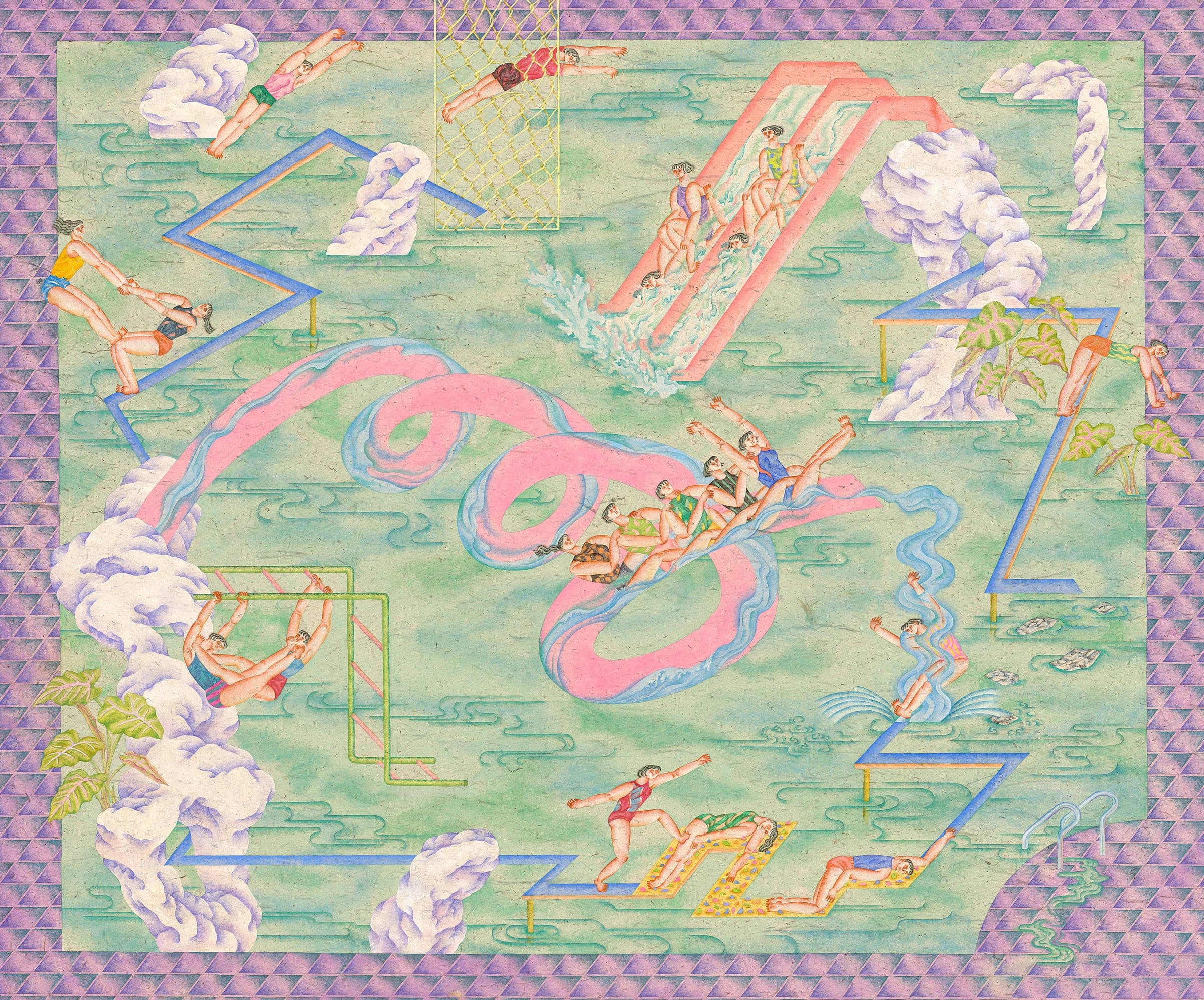
《Forgettable Grief》是顏妤庭早期以新聞、社會事件與日常圖像進入繪畫的重要系列。這些作品多從電視、網路媒體與地方新聞中取材,捕捉那些短暫引發關注,隨後又迅速被遺忘、遮蔽或取代的事件。畫面中的人物、景觀與事件帶有一種混雜的狀態:它們既荒謬、戲劇化,也帶著難以忽視的現實重量。顏妤庭將這些片段重新剪輯、編排,使它們在繪畫中形成一個介於新聞現場、民間傳說與集體記憶之間的圖像劇場。
在畫面結構上,作品多採用俯視視角與近似地圖的全景構圖,將不同時間、地點與事件壓縮在同一個場域之中。人物則以細密、扁平、近似皮影戲的方式散布於畫面,像是被暫時安置在某個劇場、地景或公共現場裡。這些片段彼此之間未必具有明確的因果關係,卻共同構成一種地方性的精神景觀。那些看似偶然的支線、邊角與插曲,逐漸形成一個暫時性的秩序,映照出台灣社會中日常、慾望、傷痛與荒謬並置的狀態。
系列標題《Forgettable Grief》指向一種容易被遺忘的痛感。這些事件曾經被觀看、被討論、被消費,也很快被新的資訊覆蓋。顏妤庭並未試圖替事件留下固定的敘事,而是將其保留在破碎、滑動與不穩定的圖像之中。那些被秒忘的悲傷,在繪畫裡以人物的姿態、場景的細節與敘事的殘影重新浮現,成為一種關於記憶如何形成、如何消散,也如何在觀看中再次被召回的視覺紀錄。
Forgettable Grief is an important early series in which Yen Yu-Ting began to approach painting through news, social events, and images from everyday life. Drawing from television, online media, and local news, the works capture incidents that briefly attracted public attention before quickly being forgotten, obscured, or replaced by new information. The figures, landscapes, and events in these paintings carry a mixed quality: they appear absurd and theatrical, while also bearing a weight that is difficult to ignore. Yen re-edits and rearranges these fragments, allowing them to form an image-theater that exists between news scenes, local folklore, and collective memory.
In terms of composition, the works often adopt an overhead perspective and a panoramic structure close to that of a map. Different times, places, and events are compressed into a single field. The figures are scattered across the image in a dense, flat manner, almost like shadow puppets, as if temporarily placed within a theater, landscape, or public site. These fragments do not necessarily share a clear causal relationship, yet together they form a kind of local psychological landscape. Seemingly accidental subplots, margins, and episodes gradually create a temporary order, reflecting a social reality in Taiwan where the everyday, desire, grief, and absurdity coexist.
The title Forgettable Grief points to a kind of pain that is easily forgotten. These events were once seen, discussed, and consumed, but were soon covered over by new information. Rather than leaving behind a fixed narrative, Yen keeps them within fragmented, shifting, and unstable images. The grief that is forgotten almost instantly resurfaces through the postures of figures, the details of scenes, and the remnants of narrative, becoming a visual record of how memory is formed, how it disappears, and how it can be called back through the act of looking.