夜拾 Nocturnals
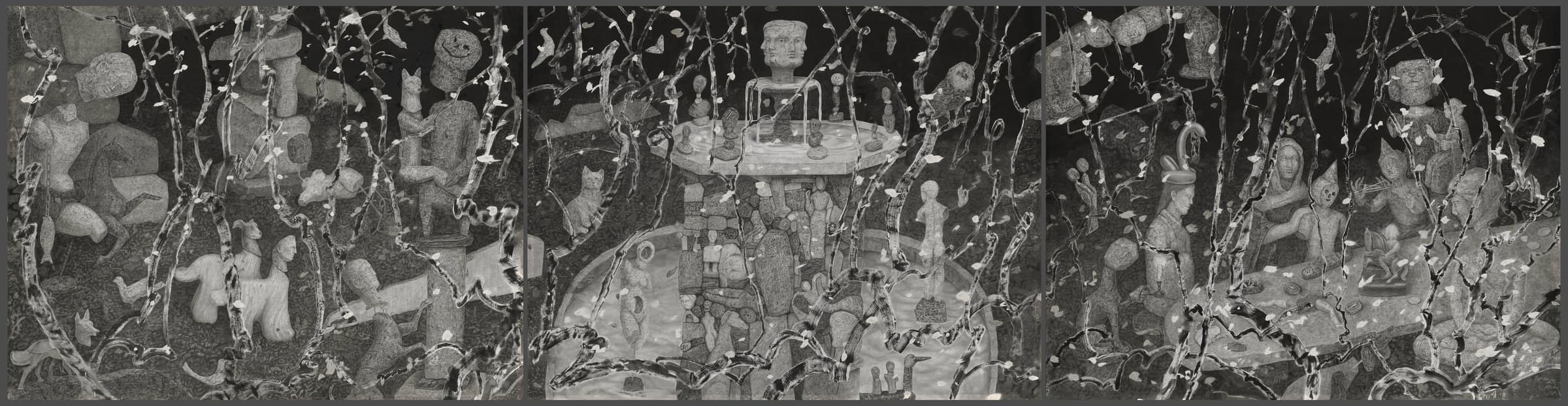
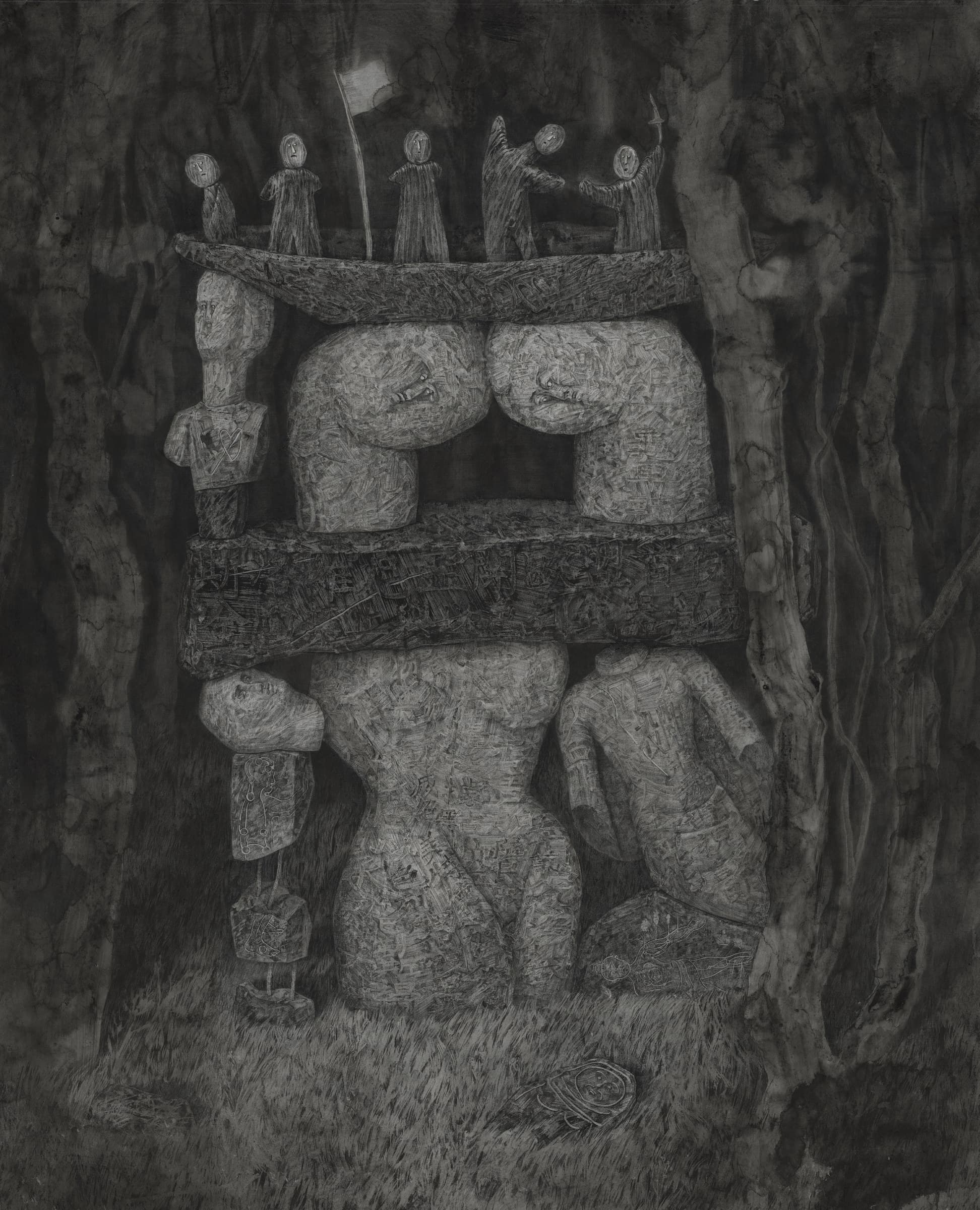
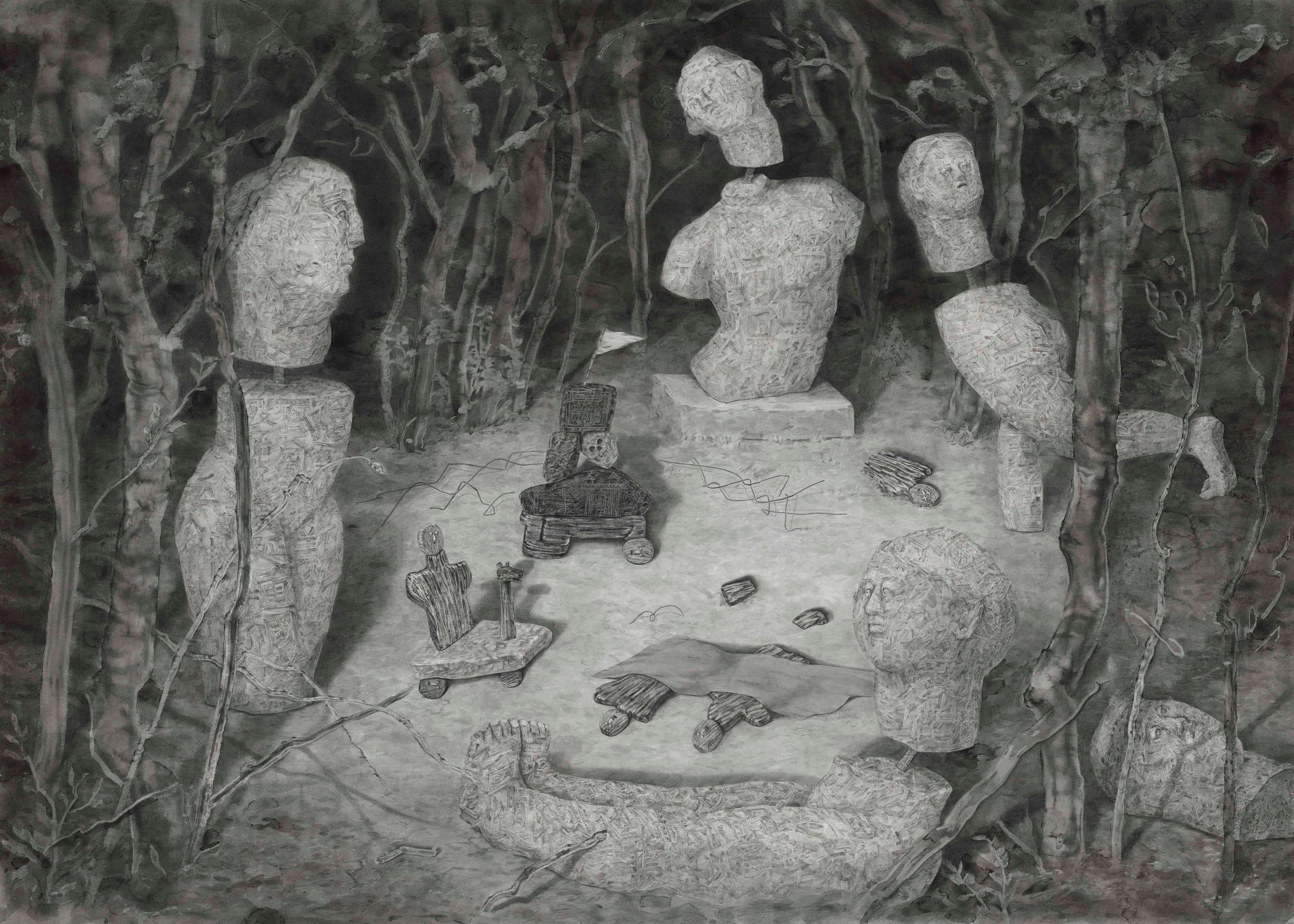
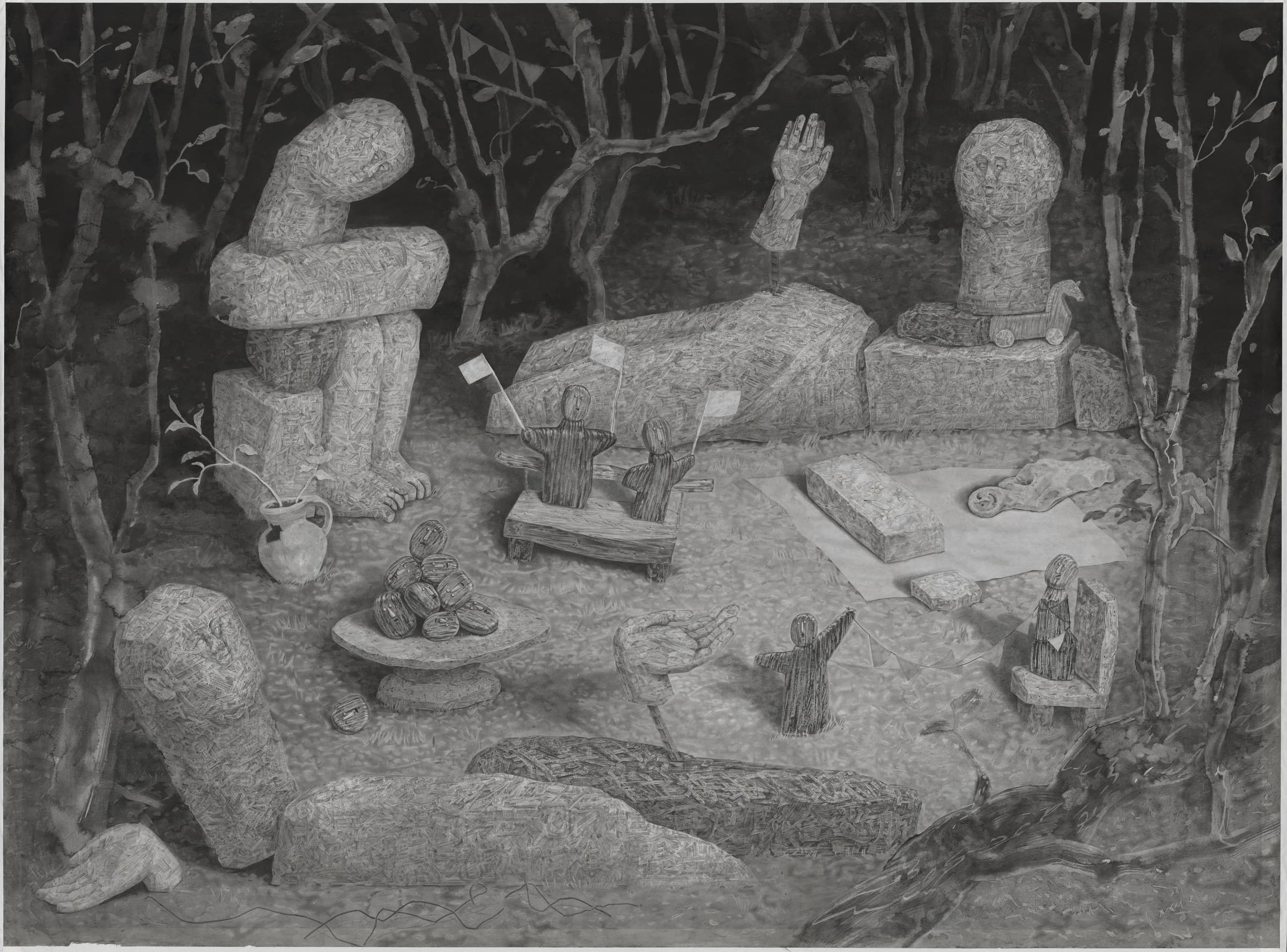
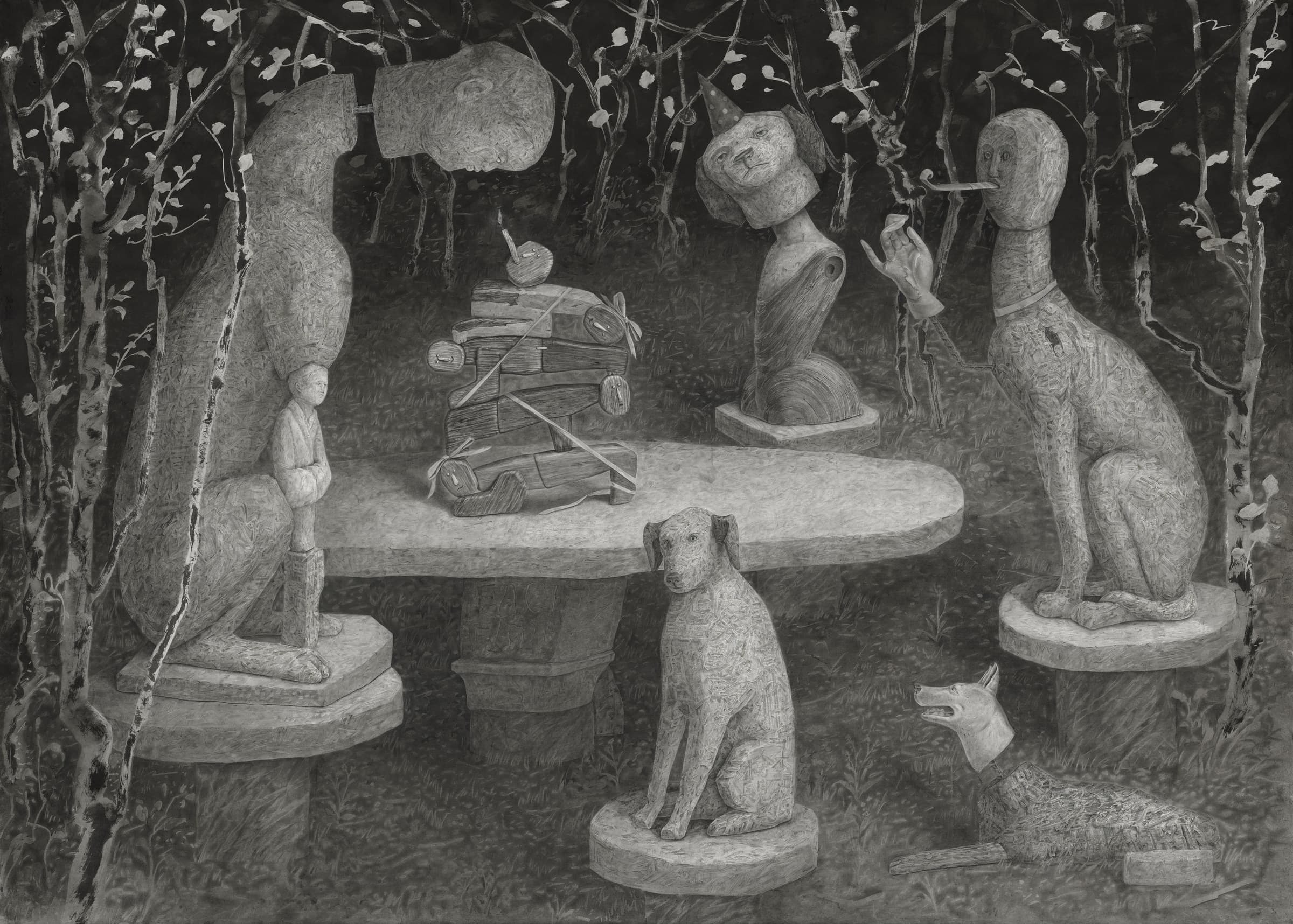
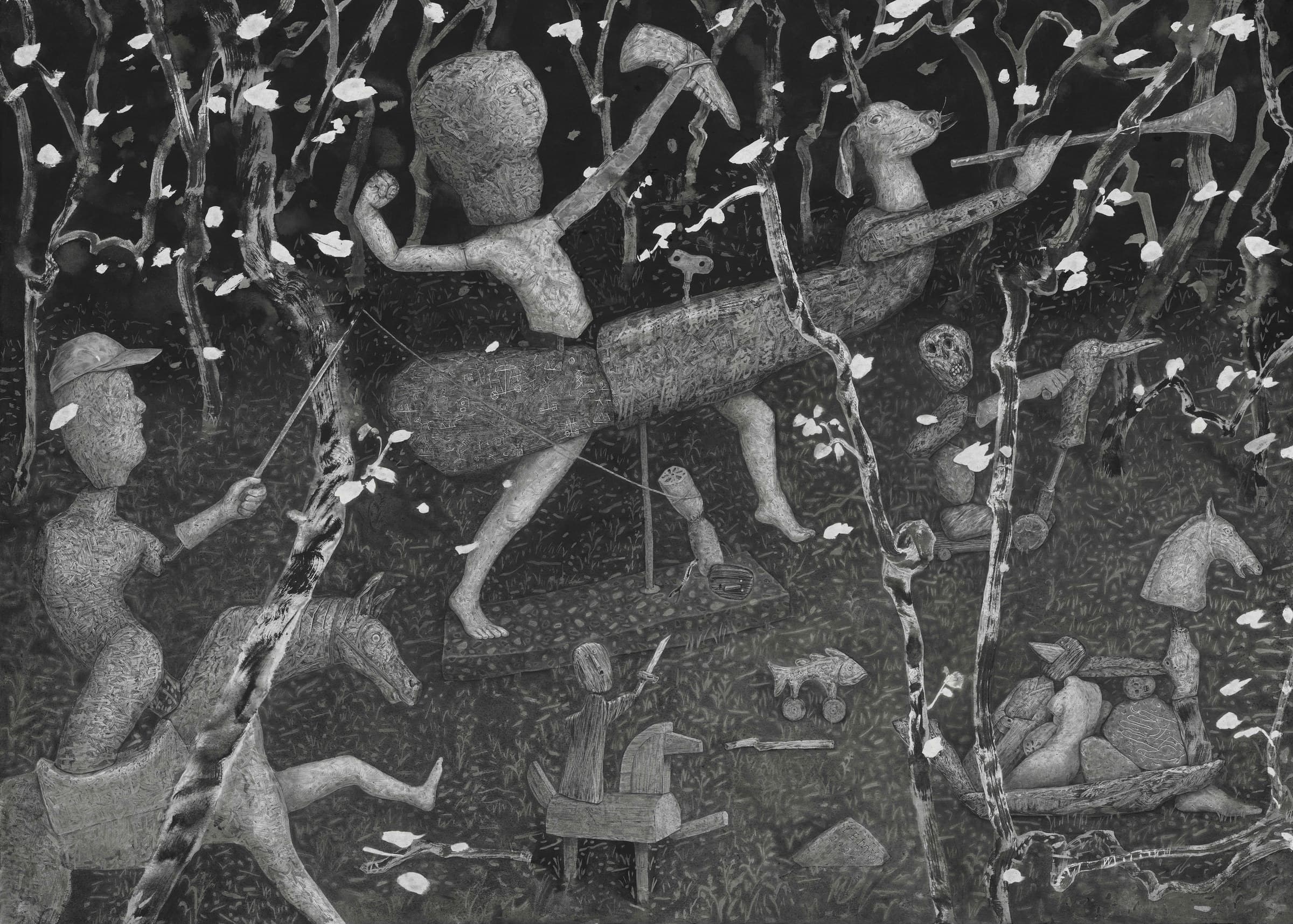
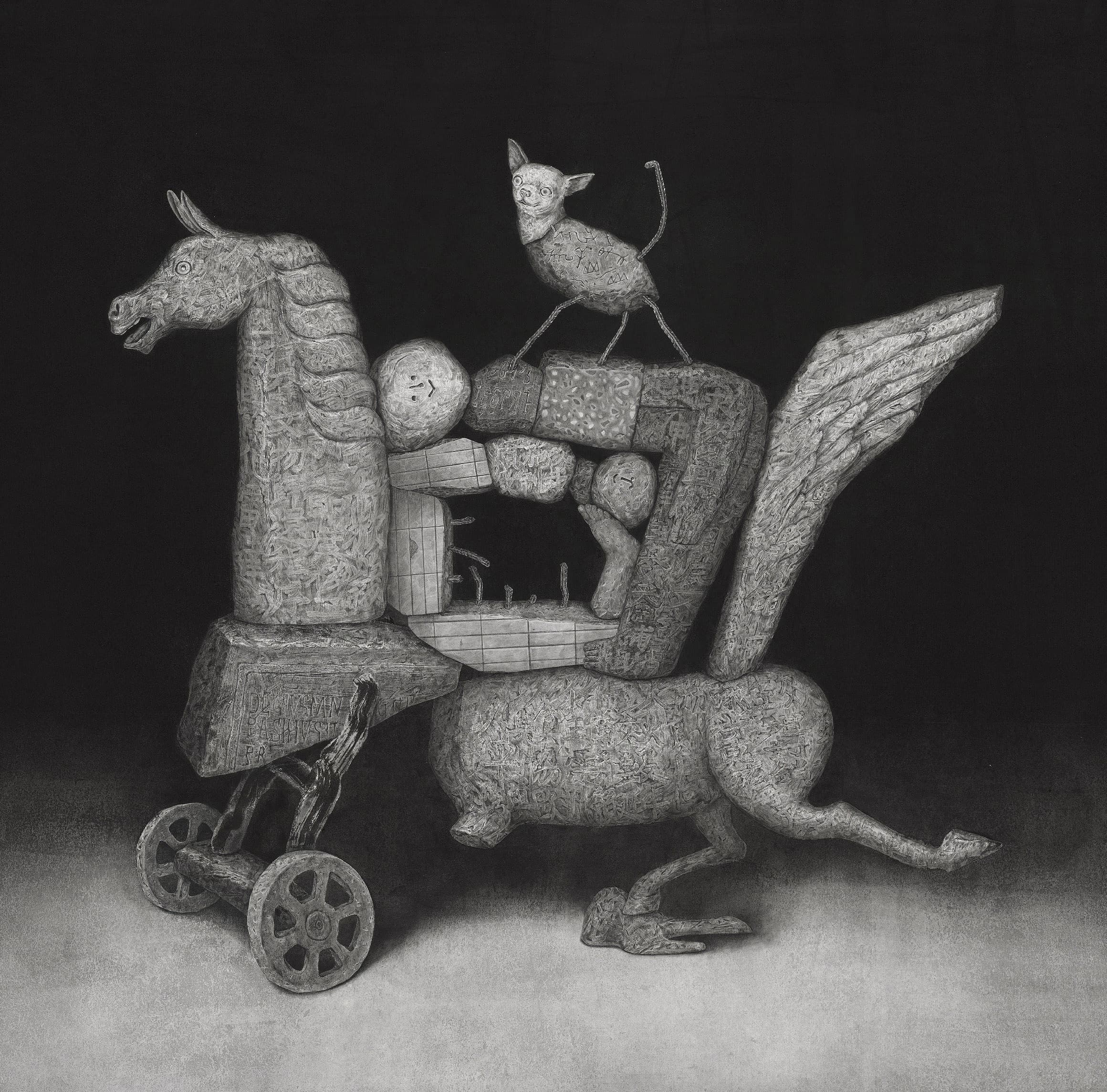
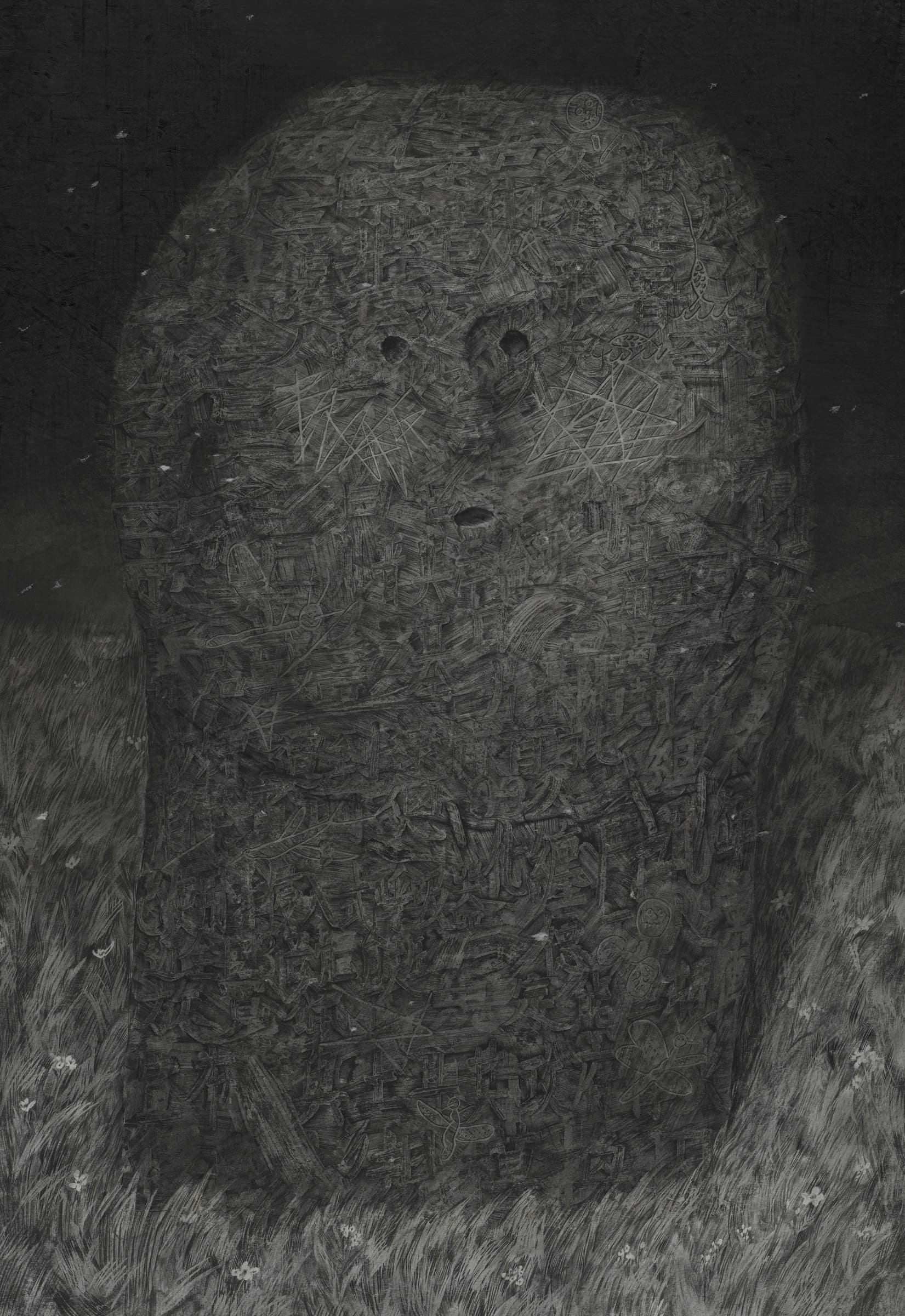
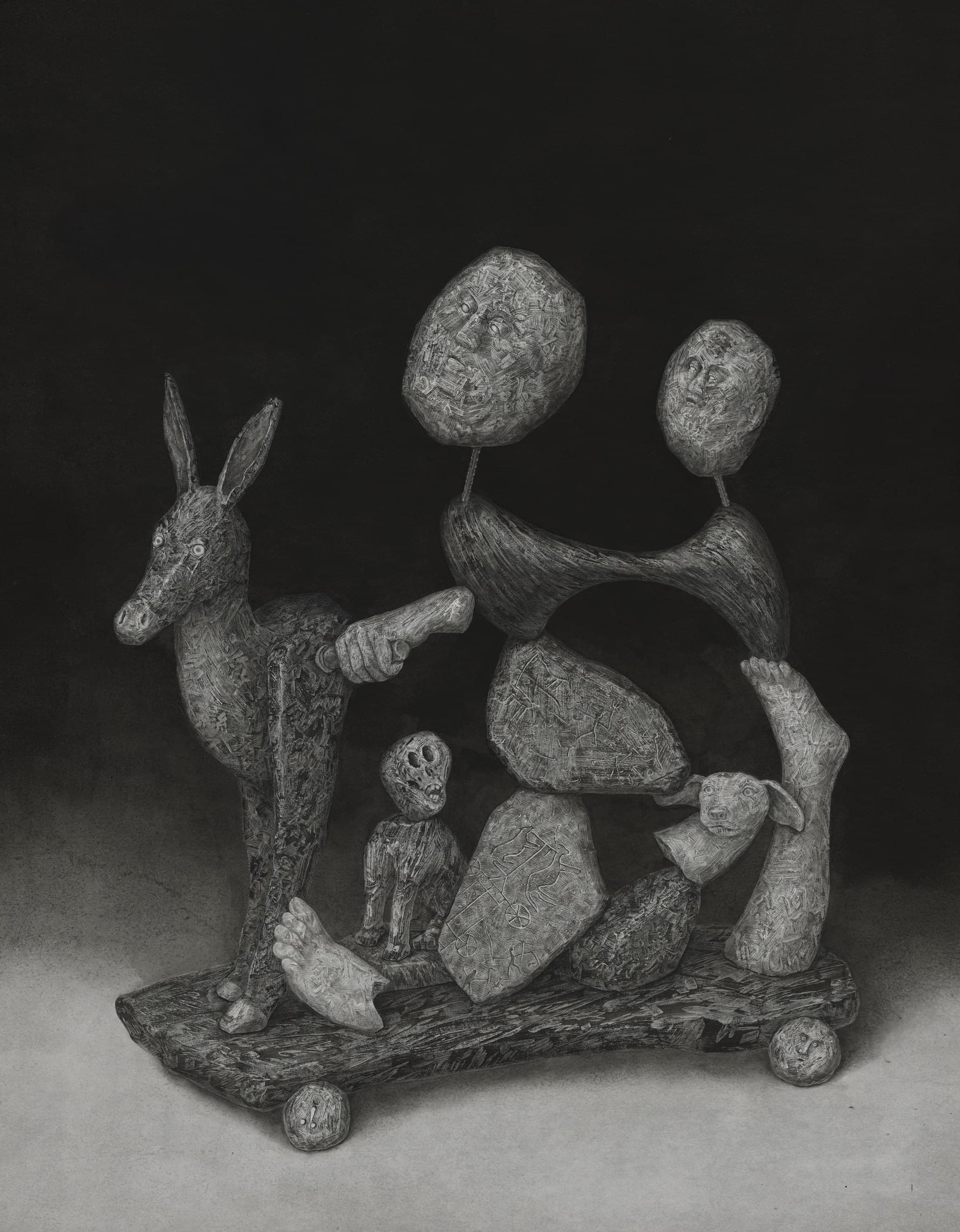
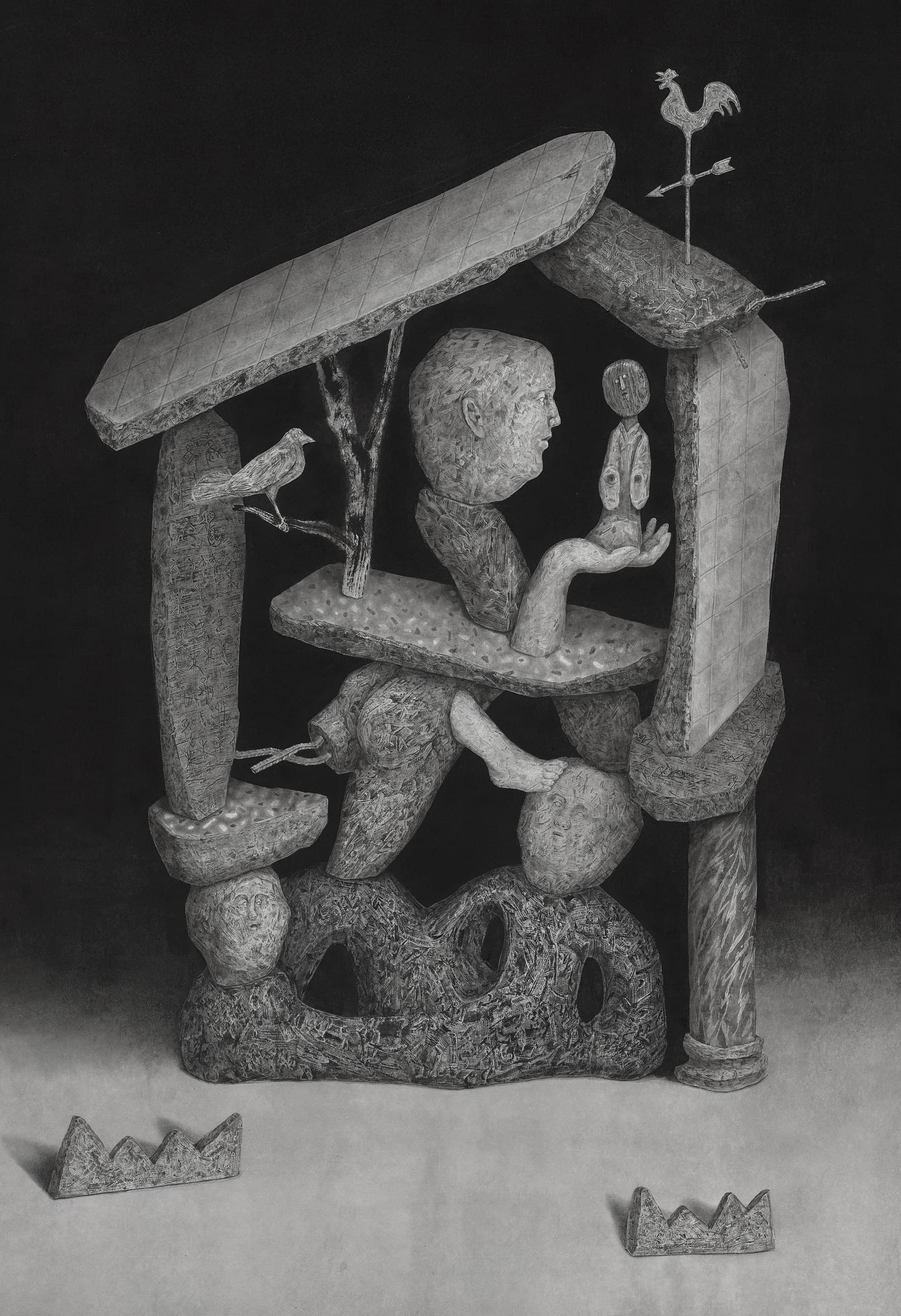
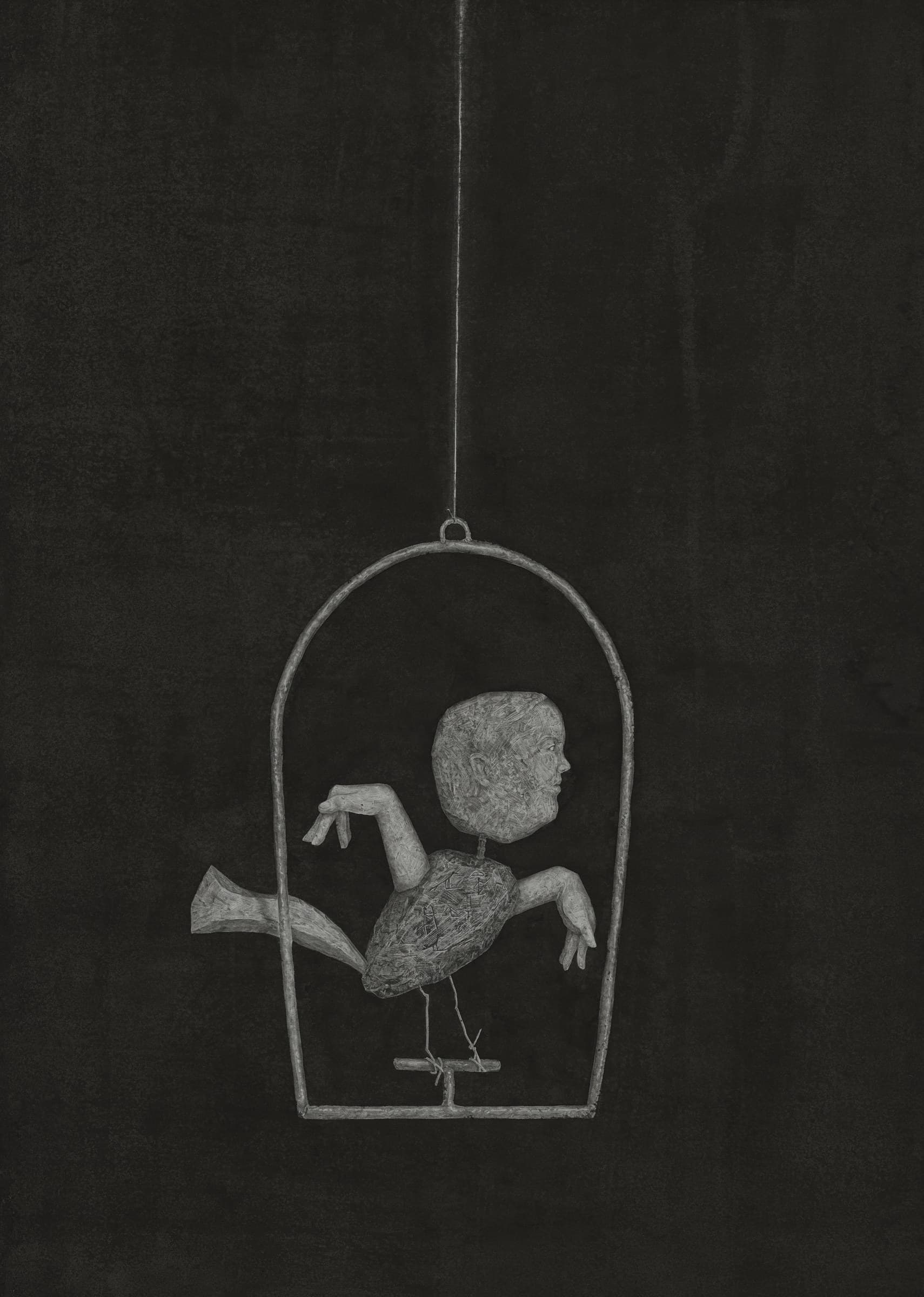
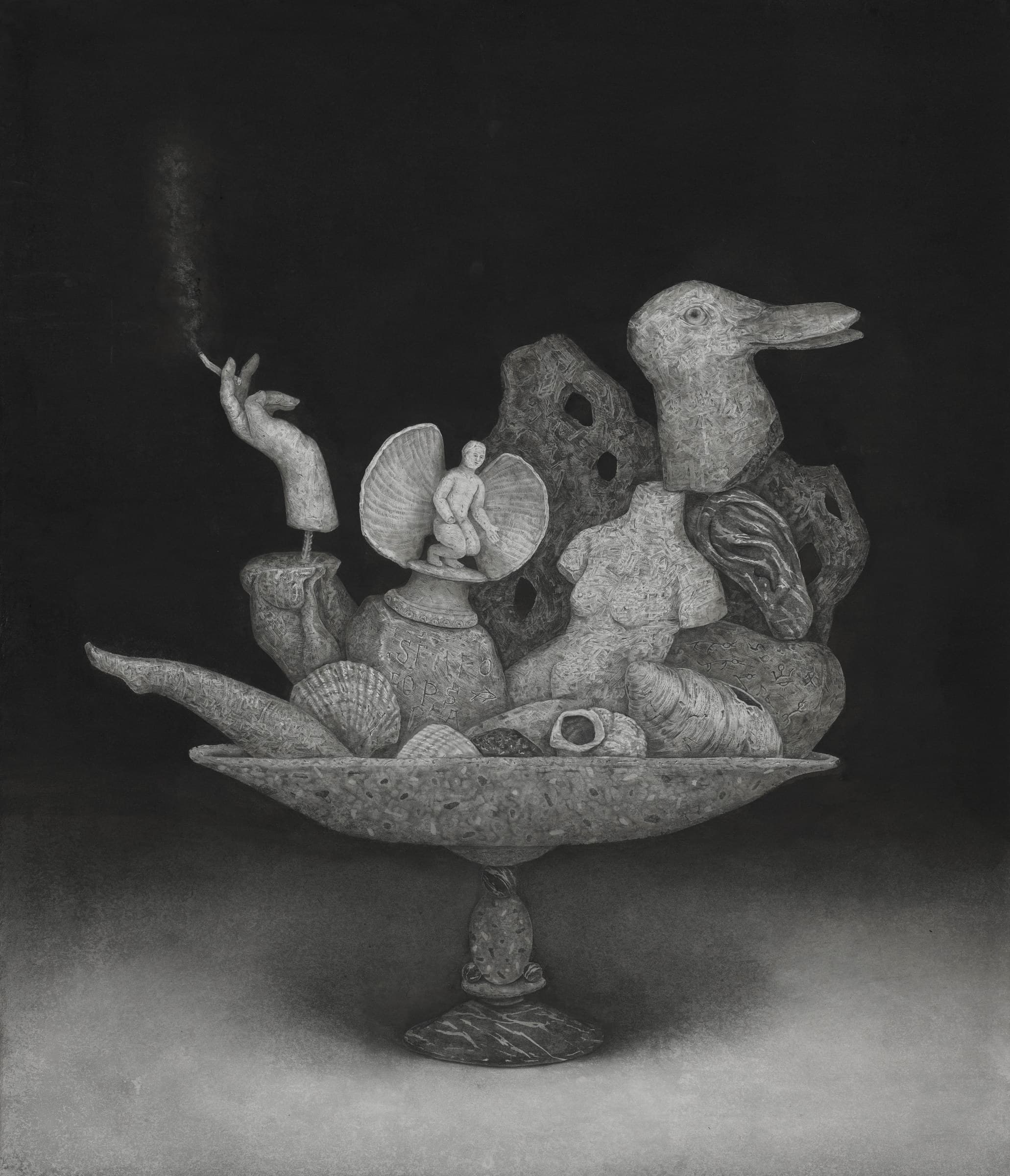
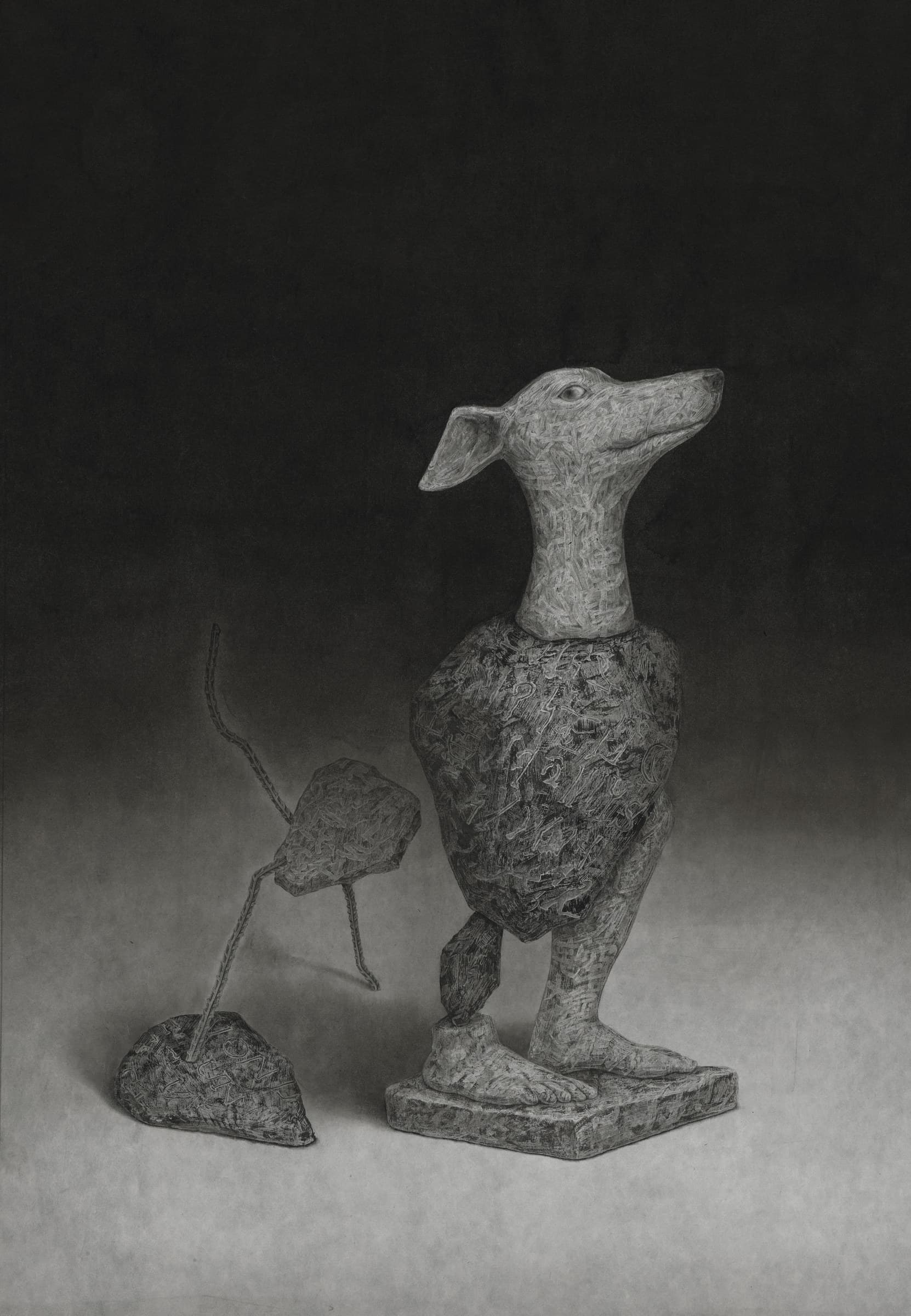
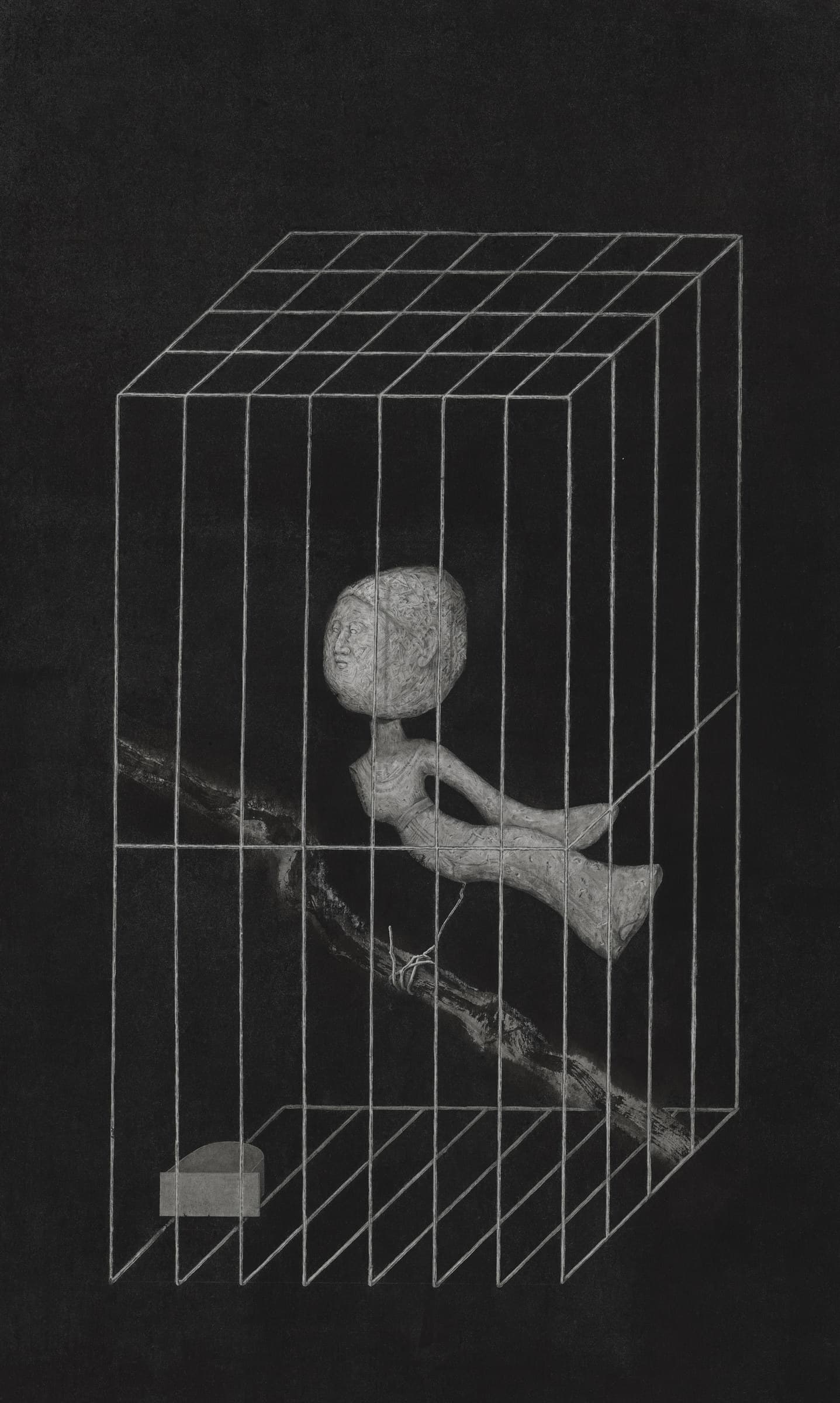
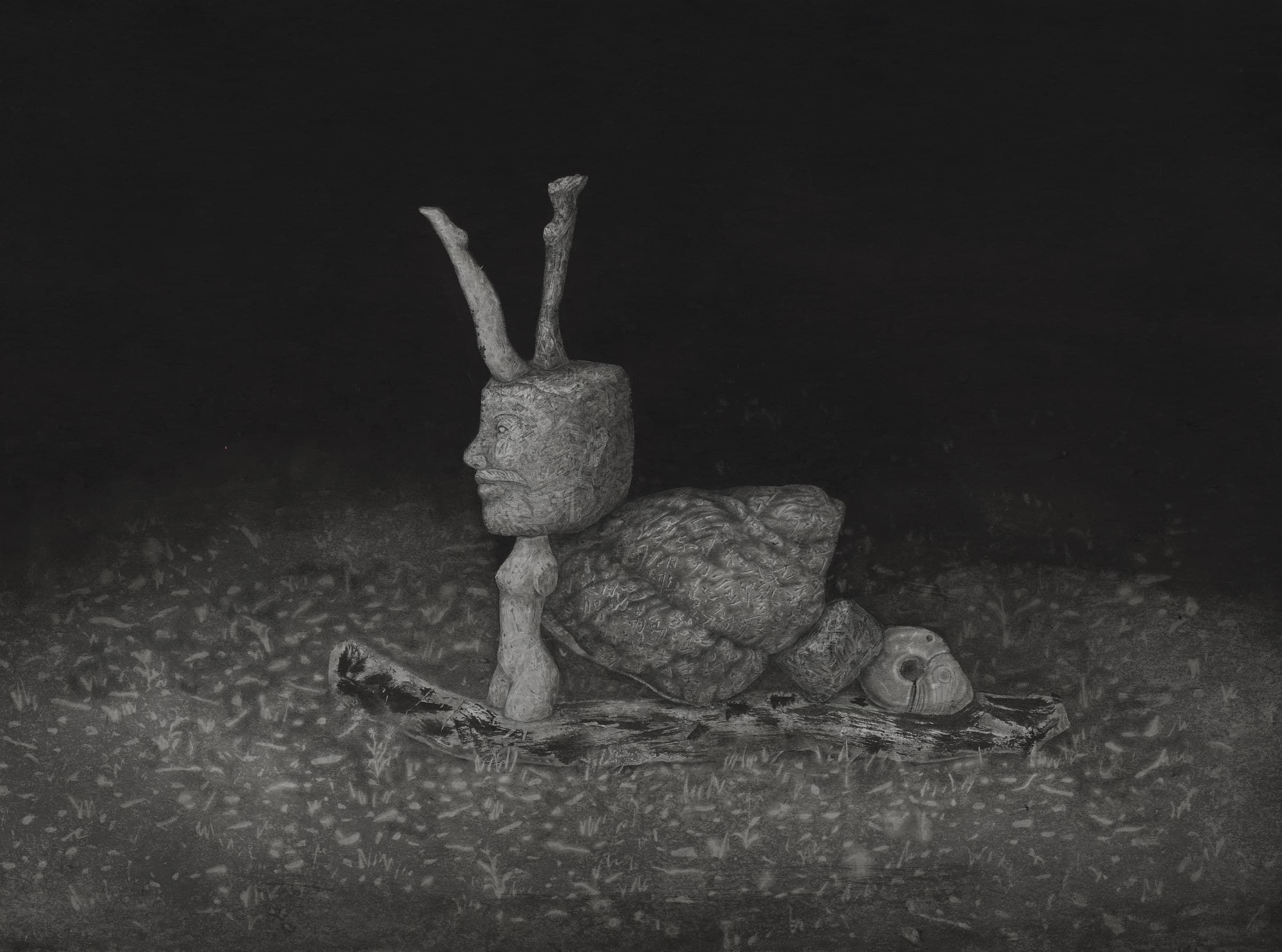
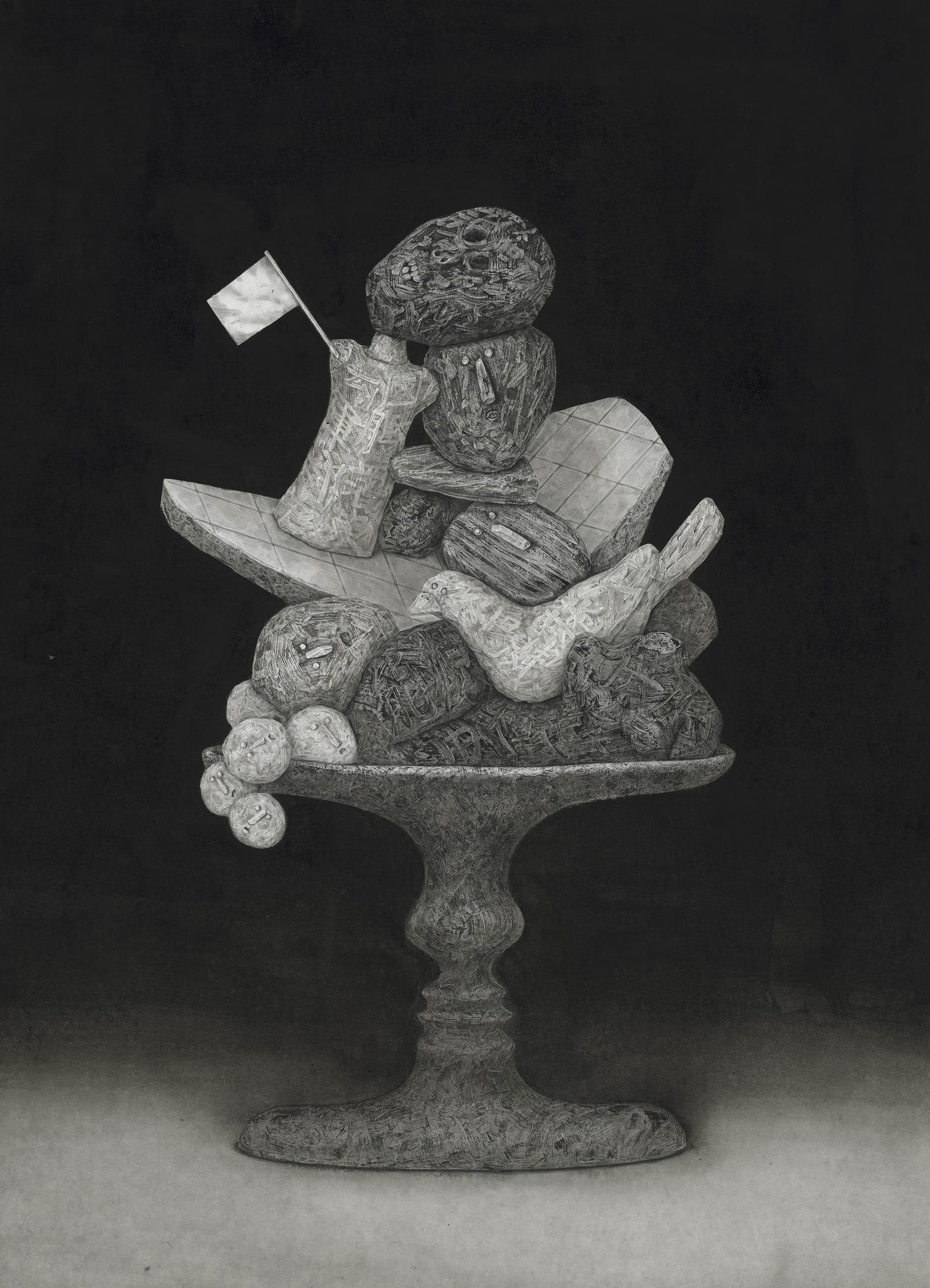
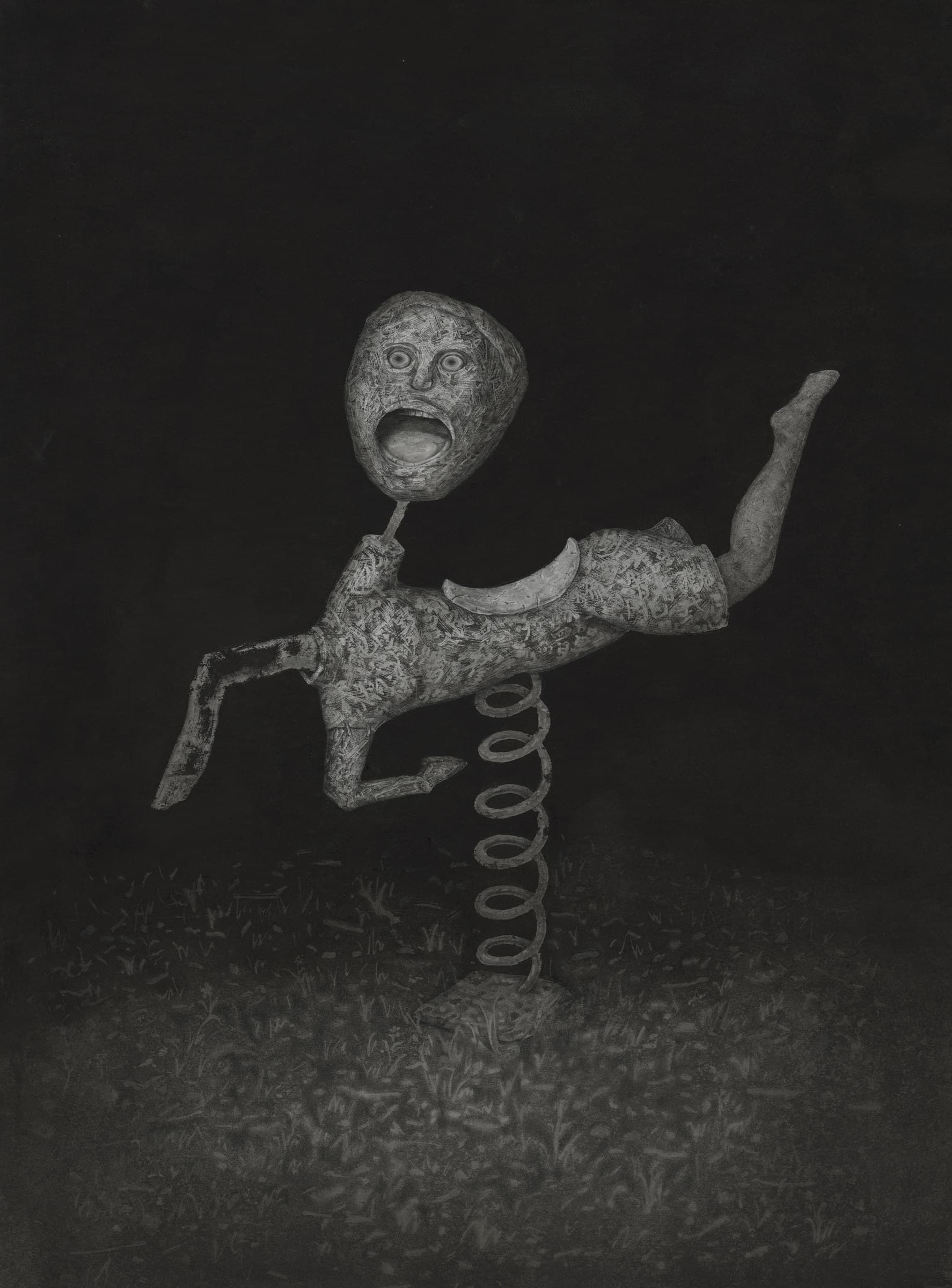
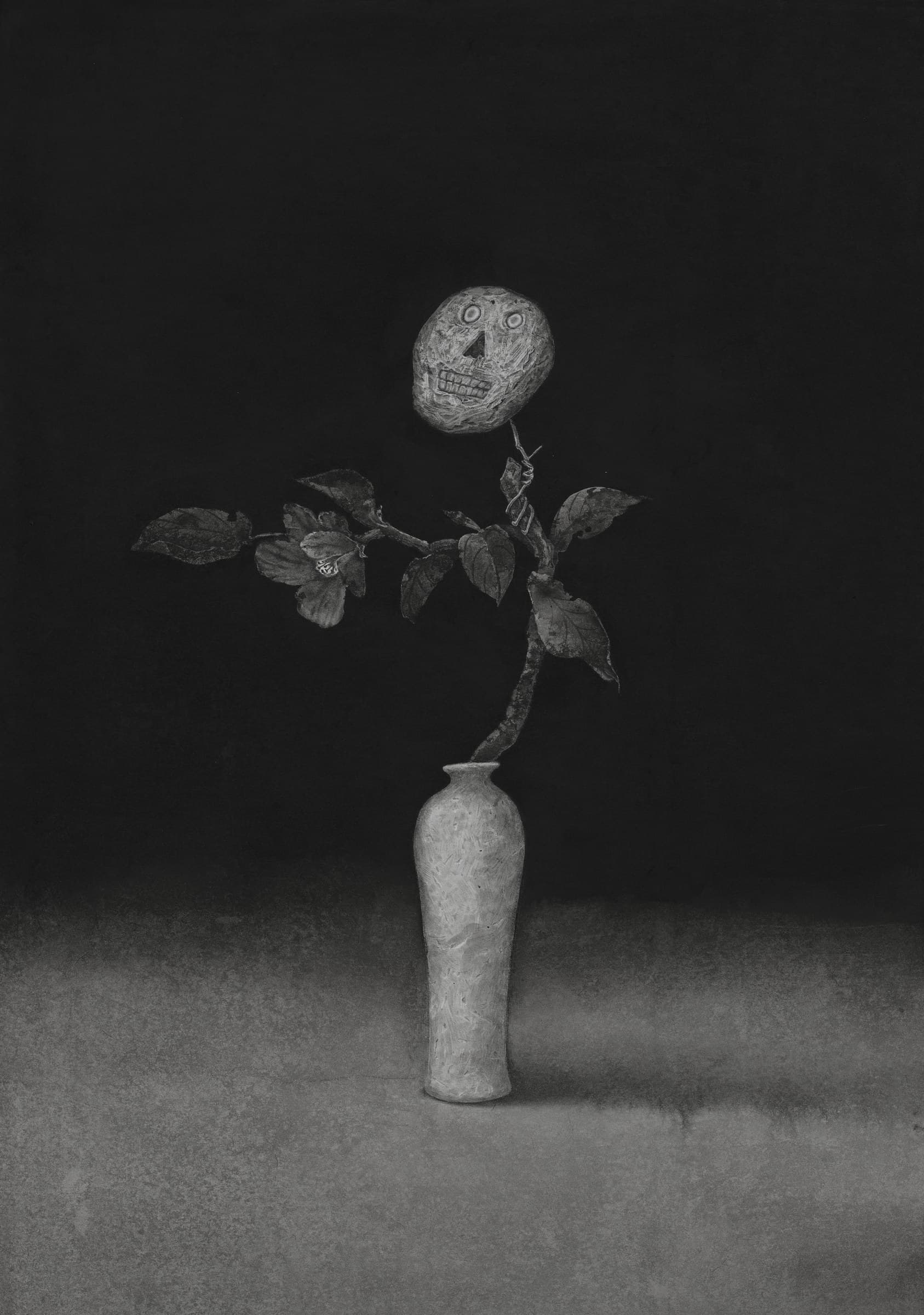
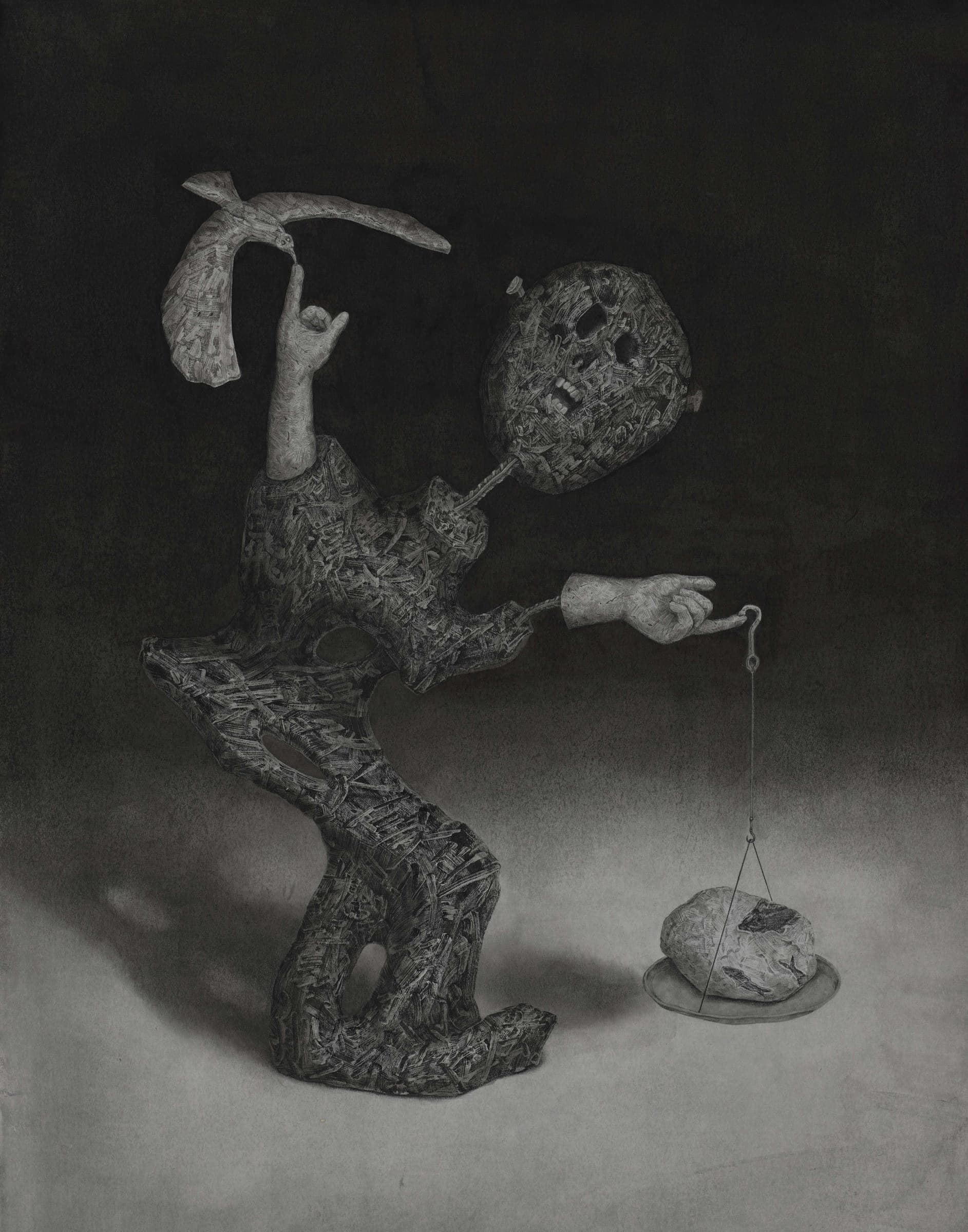
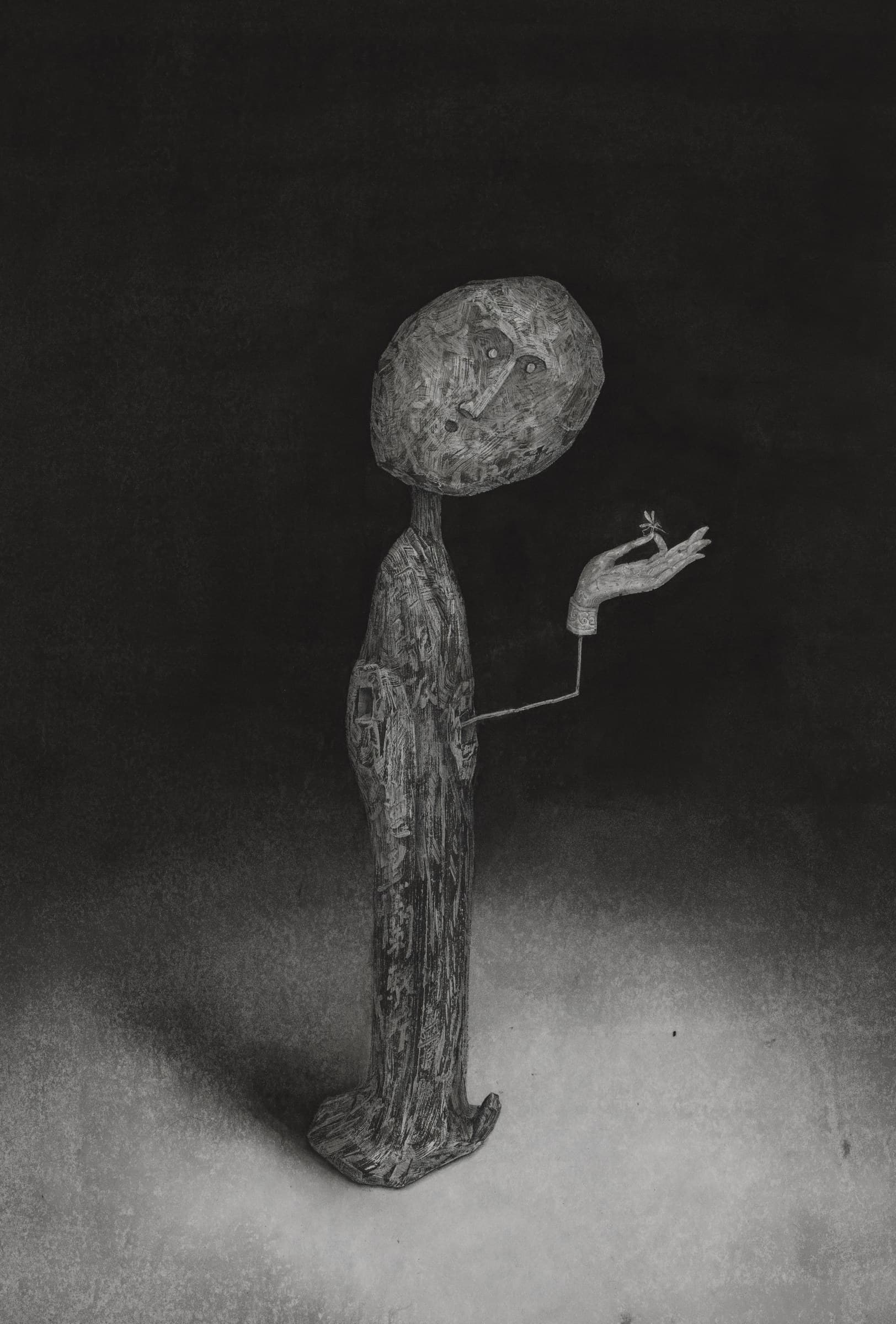
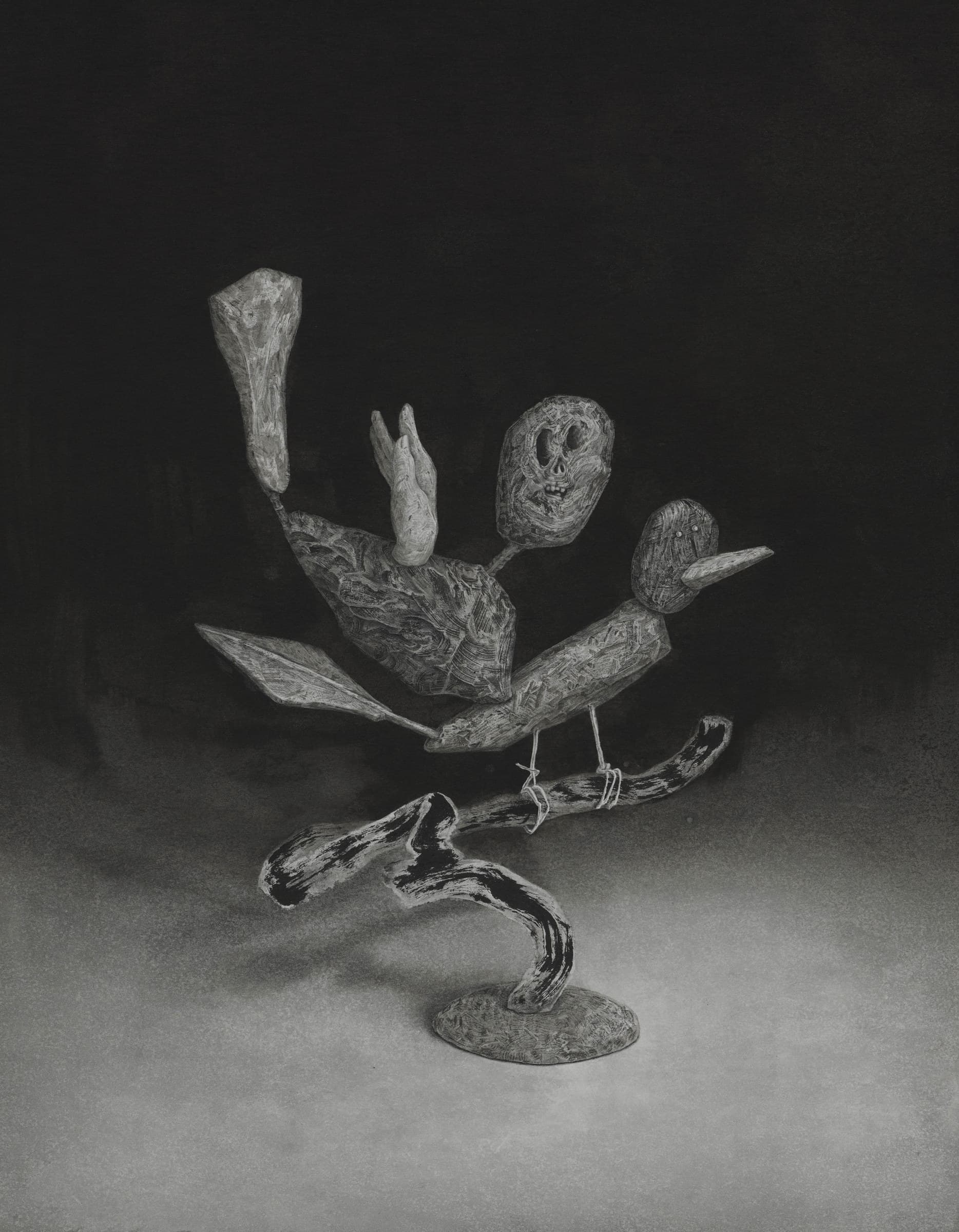
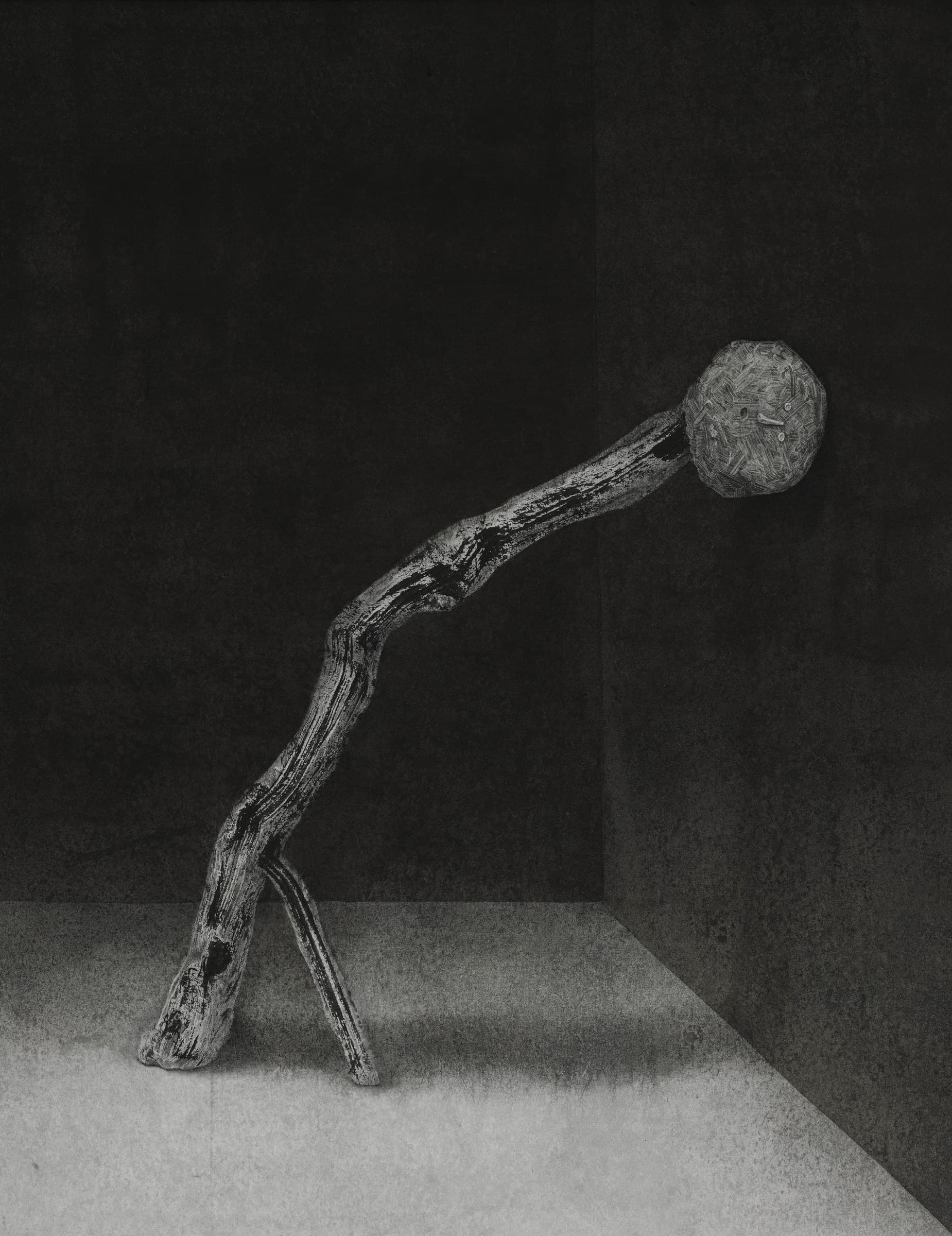
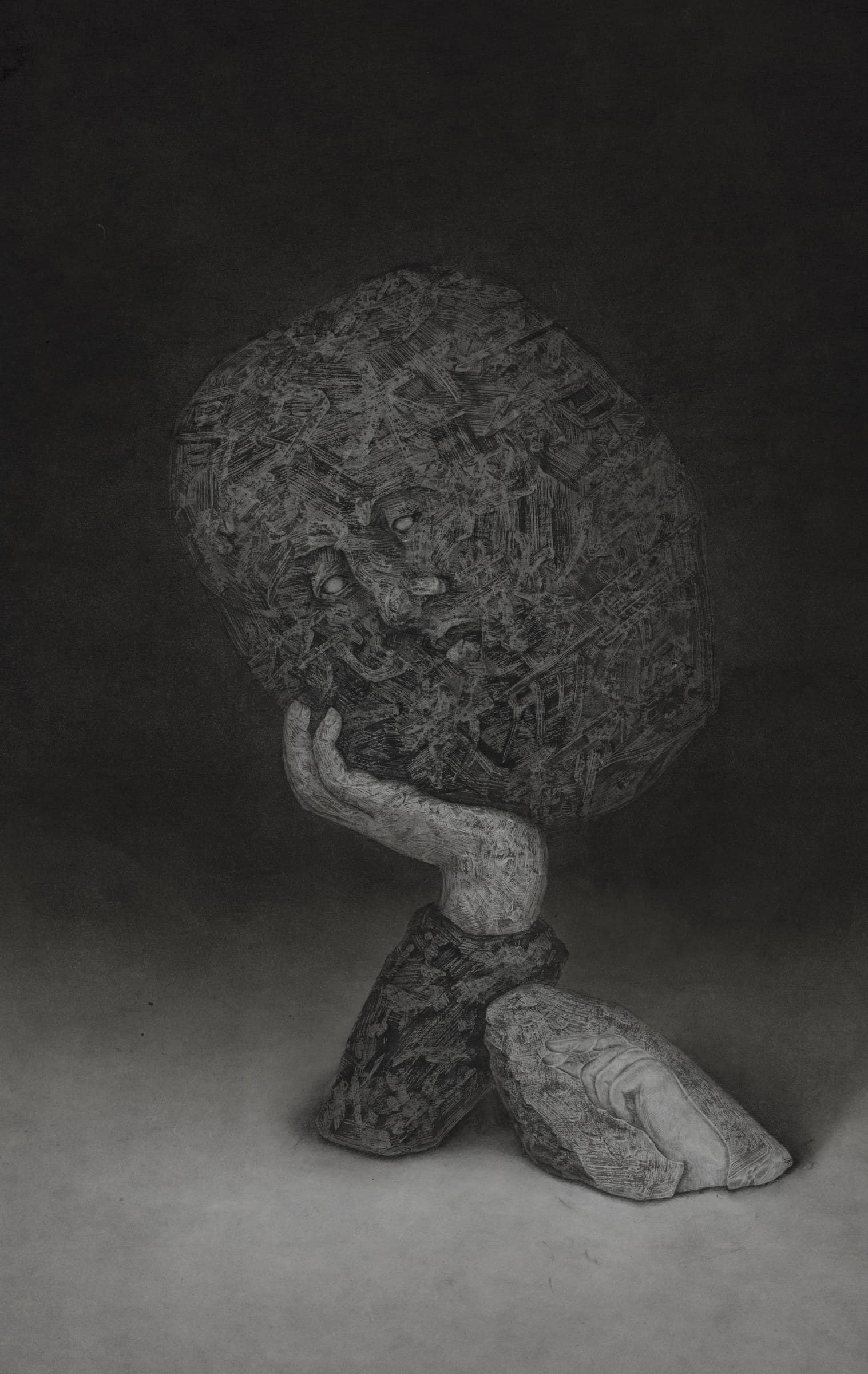
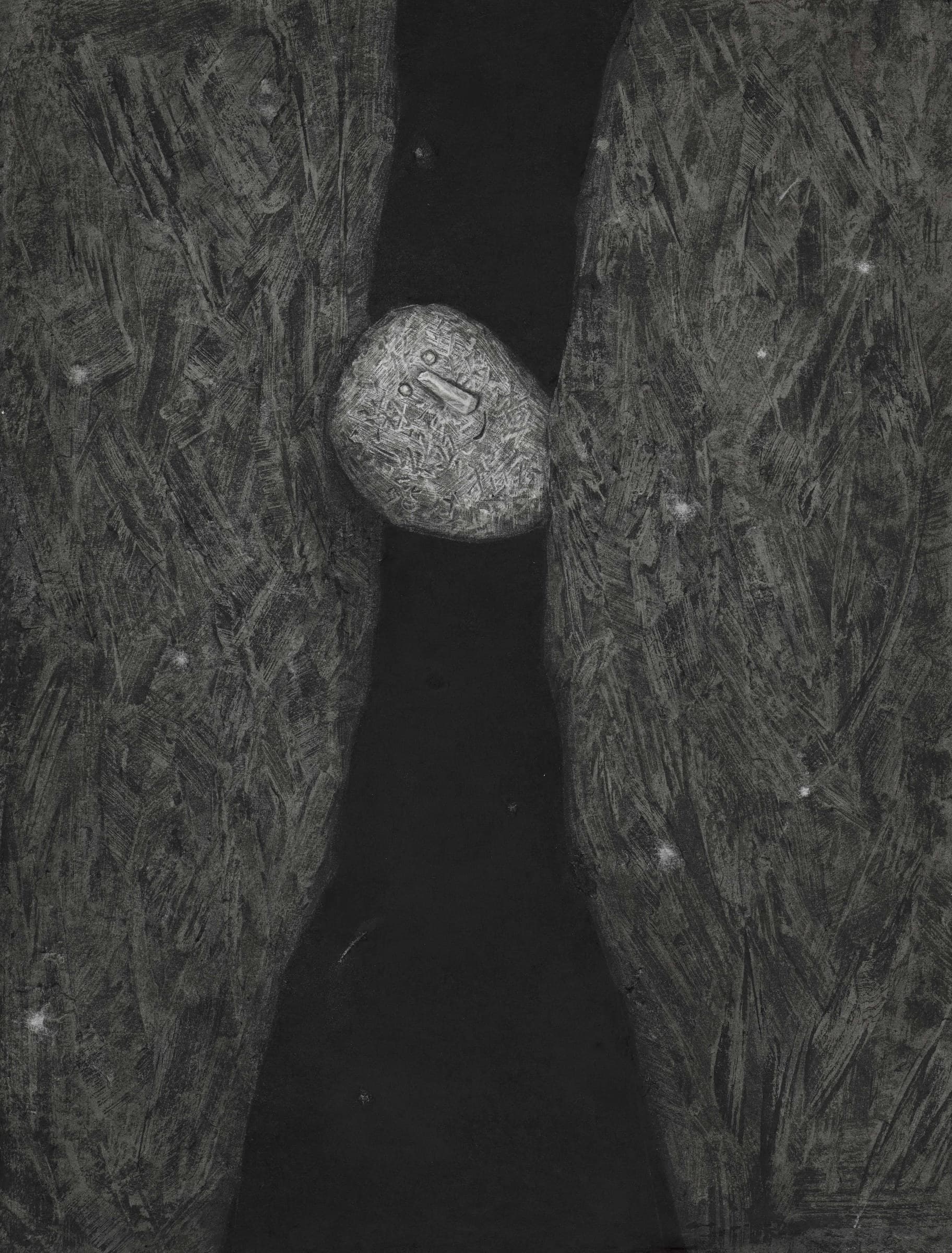
《夜拾 Nocturnals》延續顏妤庭自 2020 年以來對新聞訊息、記憶與水墨繪畫的思考。他透過反覆抄寫日常新聞,將資訊帶入畫面,使文字在層層覆蓋與沉積之中逐漸失去可讀性,轉化為近似拓片、石痕與時間風化後留下的視覺質地。這樣的繪畫方式轉化自傳統水墨中的「皴法」,但在他的作品中,這種融合了新聞與書寫的皴法,不再只是描繪山石肌理的筆法,而是承載資訊、時間與心理狀態的繪畫語言。
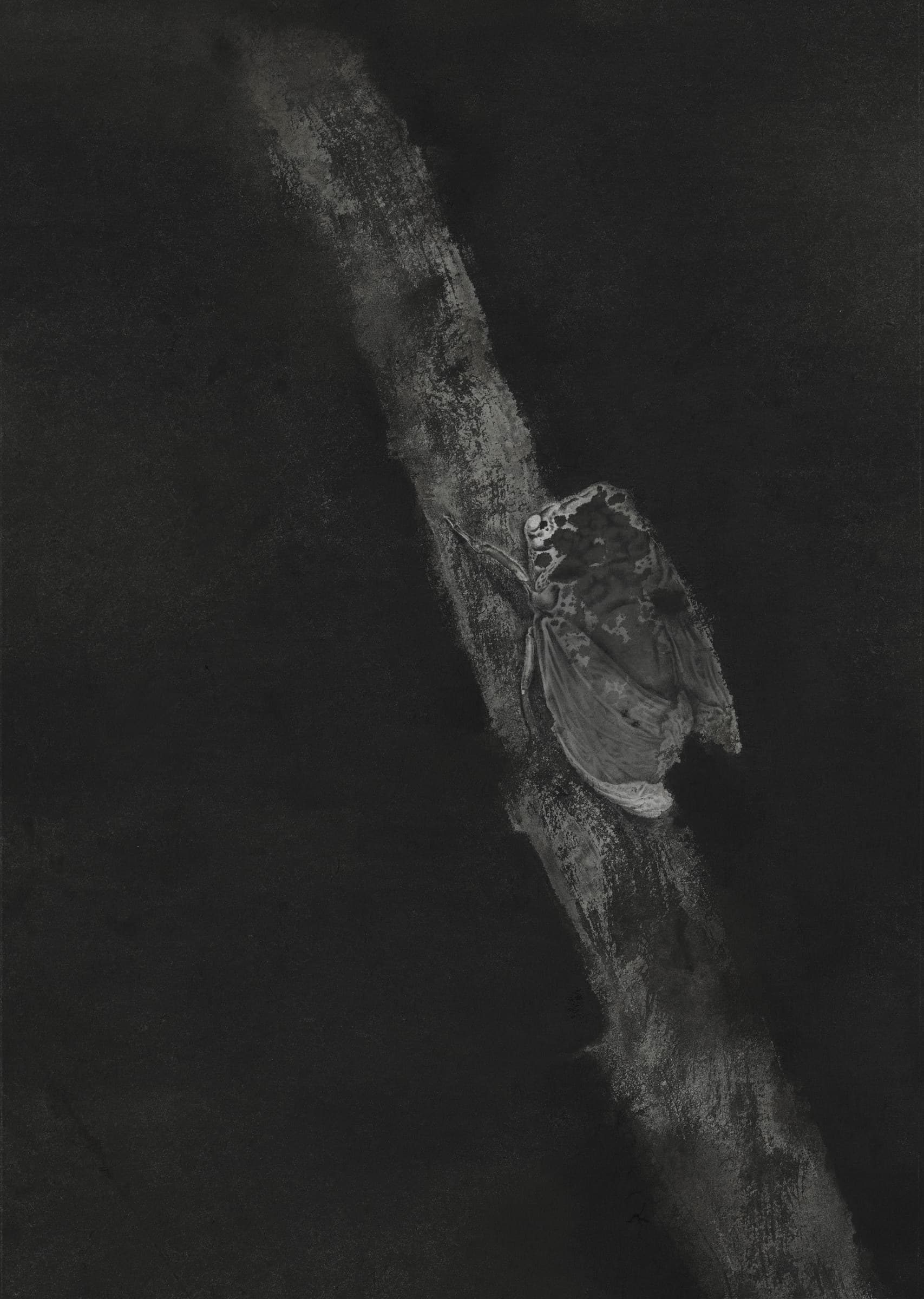
相較於前幾個系列中,他對書寫與繪畫、文字與圖像、紀錄與覆蓋等創作途徑的整理與實驗,《夜拾》更進一步將這些累積的痕跡推向場景的生成。枯樹、殘碑與夜行物在畫面中反覆出現,像是從不同時空與文化中被拾起的碎片。它們既帶有歷史遺跡的重量,也像是被任意棄置、失去原有脈絡的物件,在夜色中重新嫁接,構成一處介於記憶、廢墟與想像之間的夜間現場。
系列名稱中的「拾」,指向撿拾、辨認與重新組合。顏妤庭在畫面中拾起那些被時間與資訊沖散的事件、物件與感受,使它們在錯置與重組之中形成新的關係,並以似是而非的姿態映照現實。《夜拾》所指向的並非某段確定的過去,而是歷史、記憶與觀看如何在時間之中被建構,也持續被改寫。
Nocturnals extends Yu-Ting Yen's ongoing exploration of news, memory, and ink painting since 2020. Through the repeated transcription of daily news, Yen brings information into the pictorial surface, allowing words to gradually lose their readability through layers of covering and sedimentation. They are transformed into a visual texture reminiscent of rubbings, stone traces, or marks weathered by time. This painting method is derived from the traditional ink technique of cunfa, or texture strokes. In Yen's work, however, this form of cunfa, which merges news and writing, is no longer simply a way to depict the texture of mountains and rocks, but becomes a painterly language that carries information, time, and psychological states.
Compared with earlier series, in which Yen organized and experimented with the relationships between writing and painting, text and image, recording and covering, Nocturnals further pushes these accumulated traces toward the generation of scenes. Withered trees, remnants of monuments, and nocturnal beings repeatedly appear in the paintings, like fragments picked up from different times and cultures. They carry the weight of historical ruins, while also resembling discarded objects that have lost their original contexts. Grafted together again in the night, they form a nocturnal site between memory, ruins, and imagination.
The Chinese title Ye Shi contains the idea of picking up, identifying, and recombining. In the paintings, Yen gathers events, objects, and sensations scattered by time and information, allowing them to form new relationships through displacement and reassembly, and to reflect reality in an ambiguous, almost-but-not-quite recognizable form. Nocturnals does not point toward a specific past, but toward the ways history, memory, and looking are constructed in time, and continually rewritten.