殘章與斷片 Fragments and Remnants
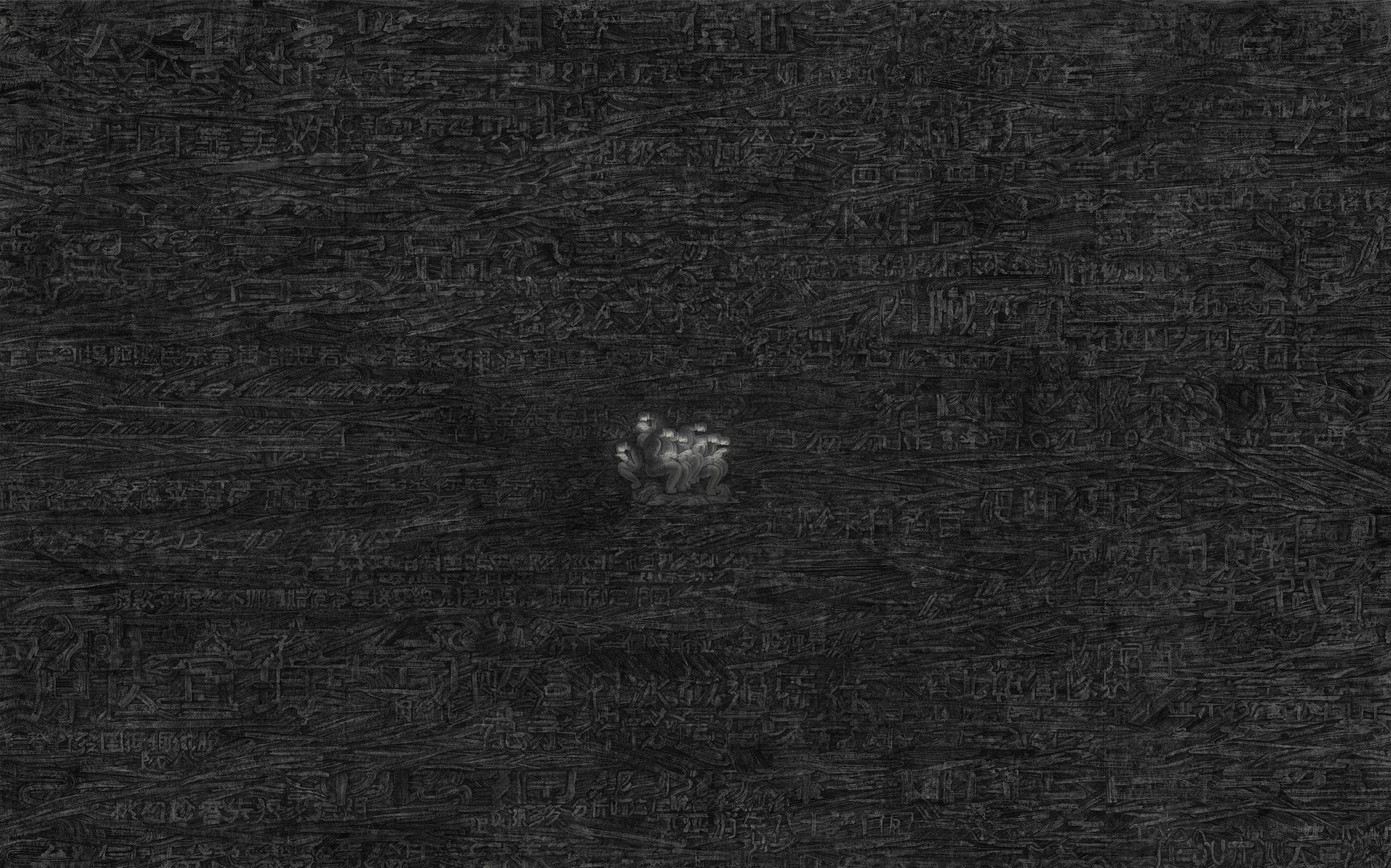
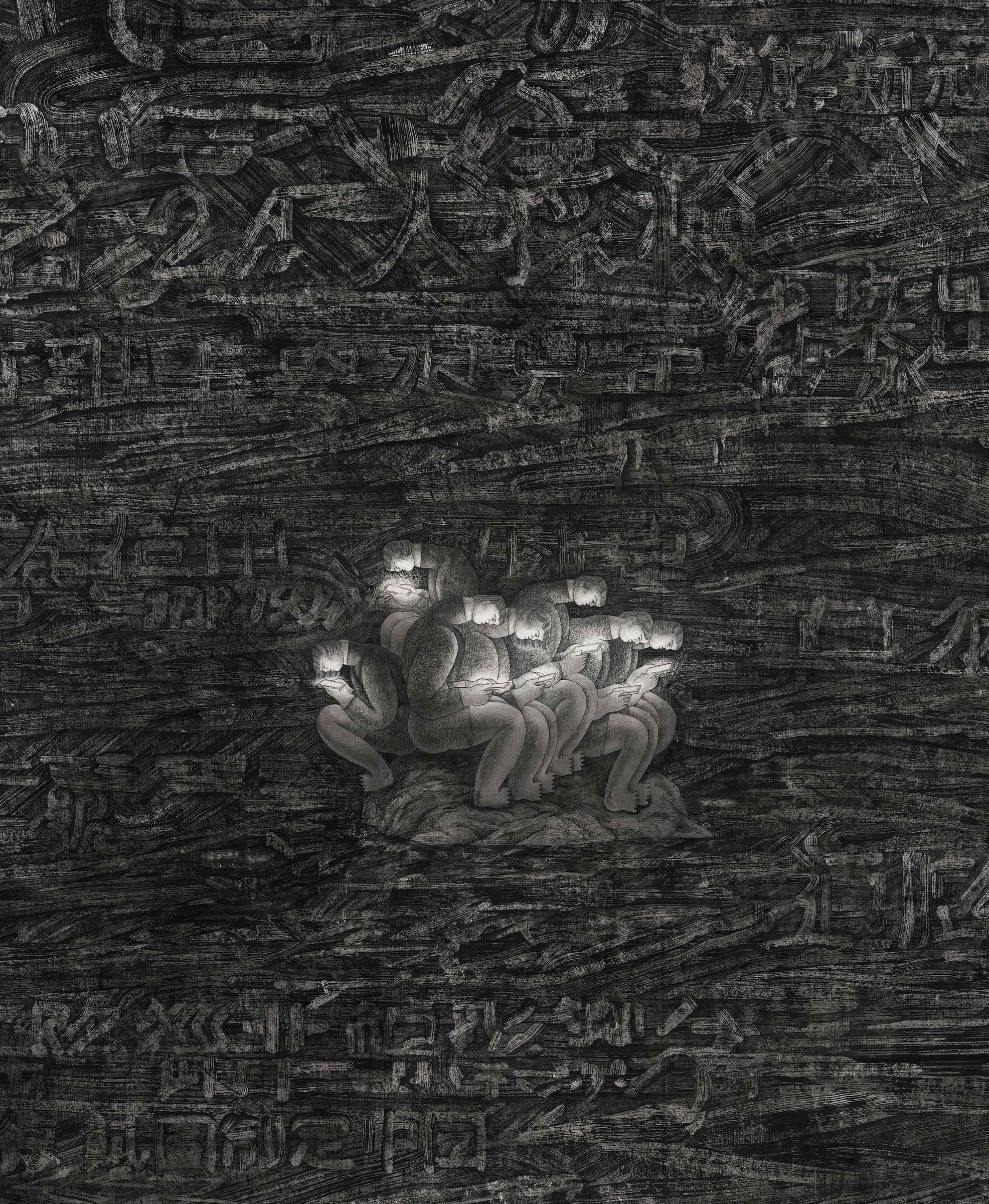
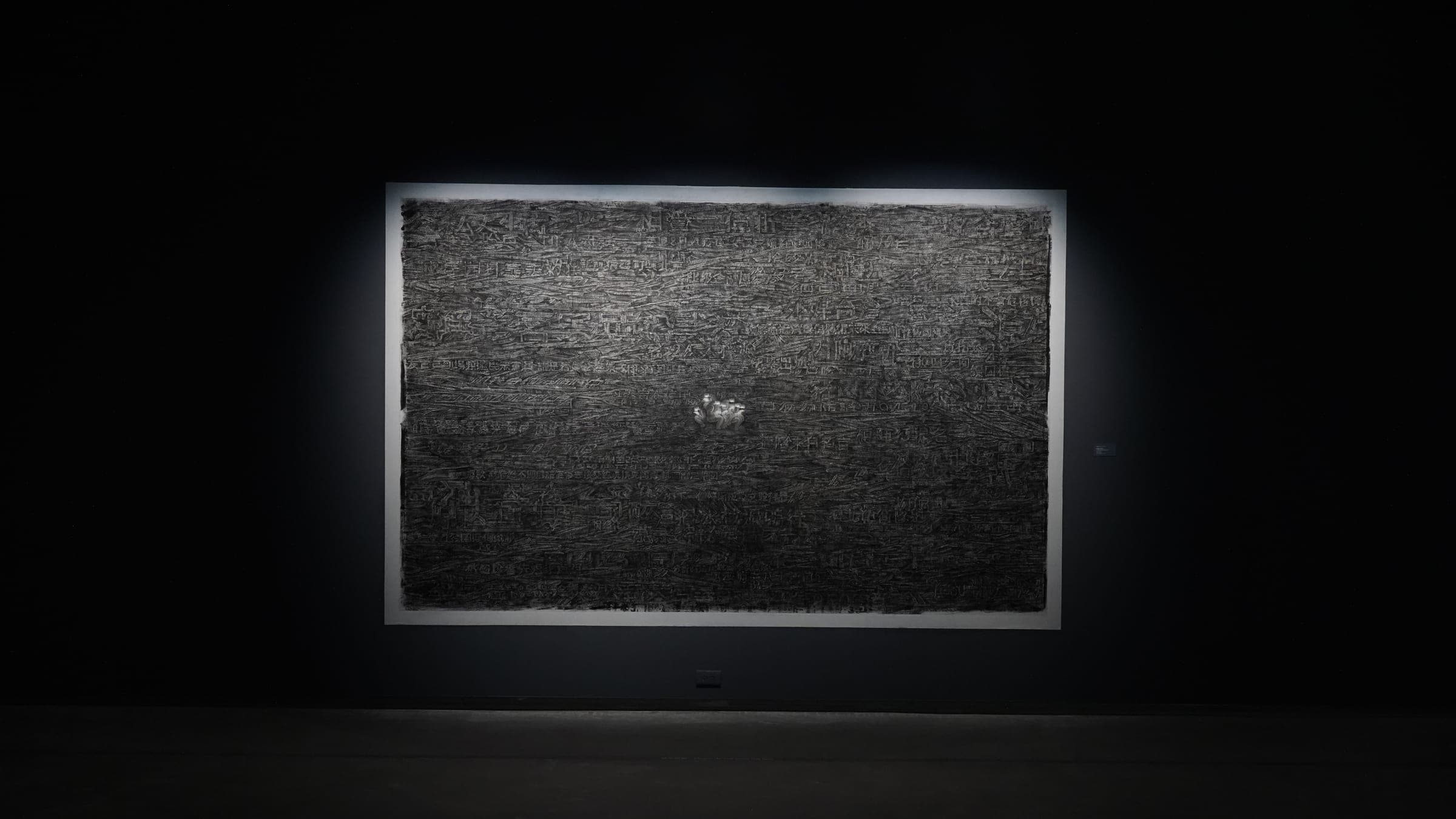
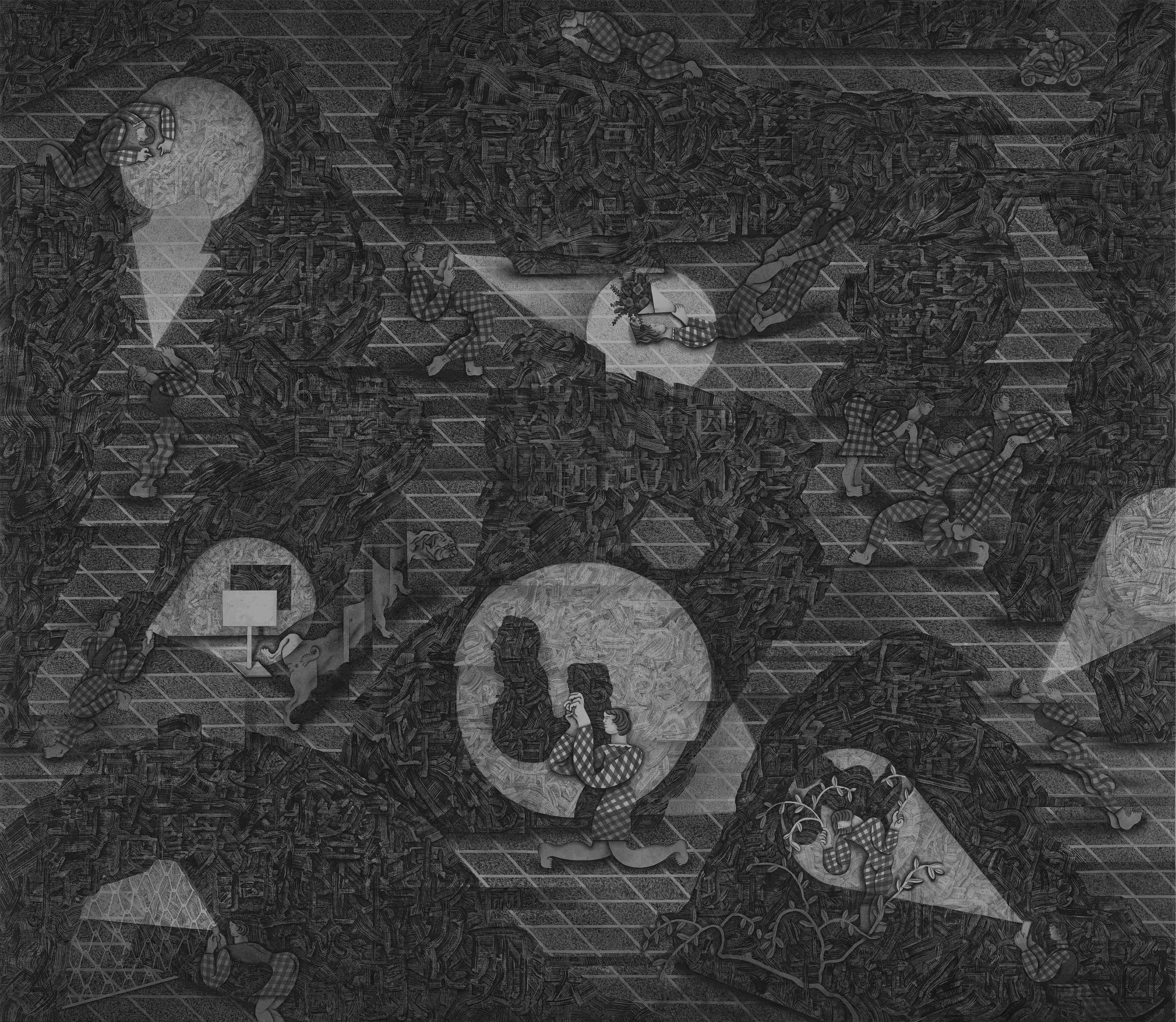
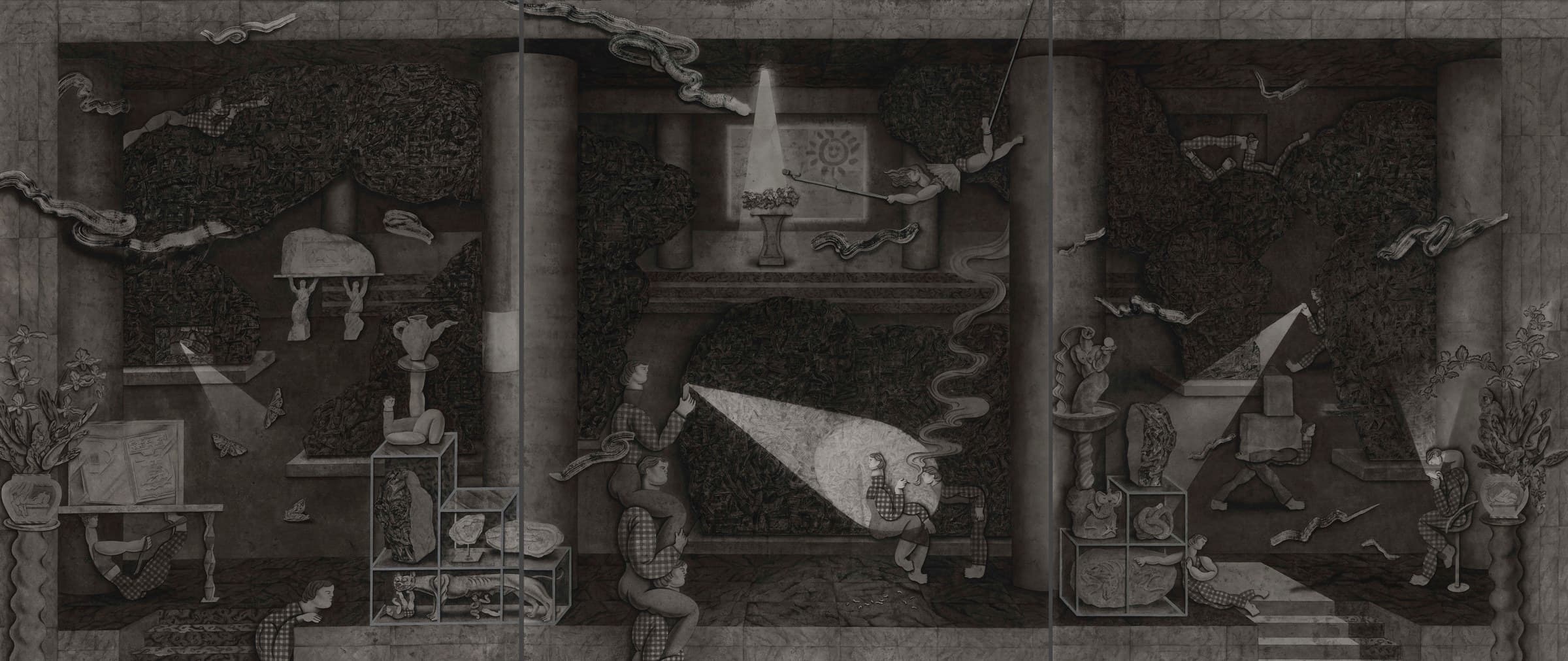
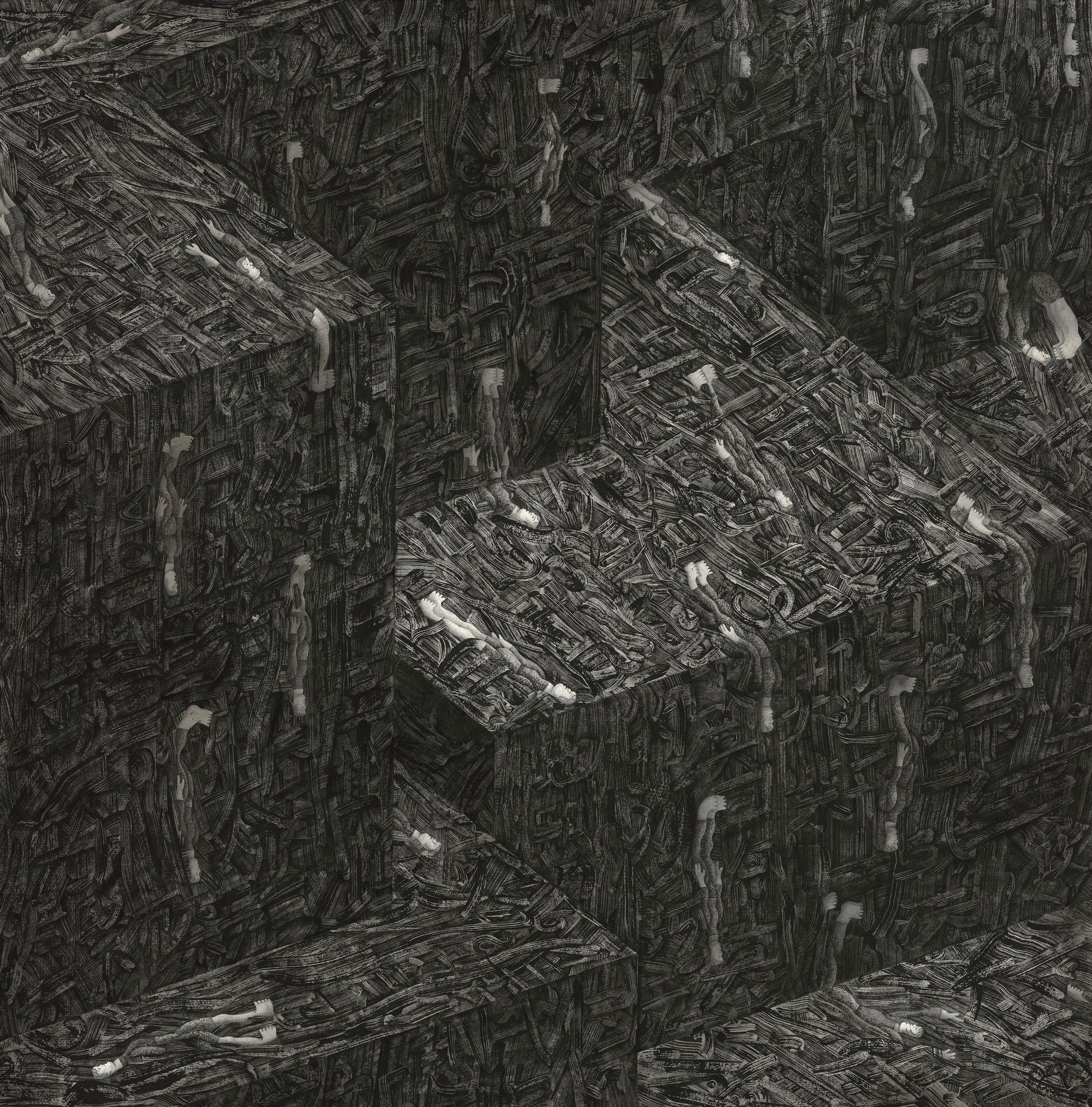
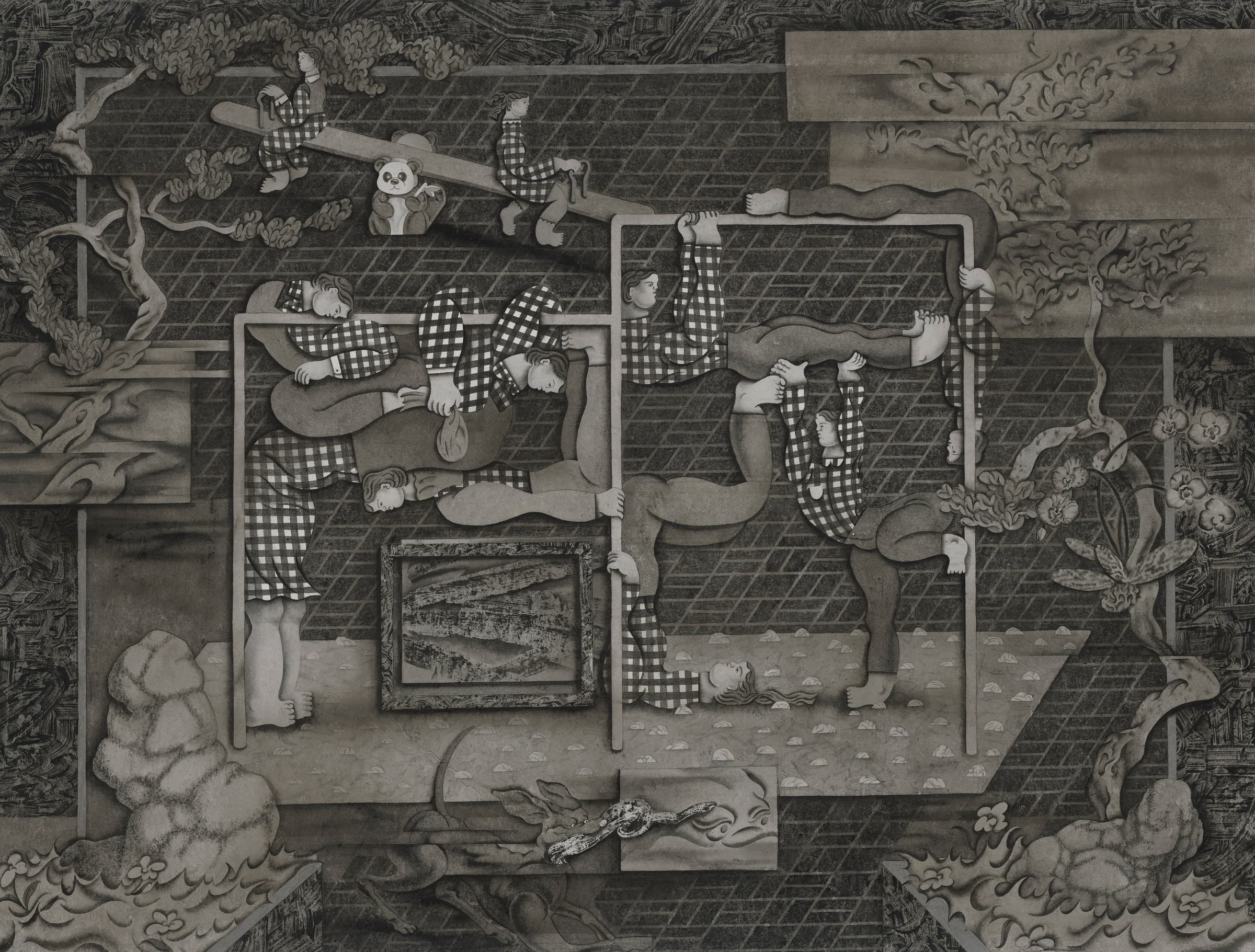
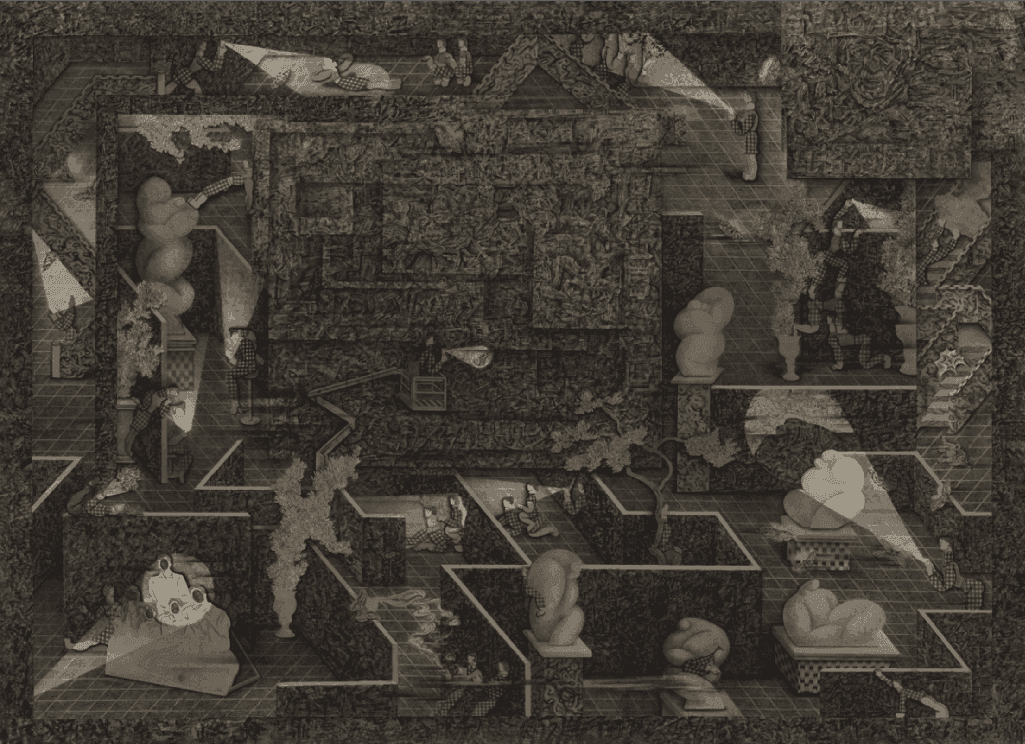
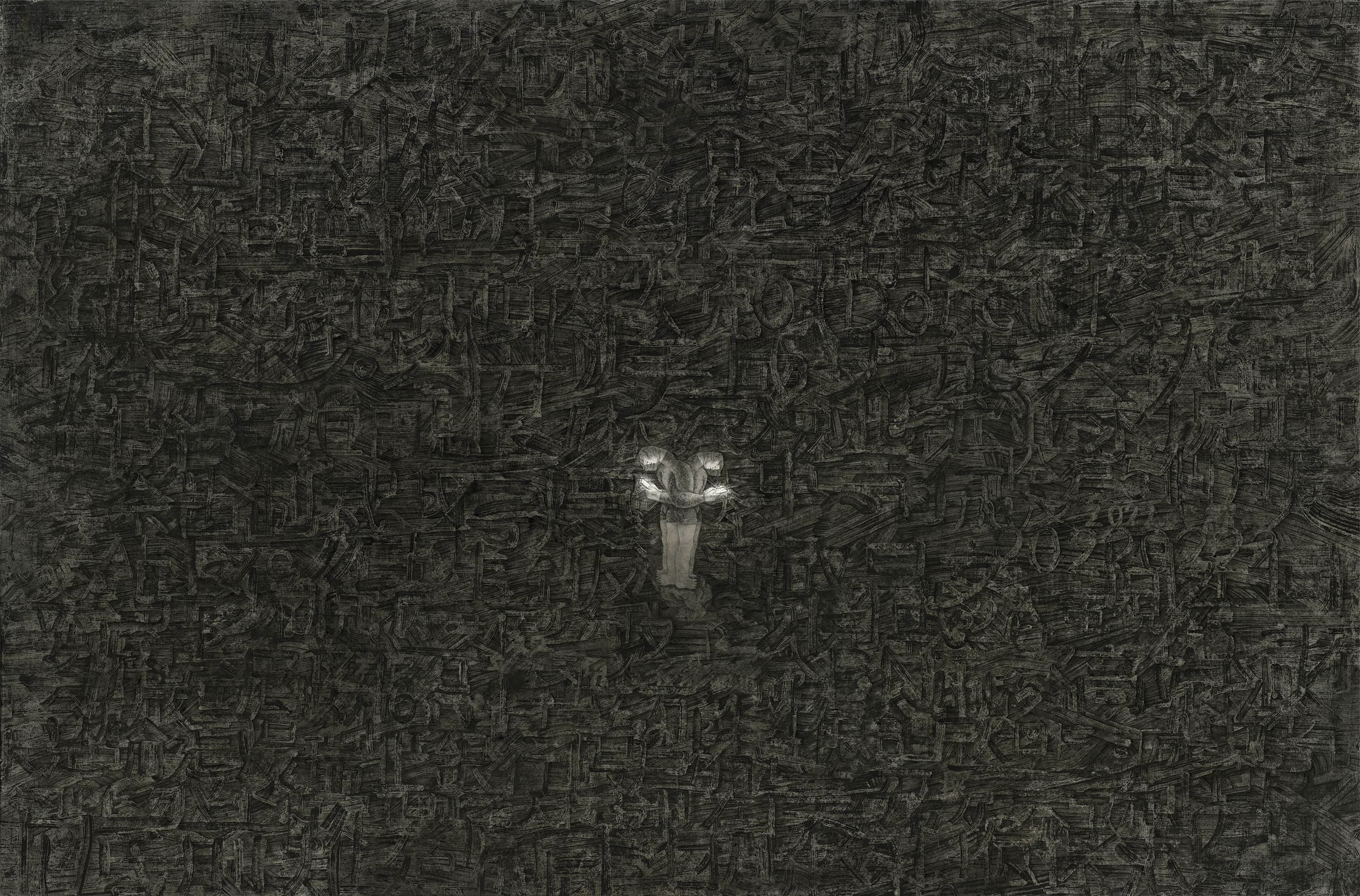
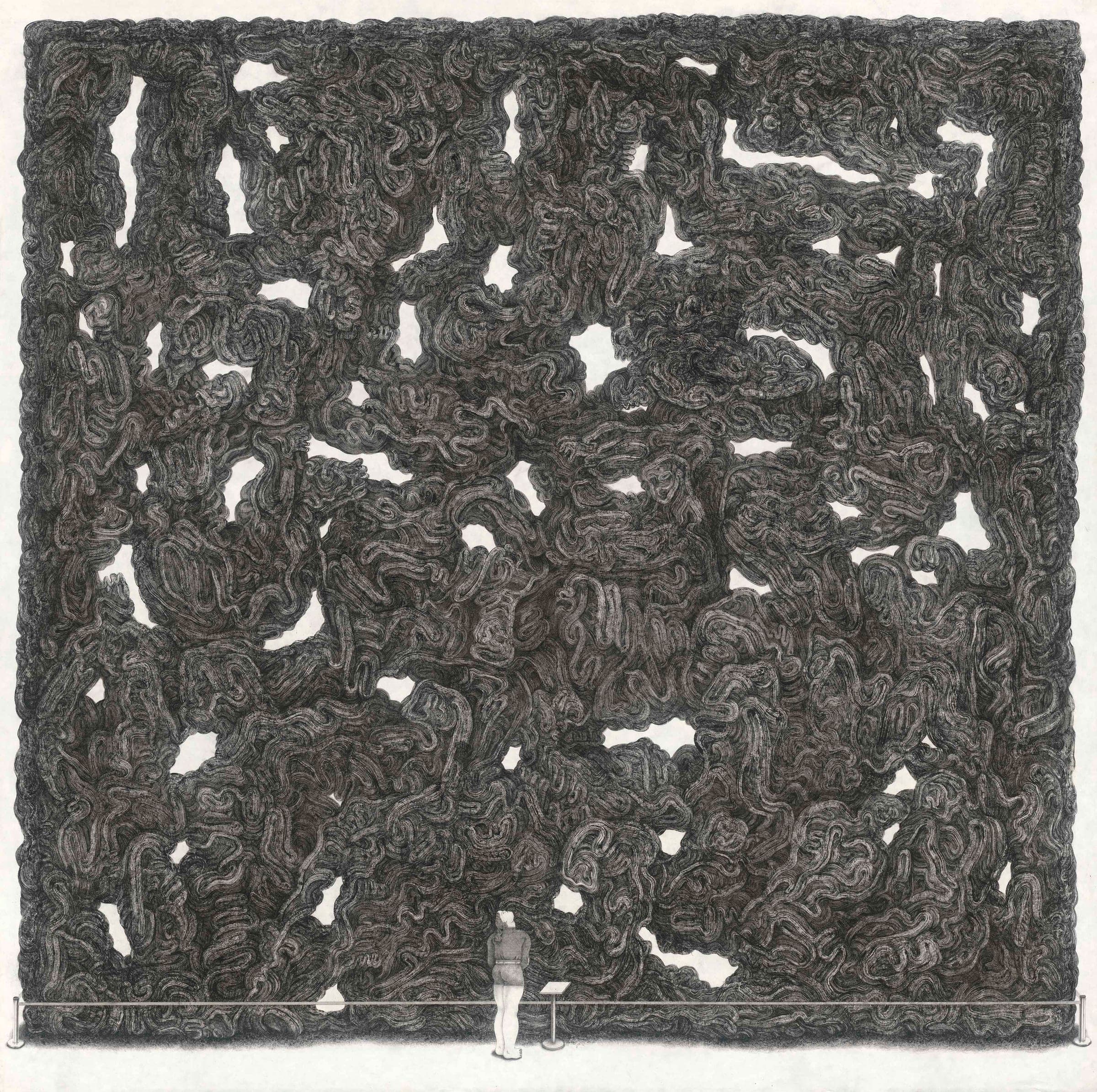
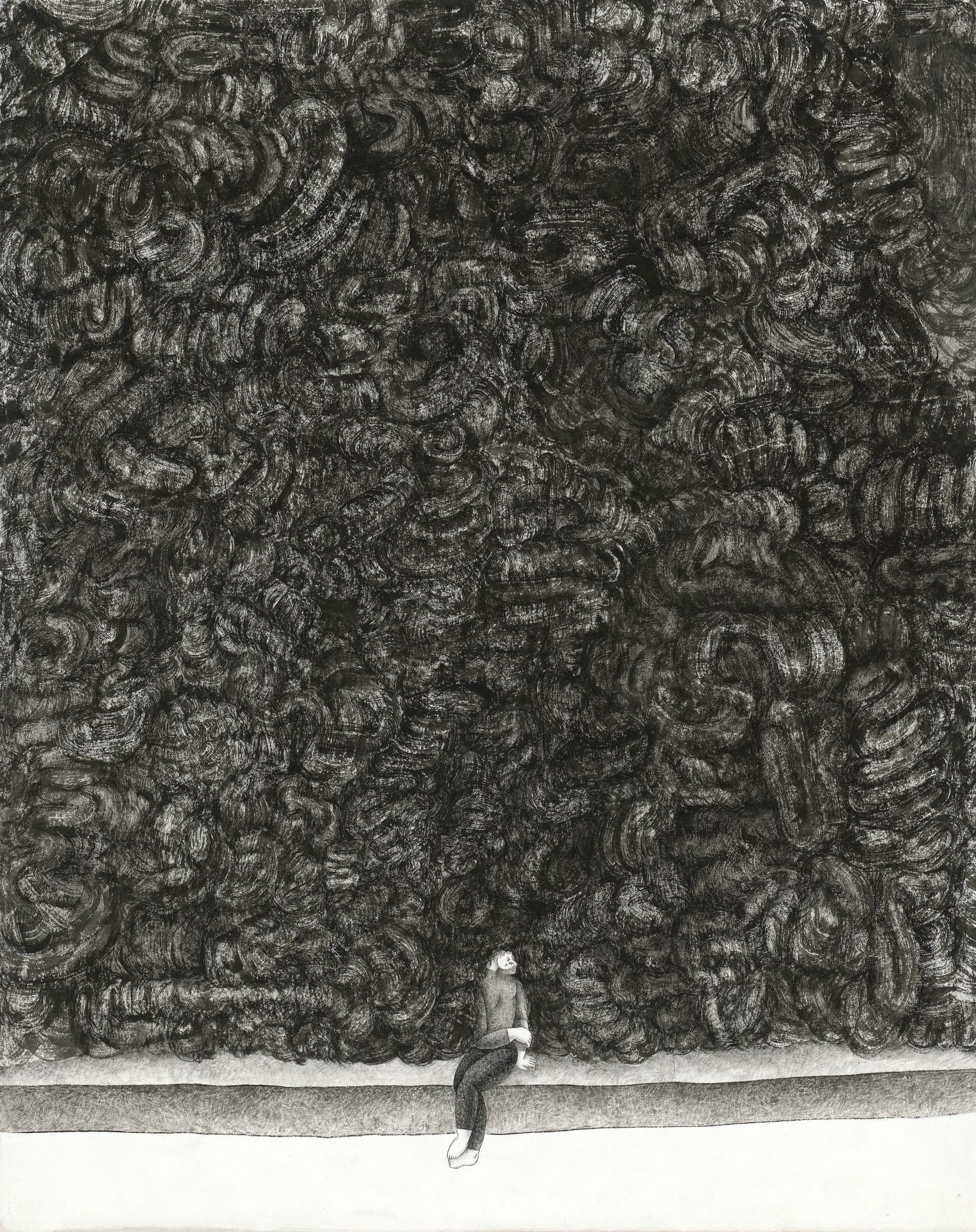
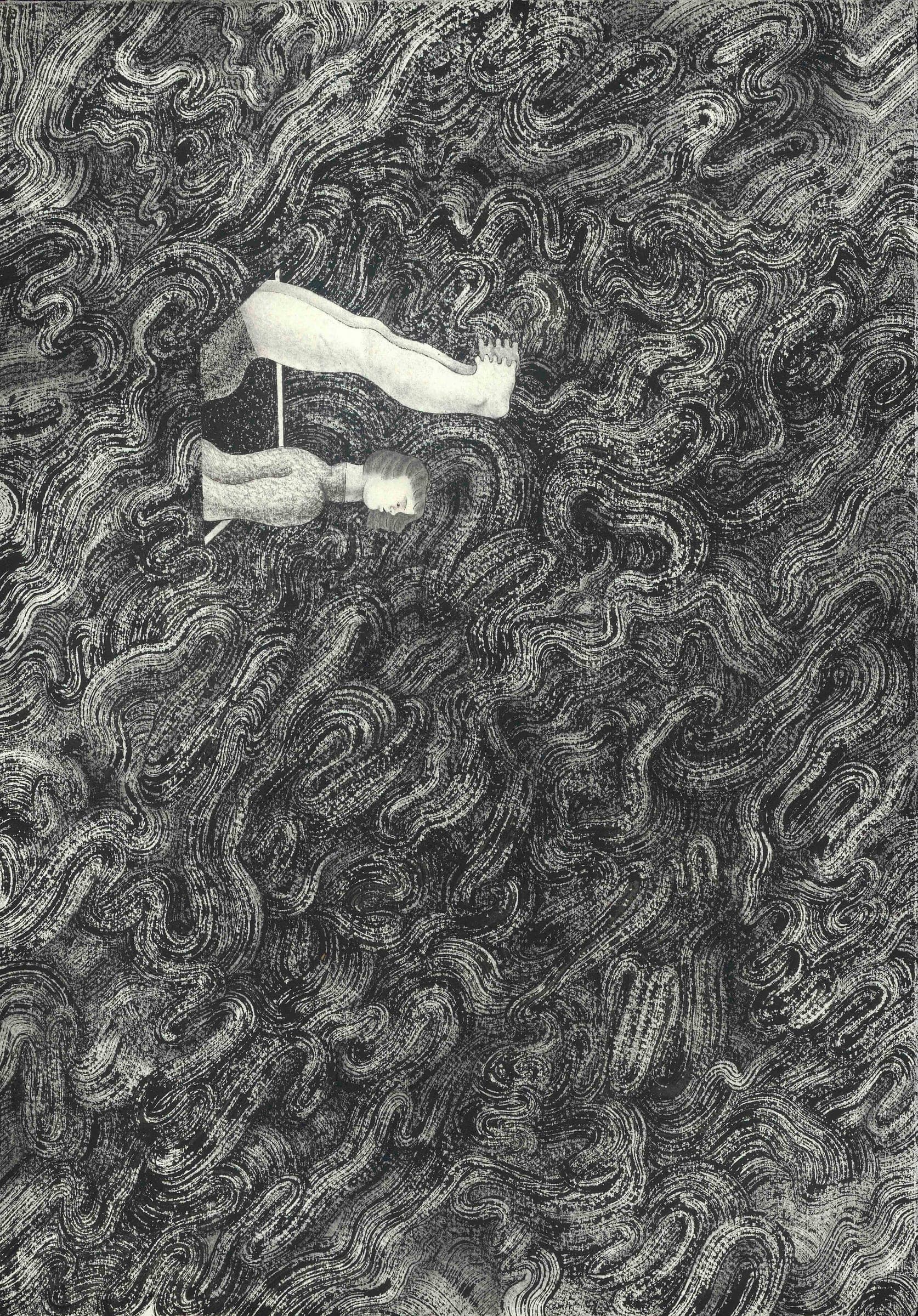
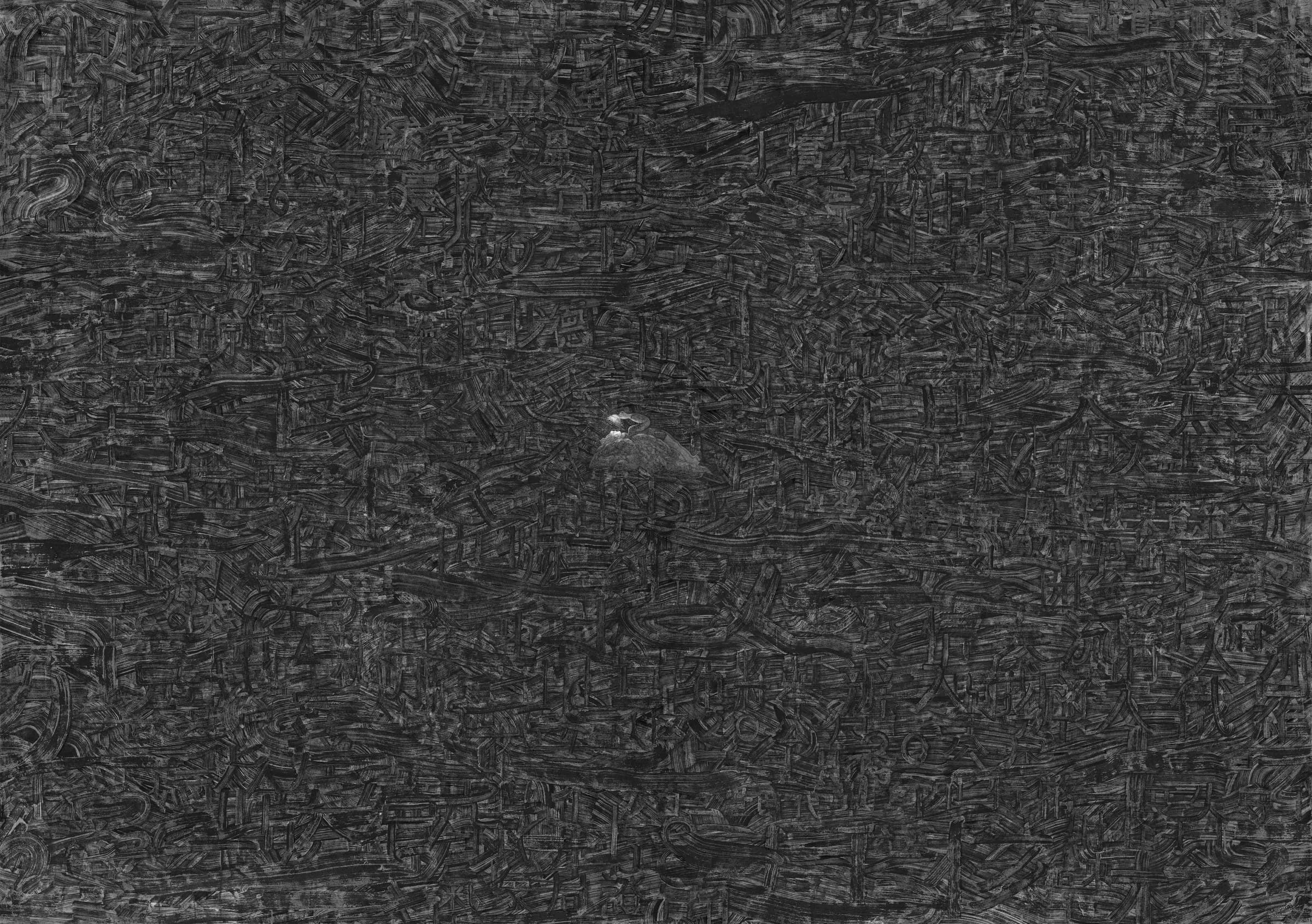
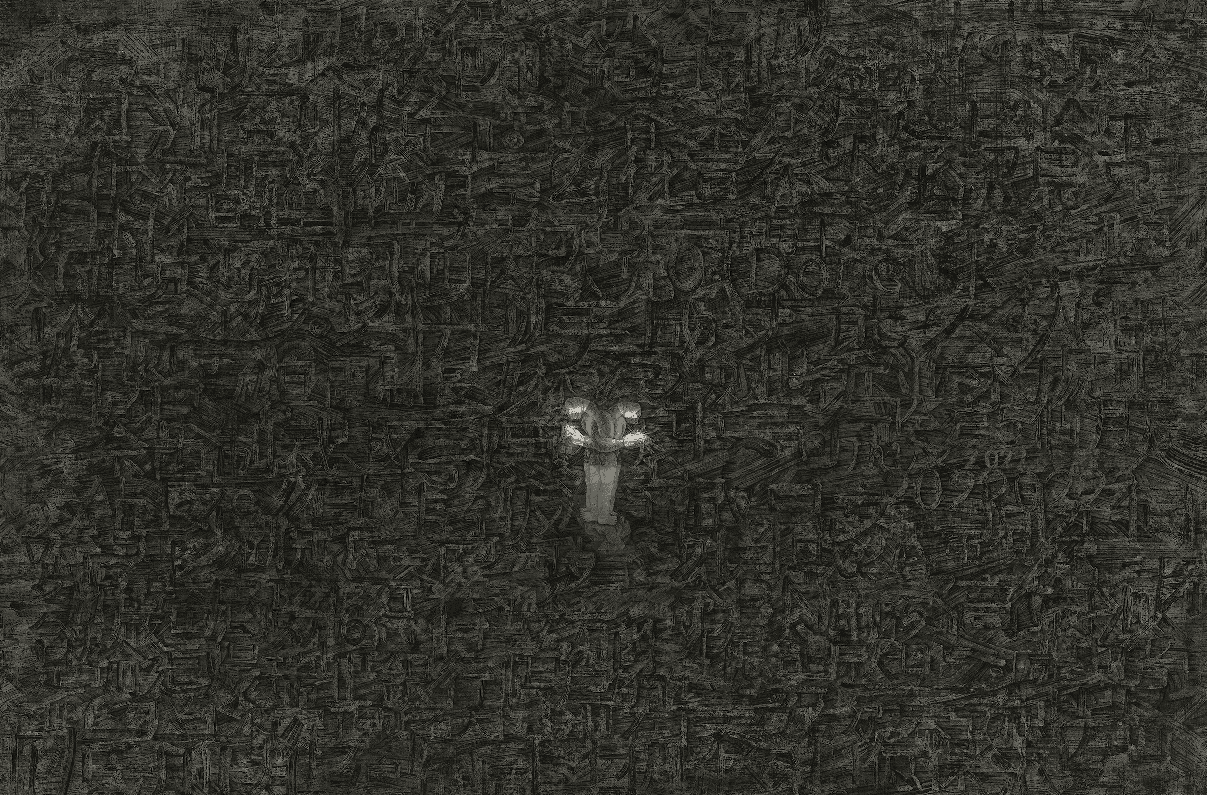
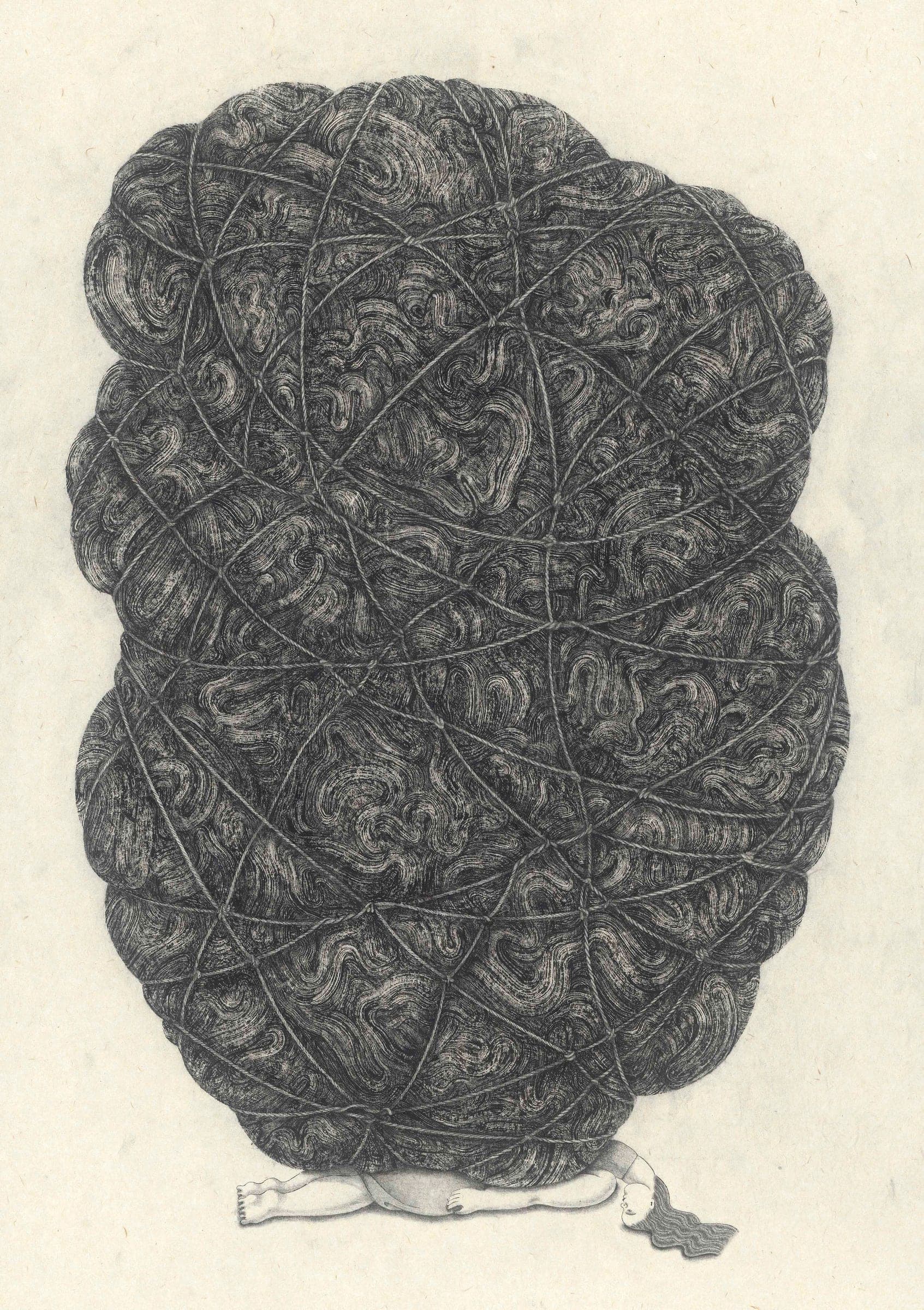
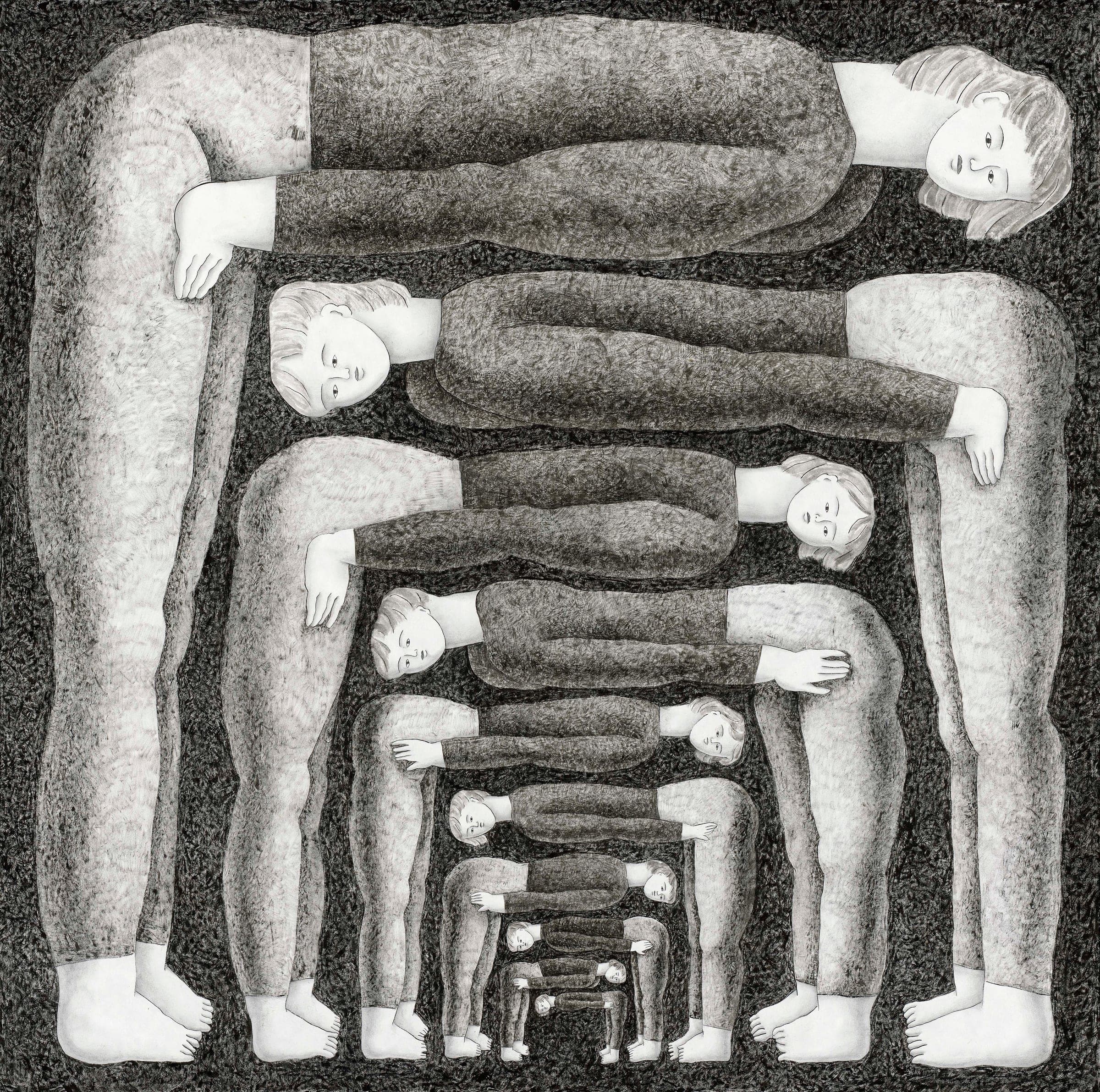
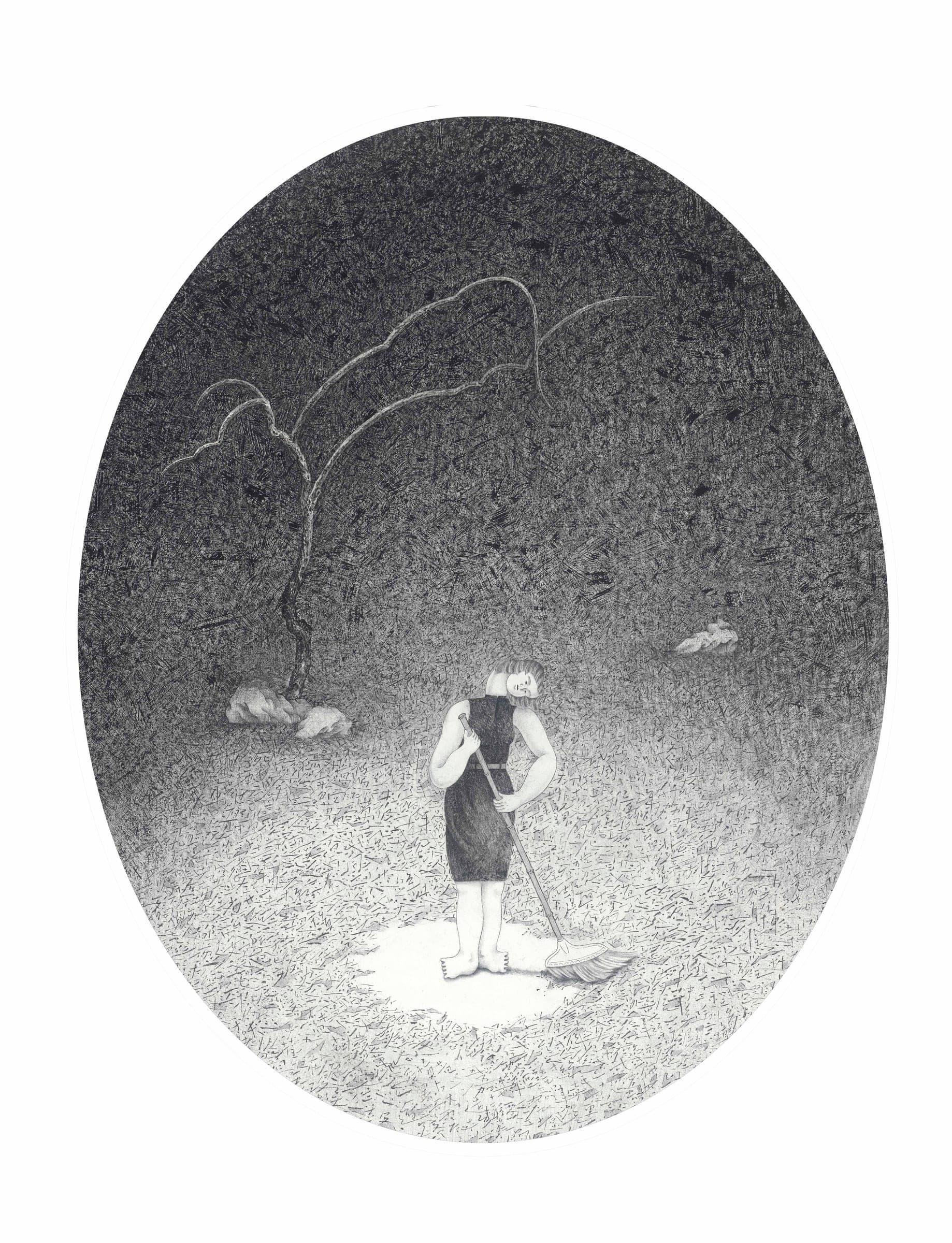
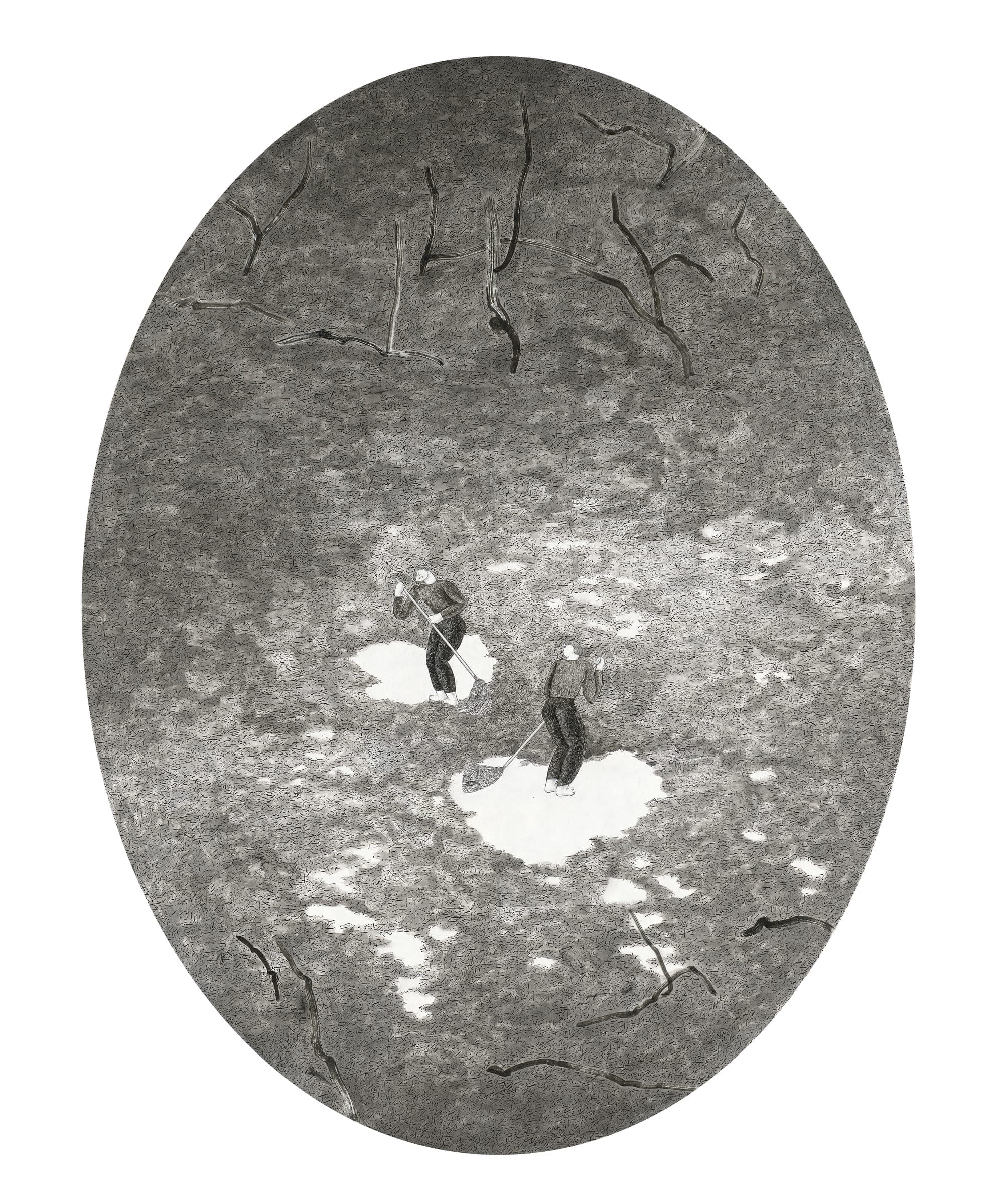
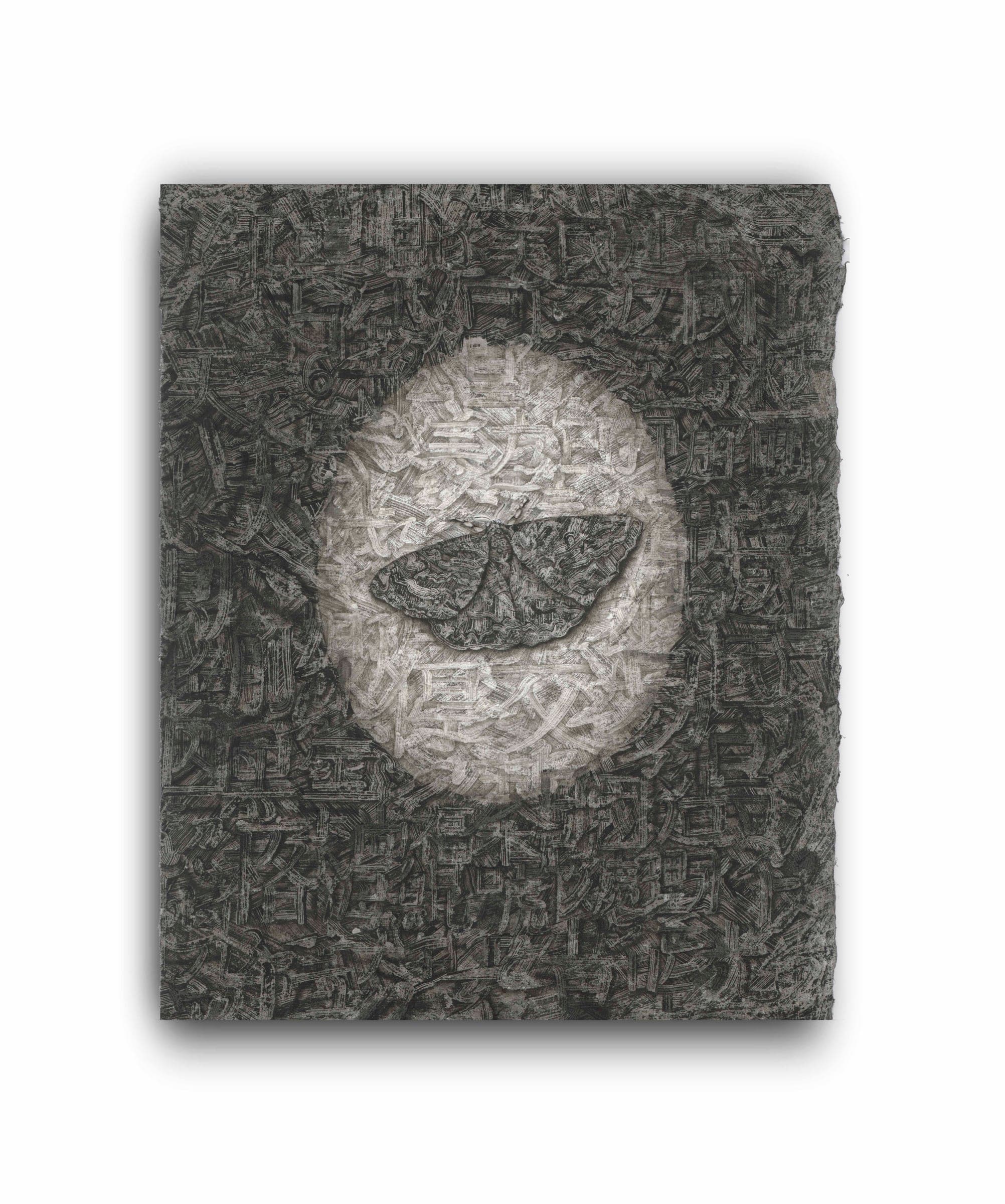
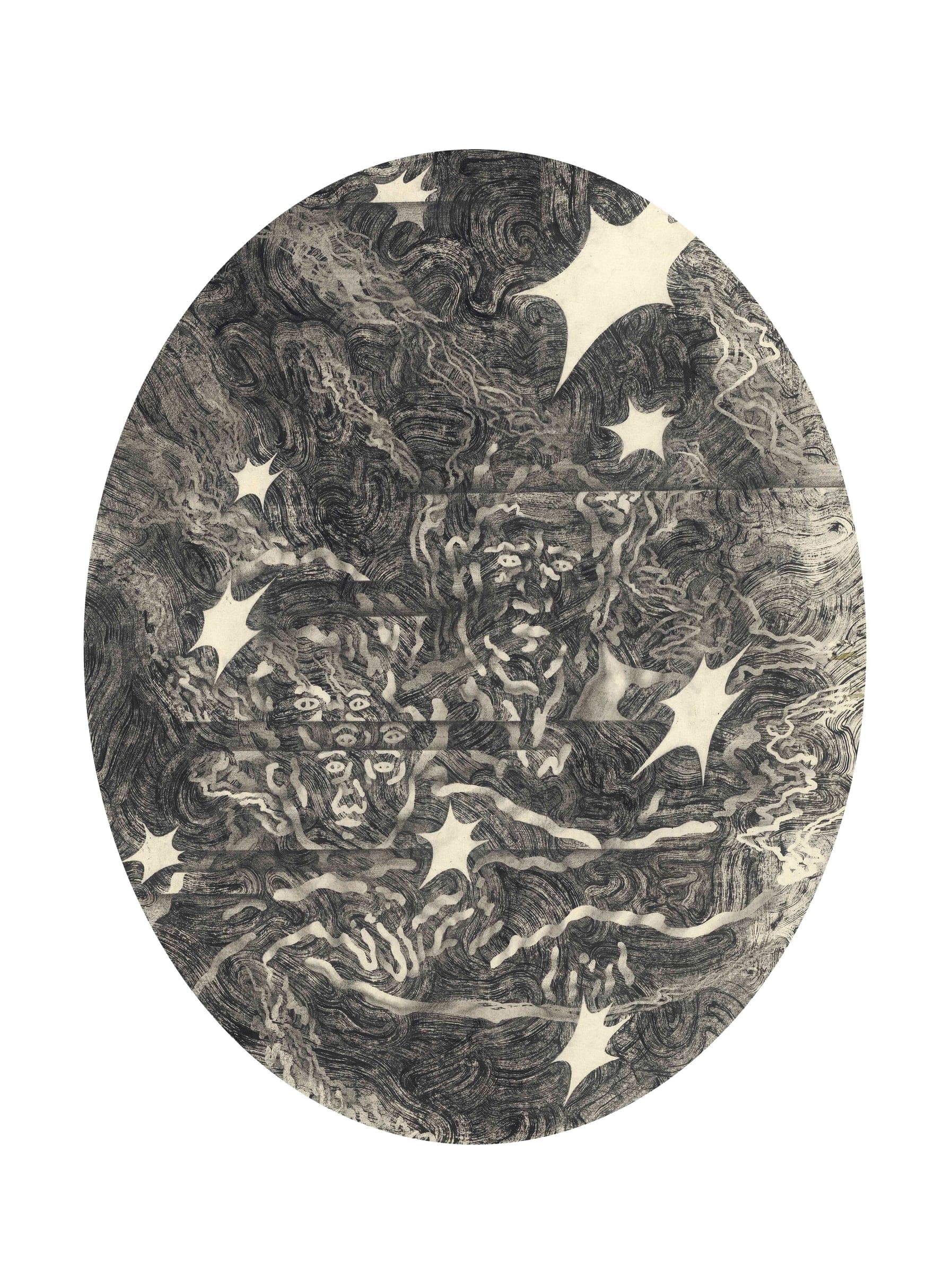
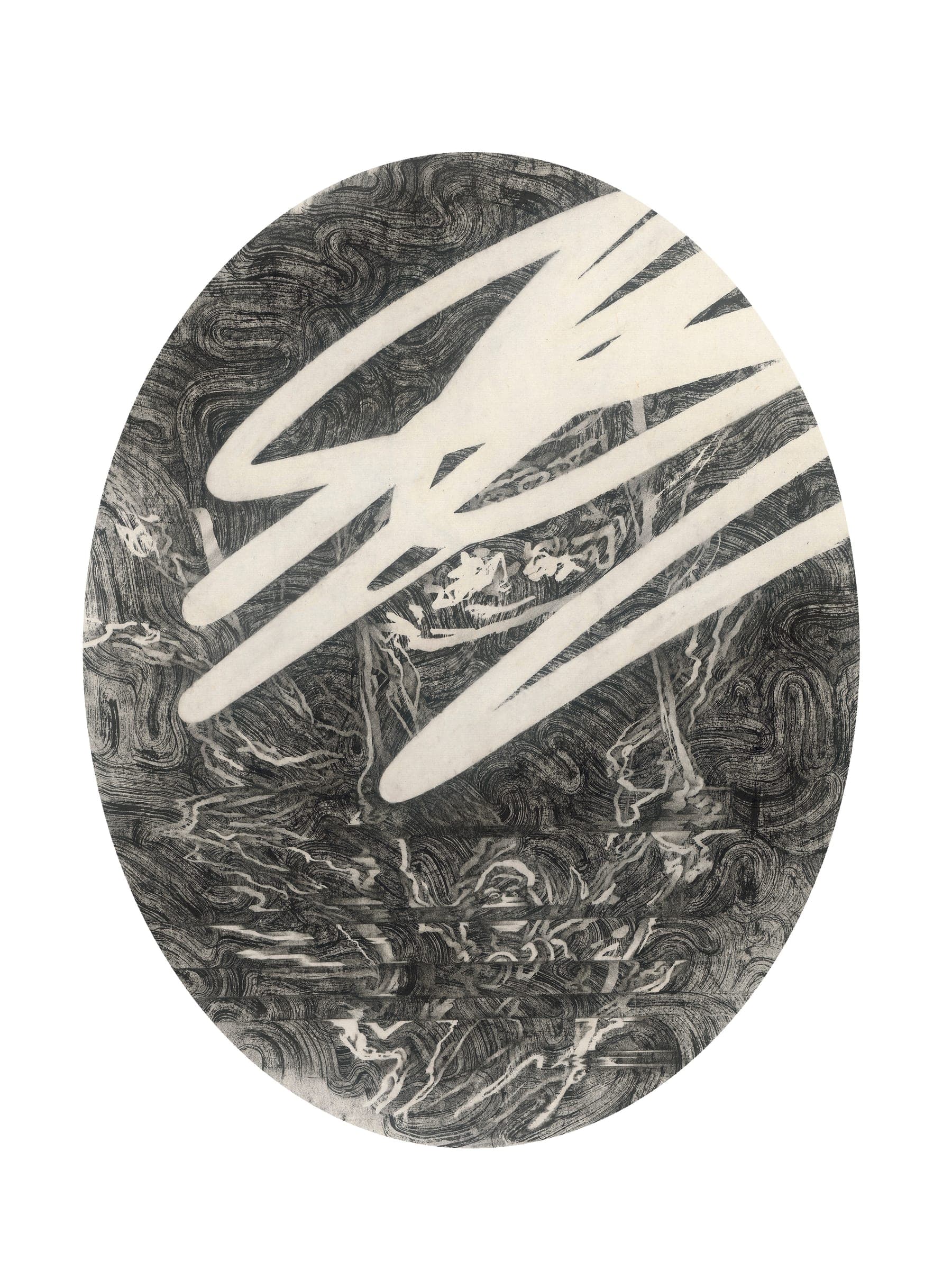
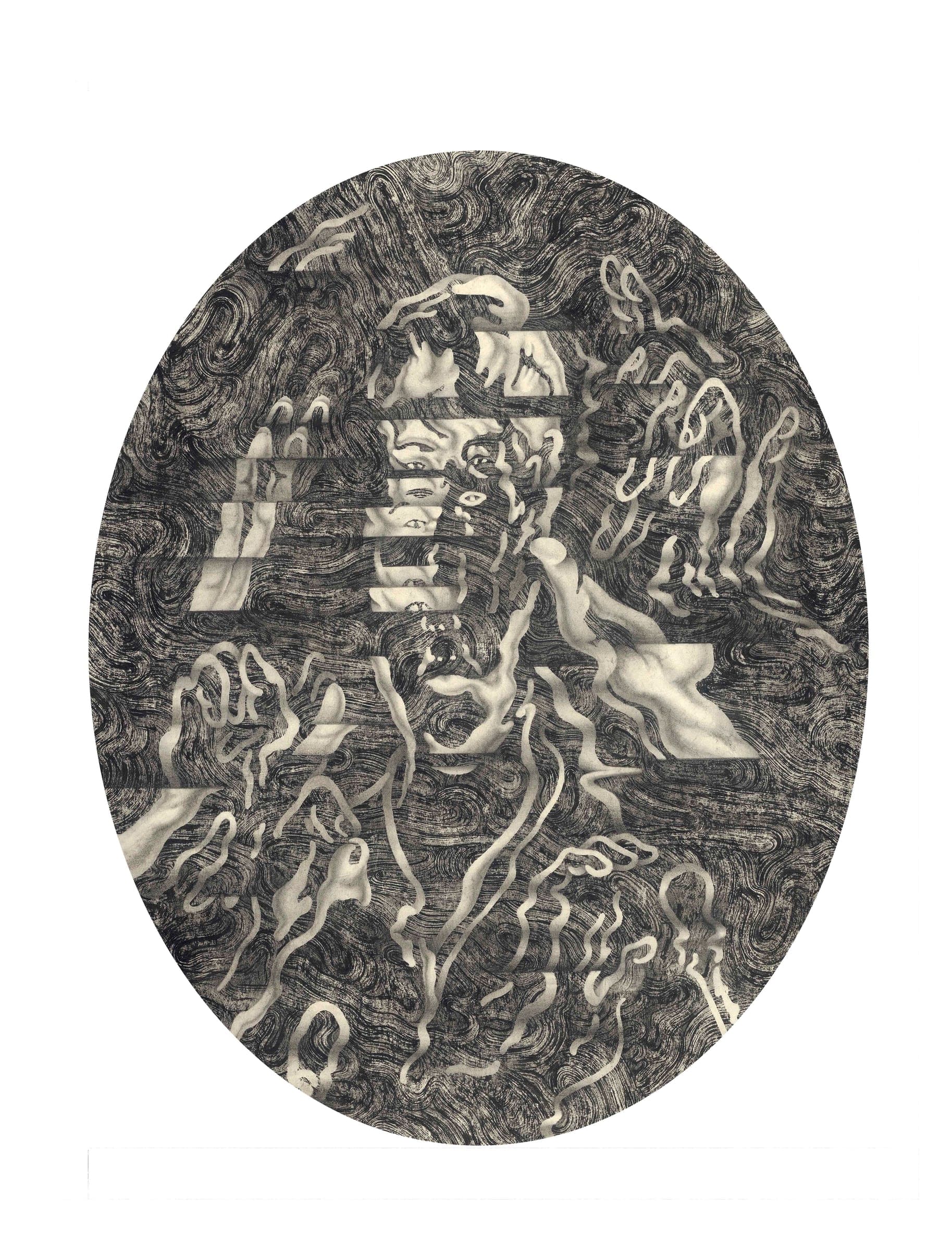
《殘章與斷片 Fragments and Remnants》是顏妤庭逐步建構個人皴法語言的重要系列。自 2018 年以來,他開始將日常新聞、熱門事件與社會訊息帶入水墨繪畫之中,透過反覆書寫、覆蓋與拆解,使文字逐漸脫離原本傳遞訊息的功能,轉化為畫面中的筆觸、肌理與視覺痕跡。
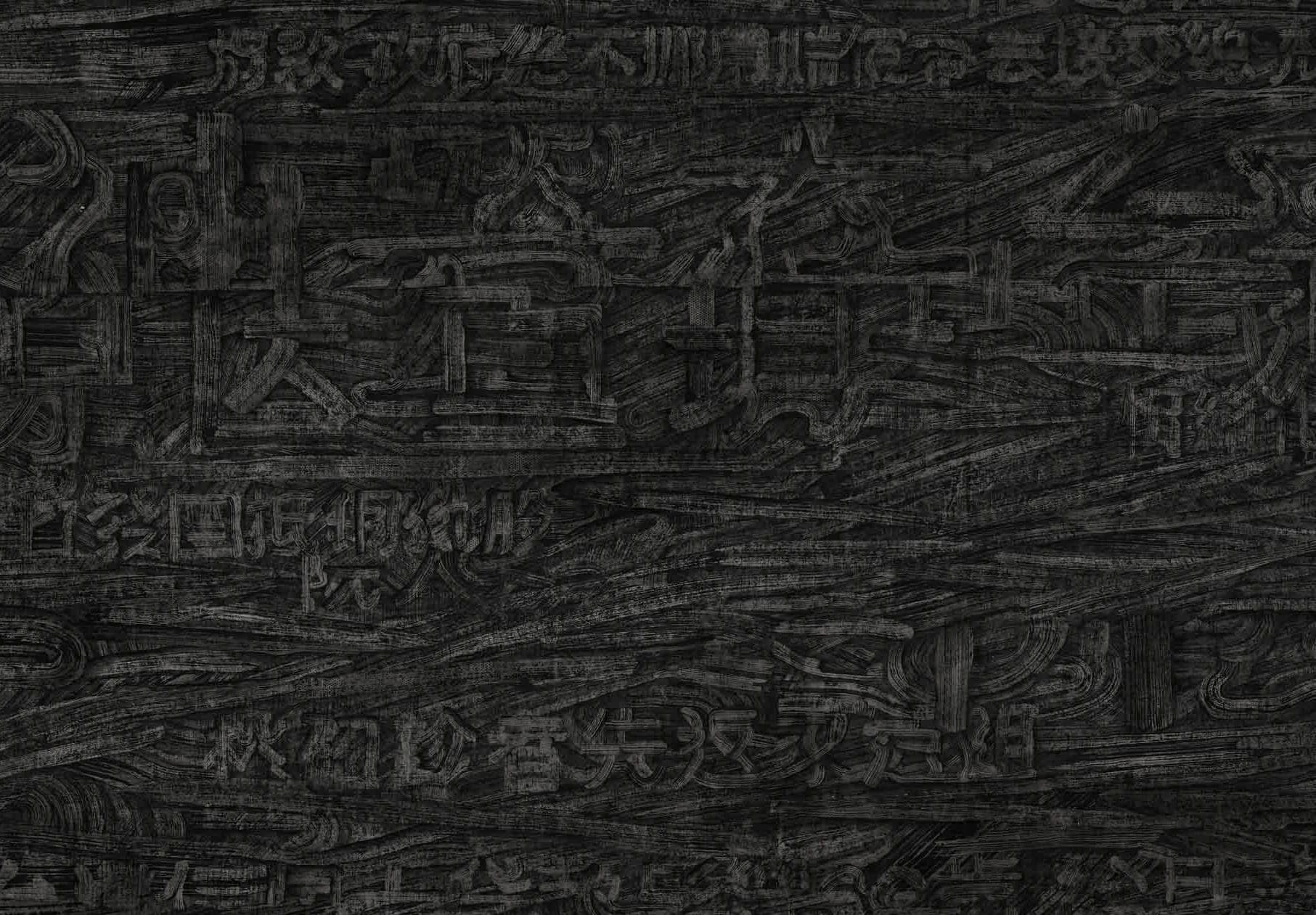
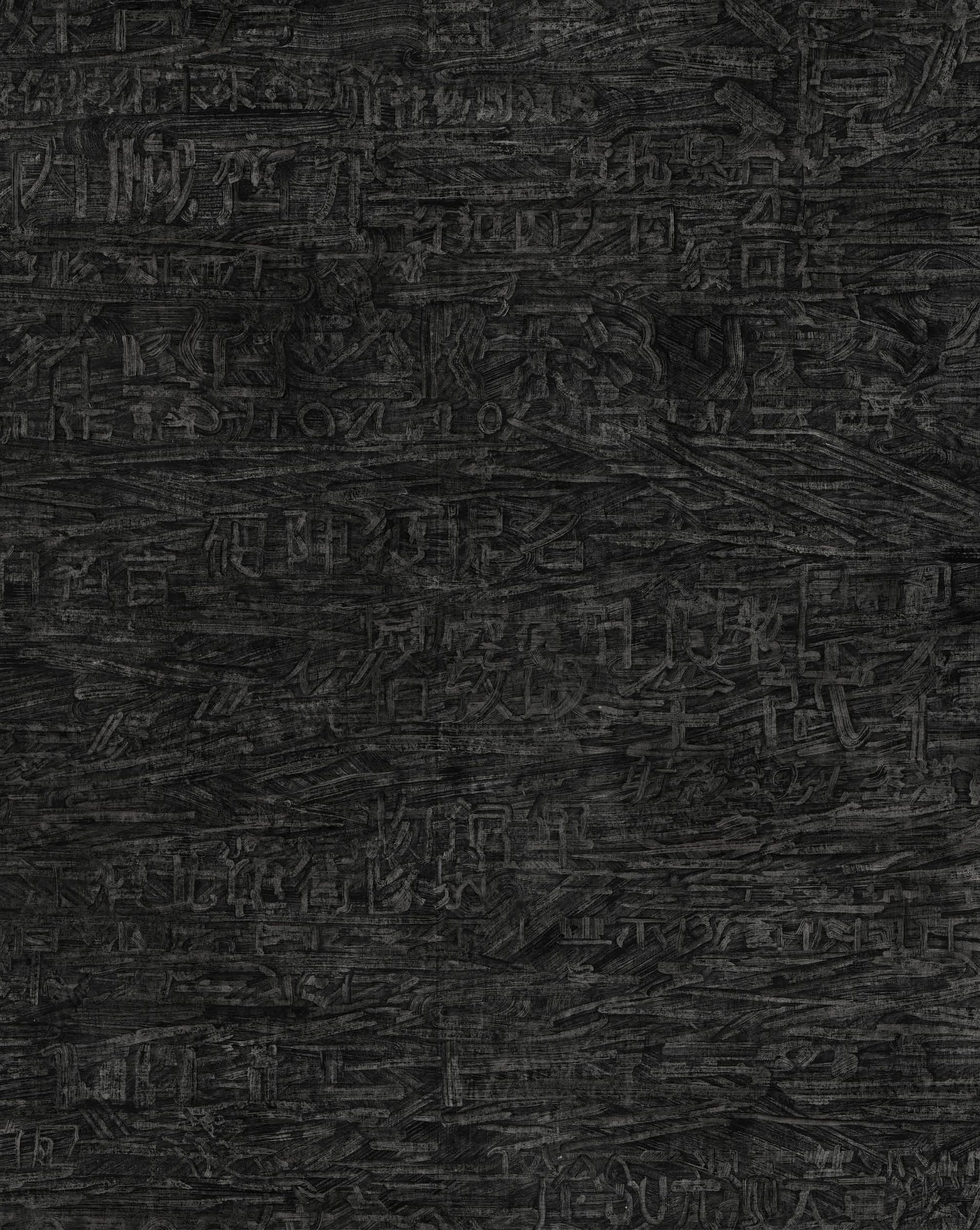
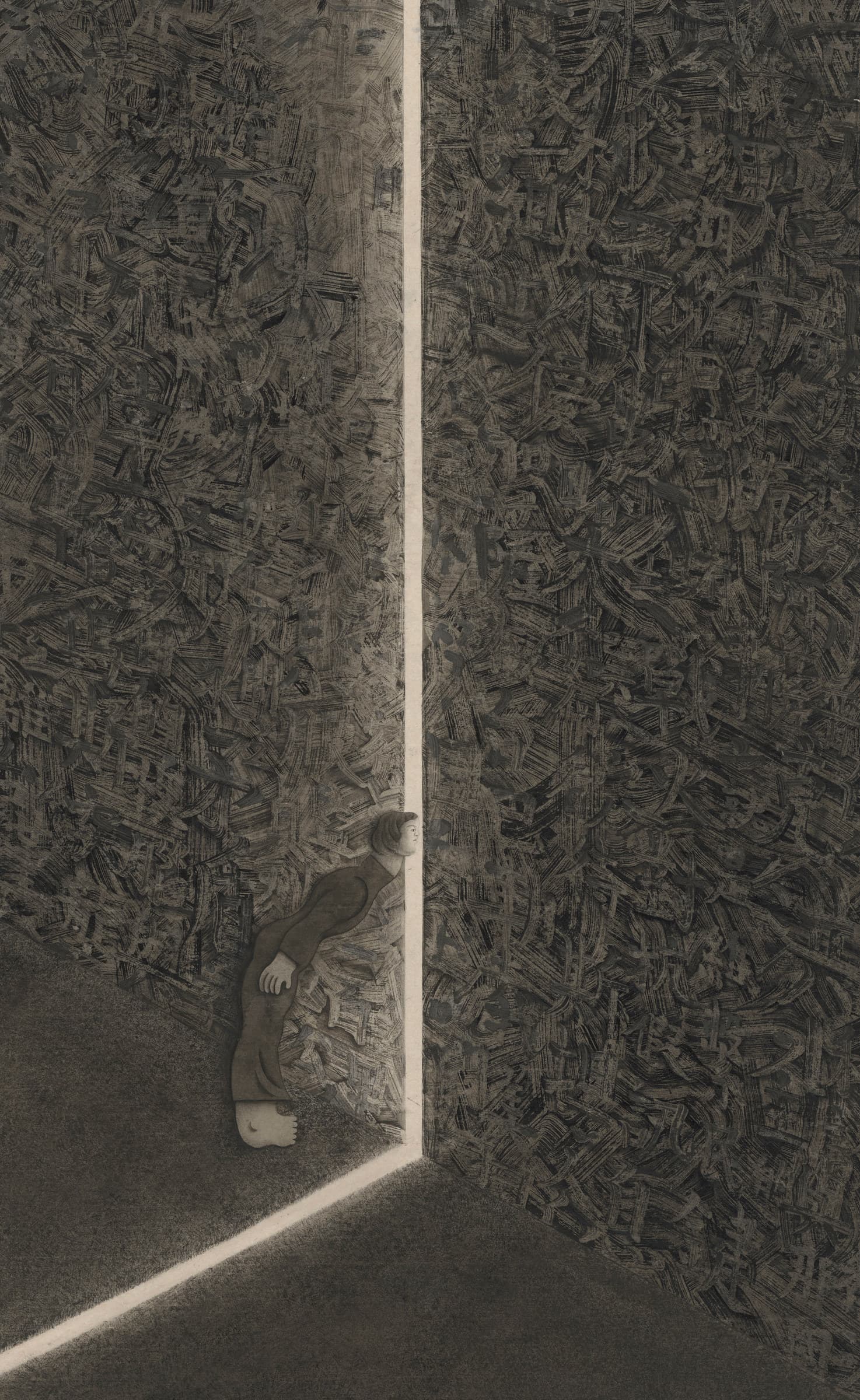
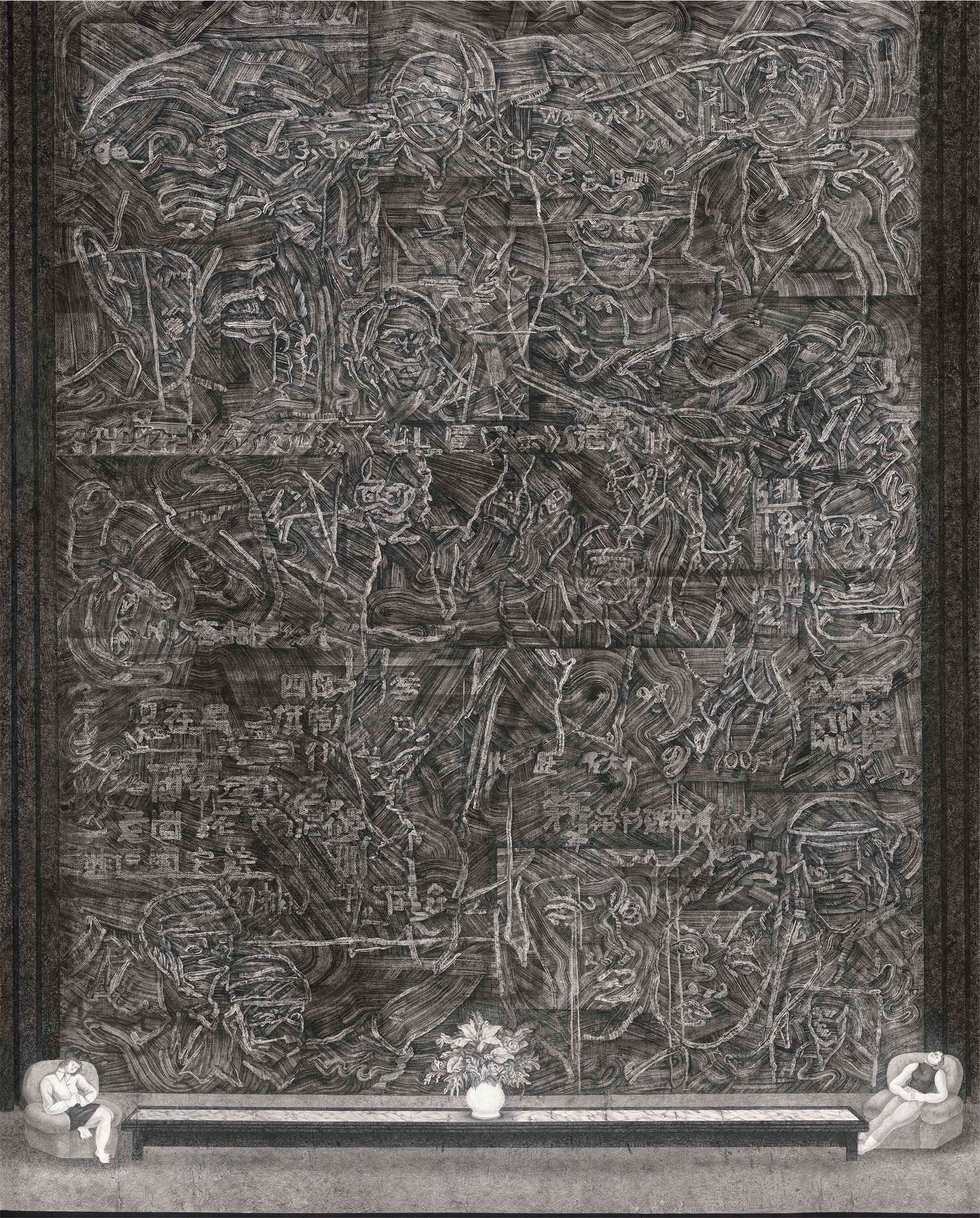
在這個系列中,皴法脫離了傳統山水中描繪山石表面的功能,轉向處理資訊、時間與記憶的方法。新聞文字在層層書寫與墨色交疊之中逐漸失去可讀性,有些筆畫依然保有清晰的輪廓,有些則被覆蓋、磨損,成為模糊而斷續的殘影。這些痕跡既像石刻風化後殘留下來的紋理,也像事件在時間中被記憶保存、遮蔽與改寫後留下的片段。
「殘章」與「斷片」指向皴法形成的過程:文字被拆開,訊息被覆蓋,事件被轉化為局部的痕跡。顏妤庭以不同的途徑回溯水墨繪畫中「書畫同源」的傳統,使書寫不僅承載文字內容,也成為生成畫面肌理的方法。那些被反覆抄寫的新聞標題,原本來自短暫聚集的大眾注意力;當事件熱度消退,留下的則是被擷取、重複、覆蓋後的新聞殘餘物。它們在畫面中無法再被完整閱讀,卻仍以筆畫、墨痕與層層殘影的形式存在,讓皴法逐漸從傳統山水的程式化筆法,轉向一種承載當代資訊、集體感知與心理狀態的繪畫語言。
Fragments and Remnants is an important series in which Yu-Ting Yen gradually constructs his own language of cunfa. Since 2018, Yen has brought daily news, trending events, and social information into ink painting. Through repeated writing, covering, and dismantling, words gradually move away from their original function of transmitting information, transforming instead into brushstrokes, textures, and visual traces within the painting.
In this series, cunfa moves beyond its traditional function of depicting the surfaces of mountains and rocks in landscape painting, and becomes a method for working with information, time, and memory. As news text is layered through writing and ink, it gradually loses its readability. Some strokes still retain clear outlines, while others are covered and worn away, becoming blurred and fragmented afterimages. These traces resemble the textures left behind by weathered stone inscriptions, as well as fragments of events preserved, obscured, and rewritten by memory over time.
The "fragments" and "remnants" in the title point to the process through which this form of cunfa takes shape: words are broken apart, information is covered, and events are transformed into partial traces. Yen revisits the ink painting tradition of "the shared origin of calligraphy and painting" through different approaches, allowing writing not only to carry textual content, but also to generate the texture of the image. The news headlines repeatedly transcribed in these works originally come from moments of briefly gathered public attention. As the intensity surrounding each event fades, what remains are residues of news that have been selected, repeated, and covered over. They can no longer be fully read, yet they continue to exist in the painting as strokes, ink marks, and layered afterimages. Through this process, cunfa gradually shifts from a codified technique of traditional landscape painting into a painterly language that carries contemporary information, collective perception, and psychological states.