Forgettable Grief
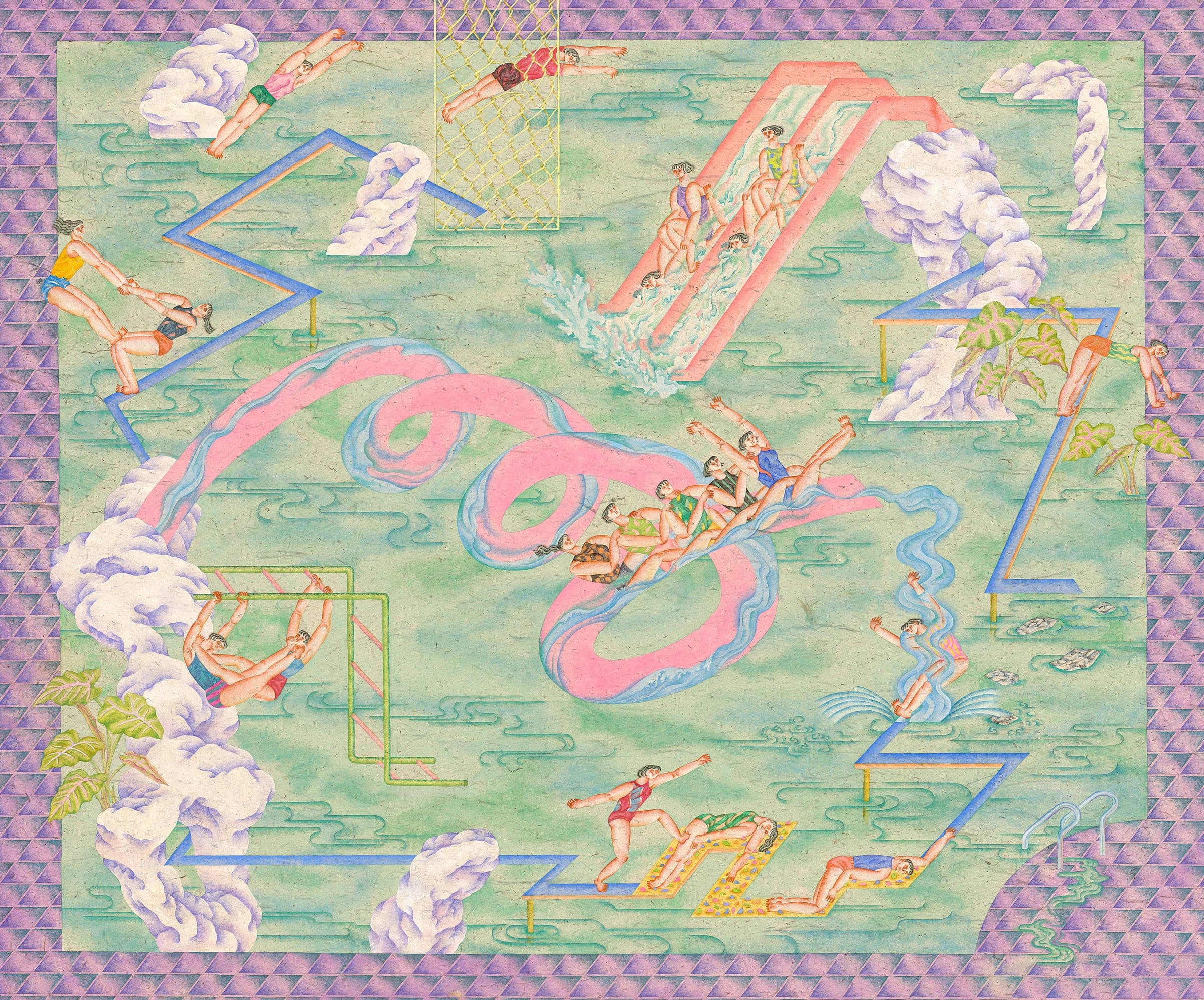
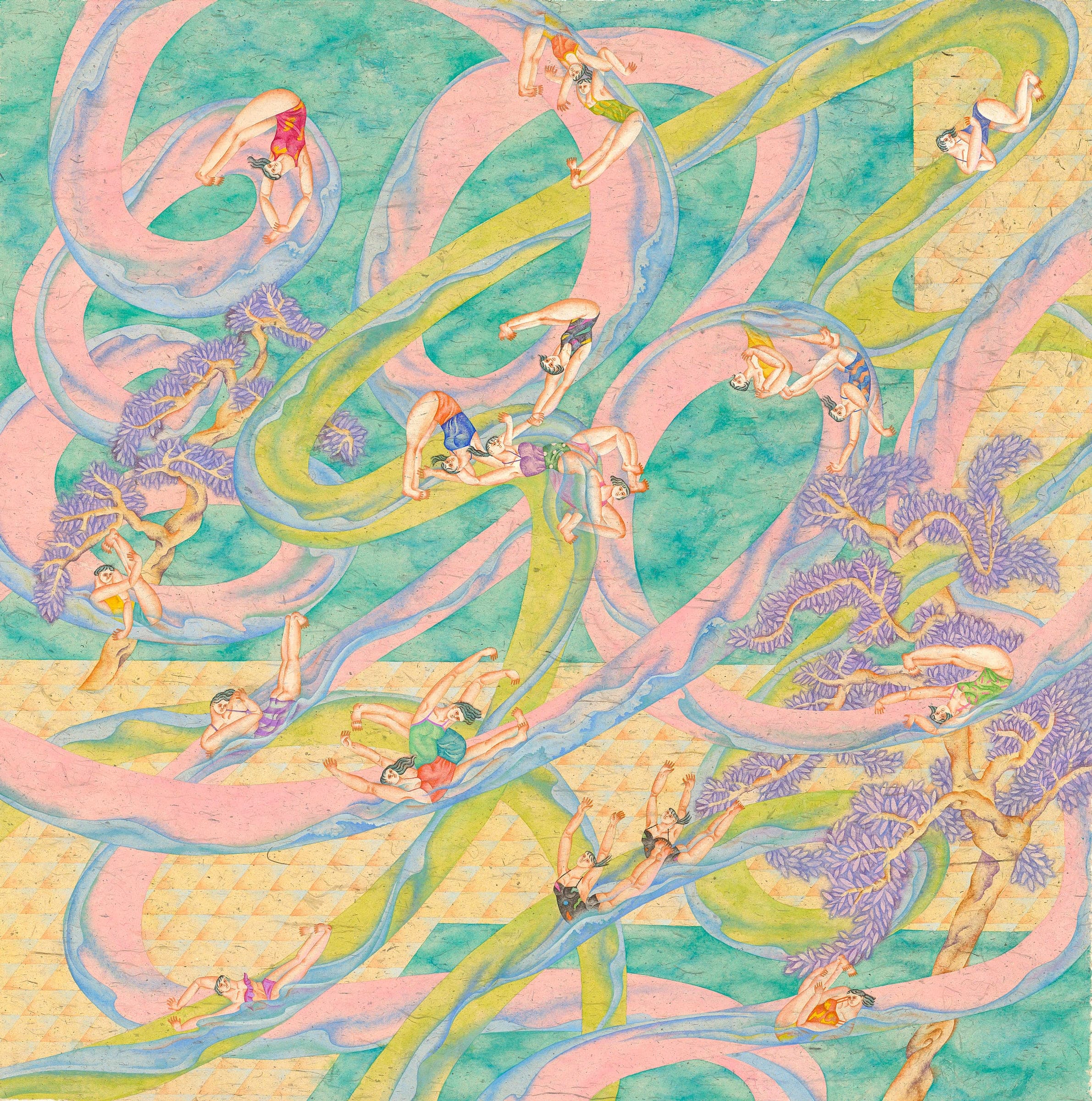
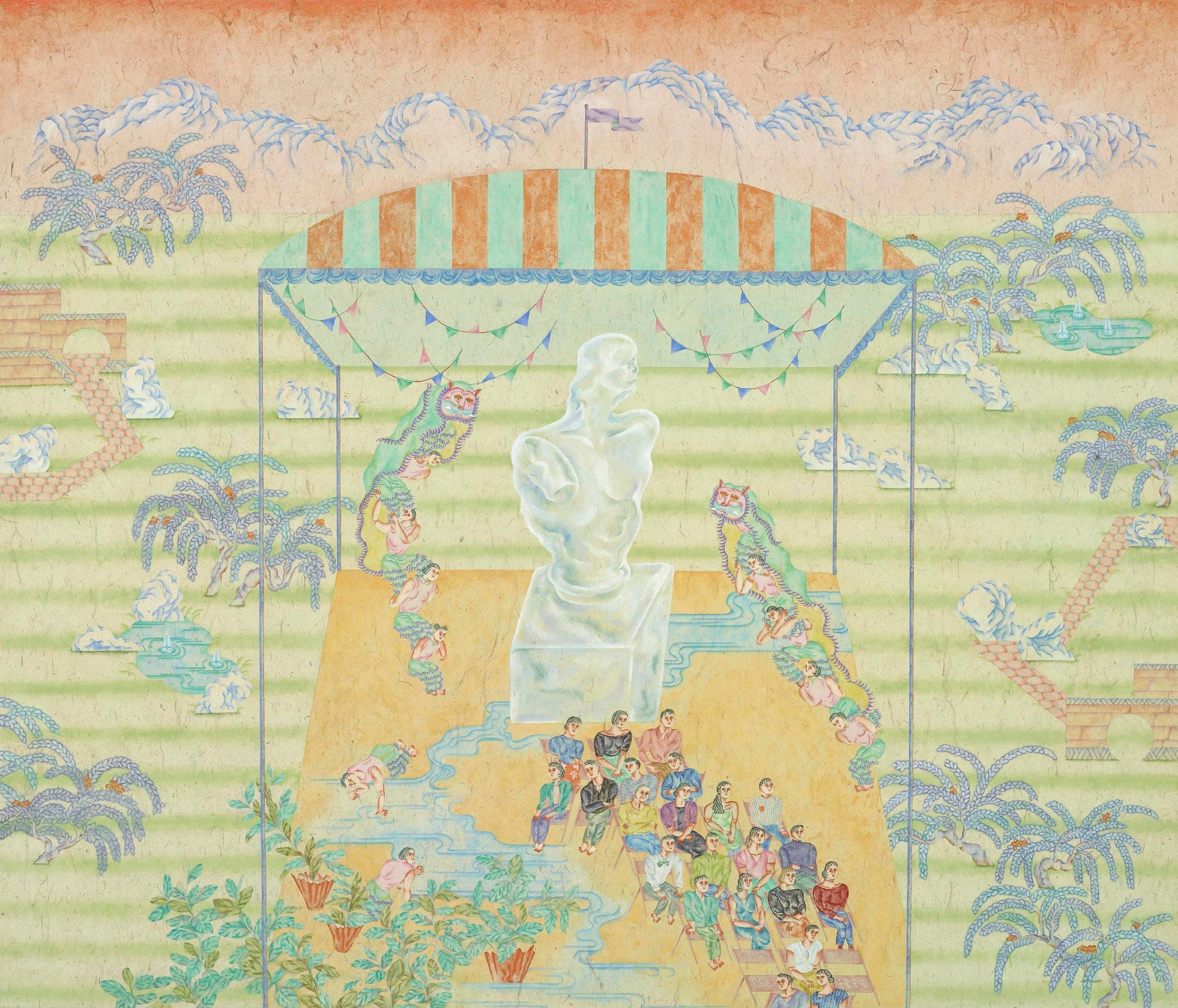
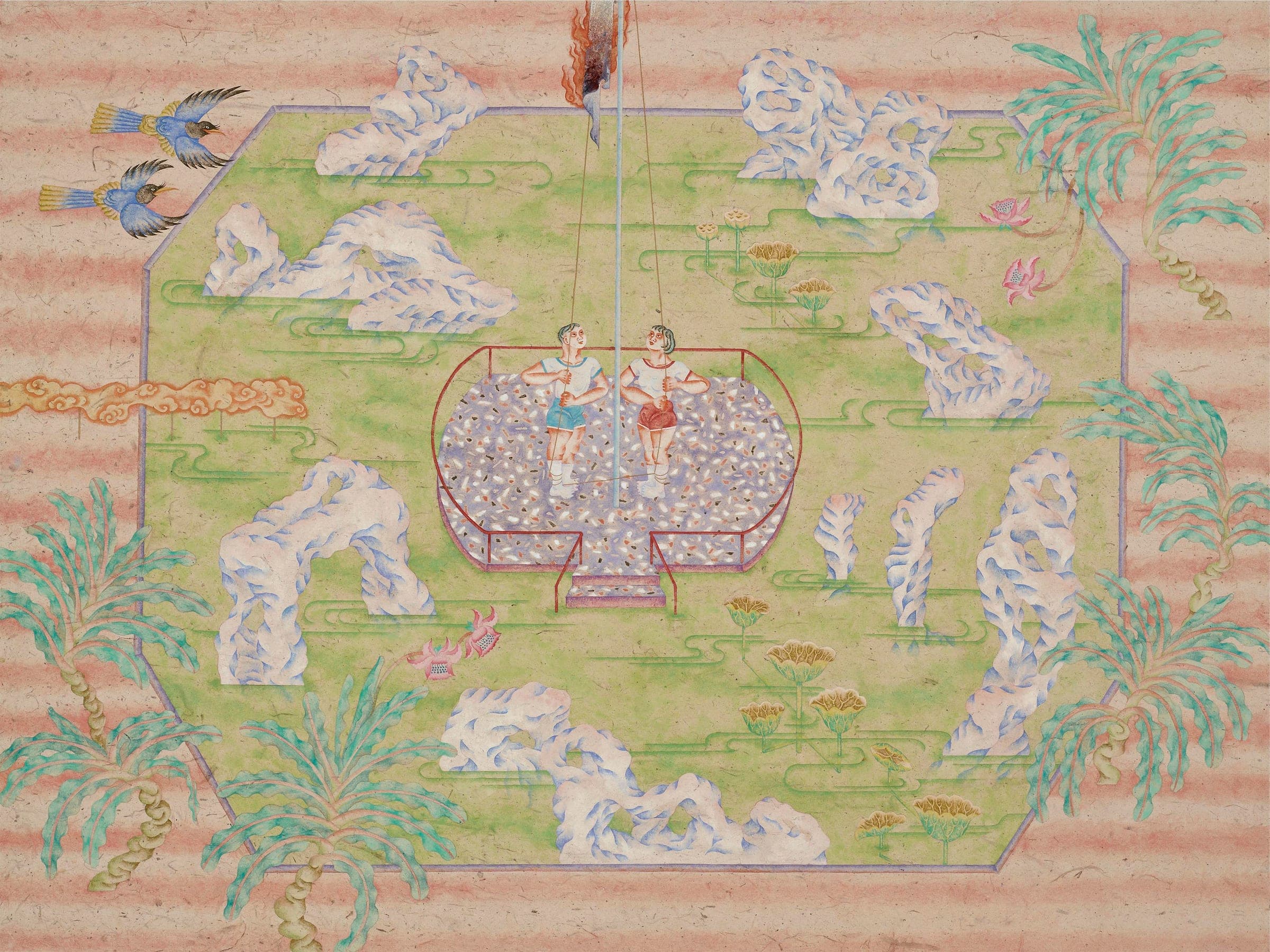
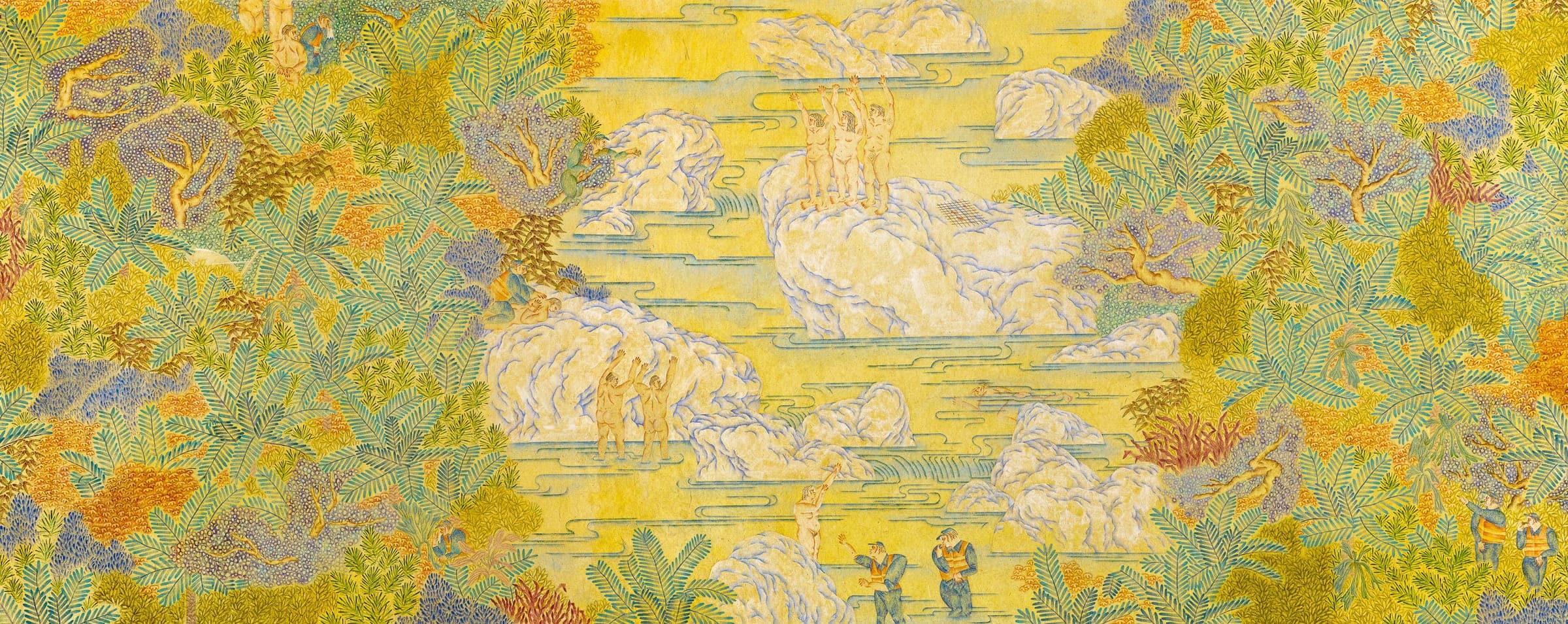
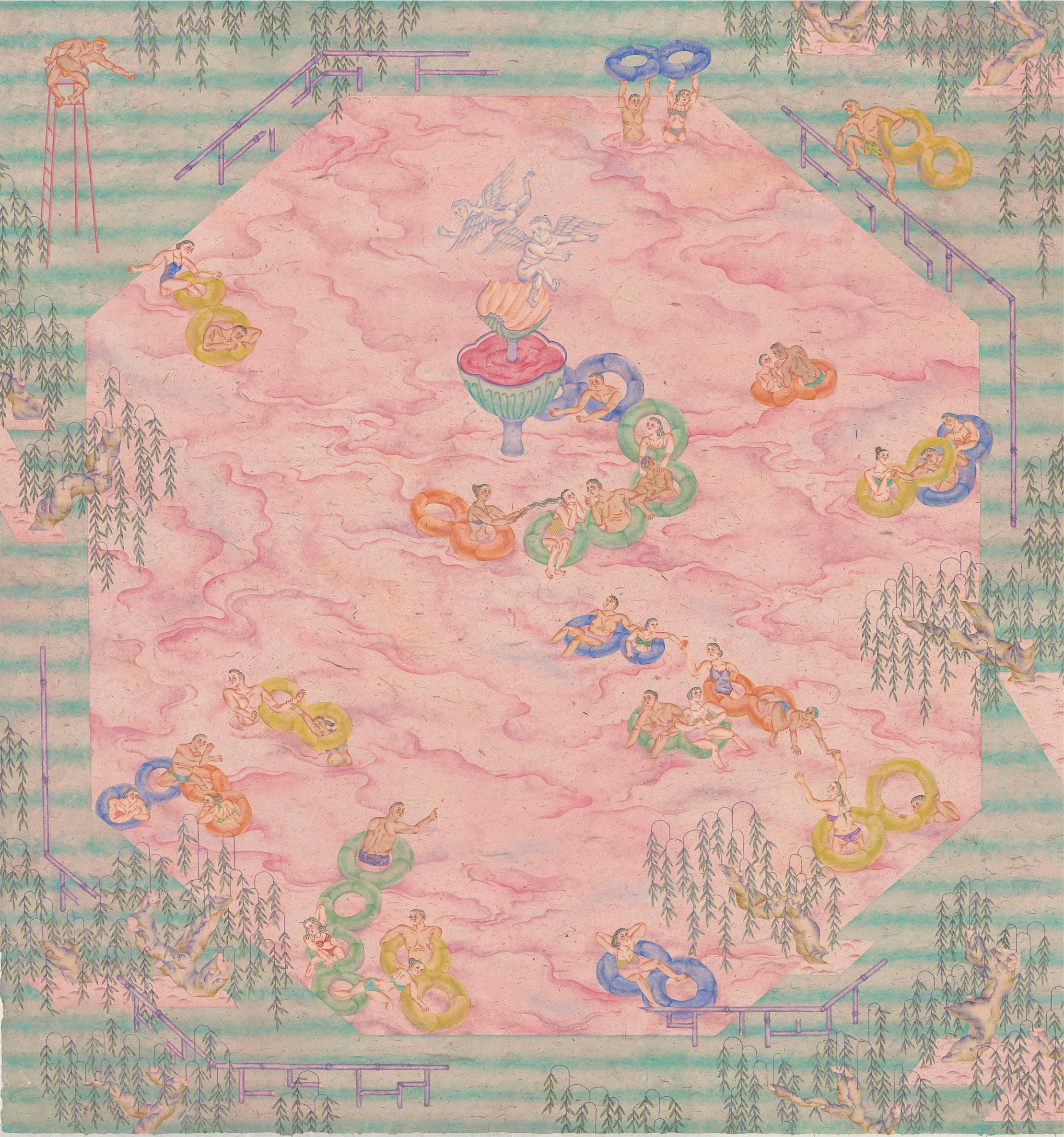
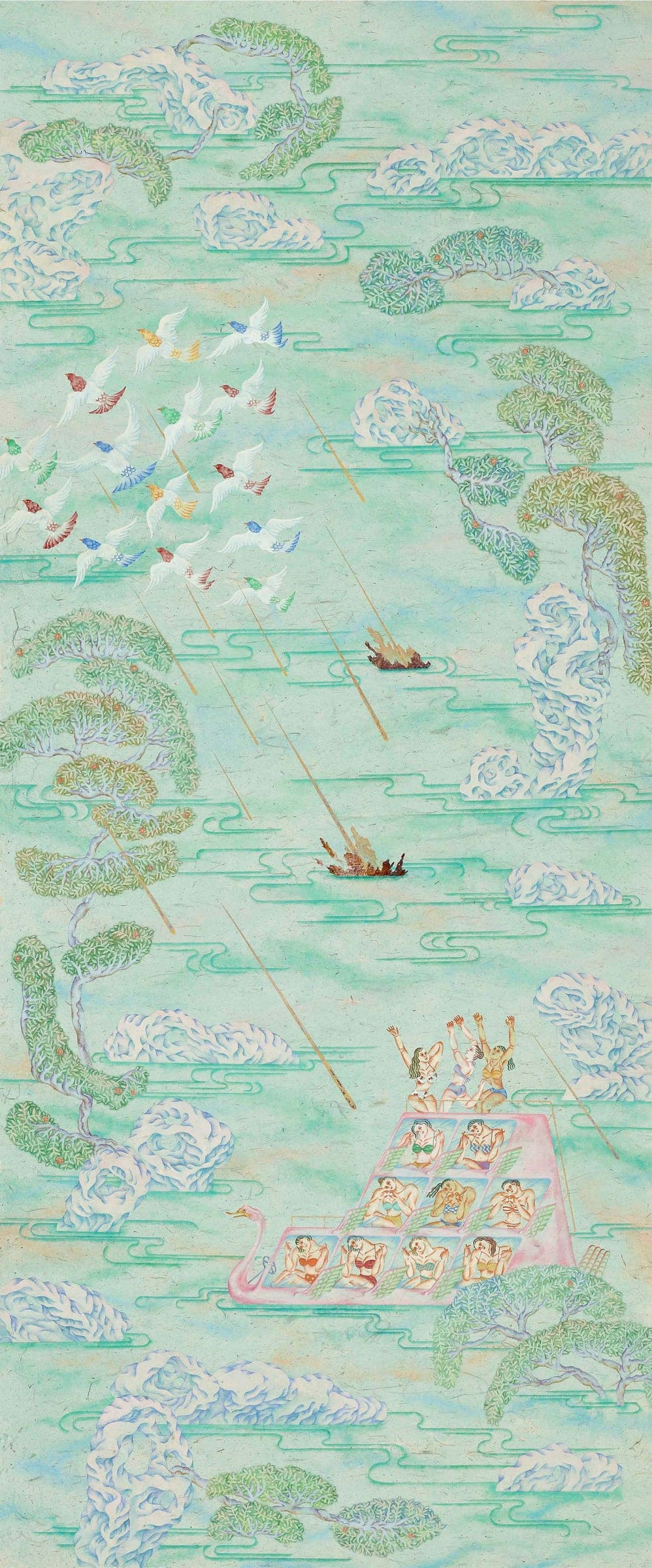
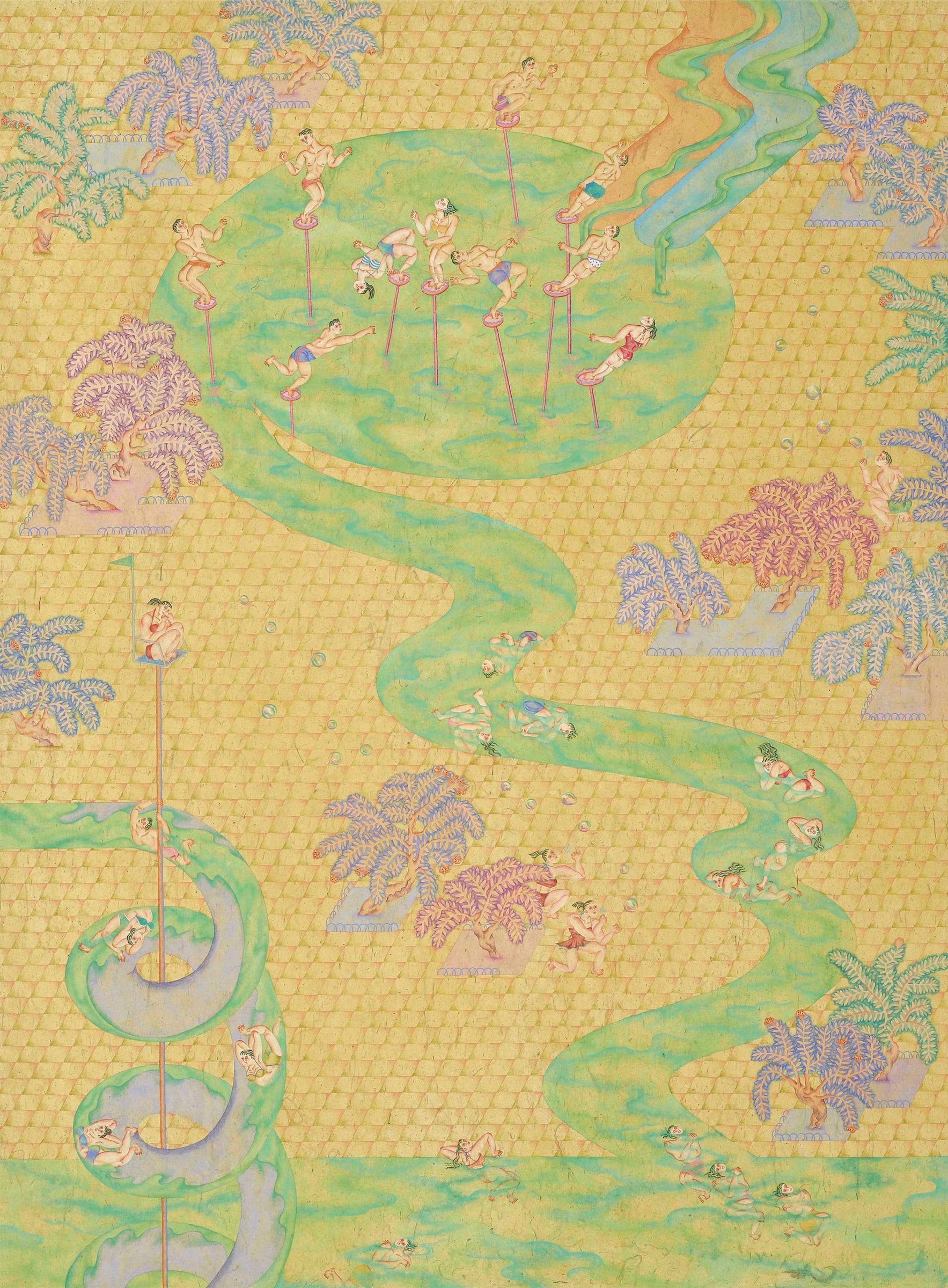
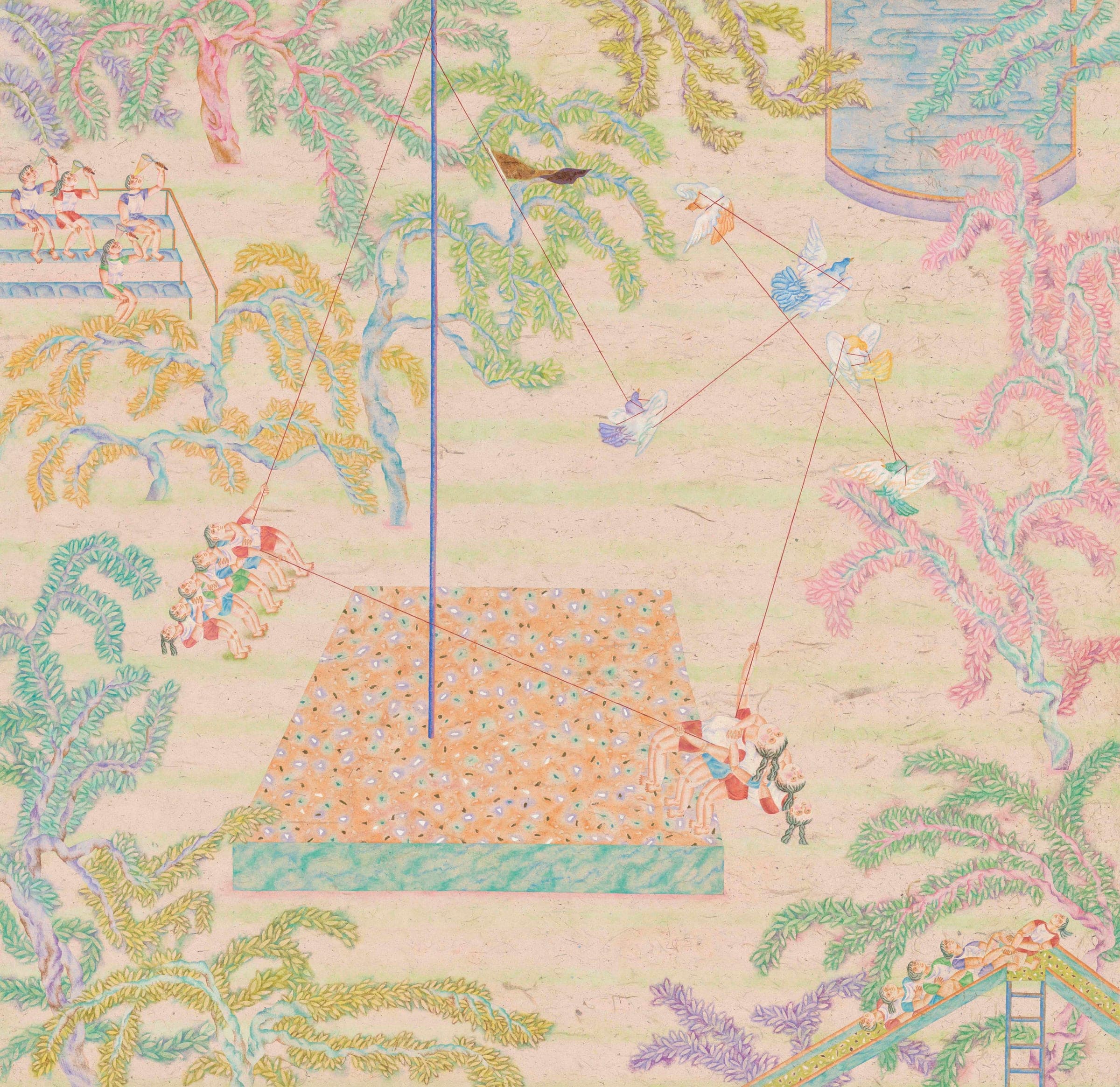
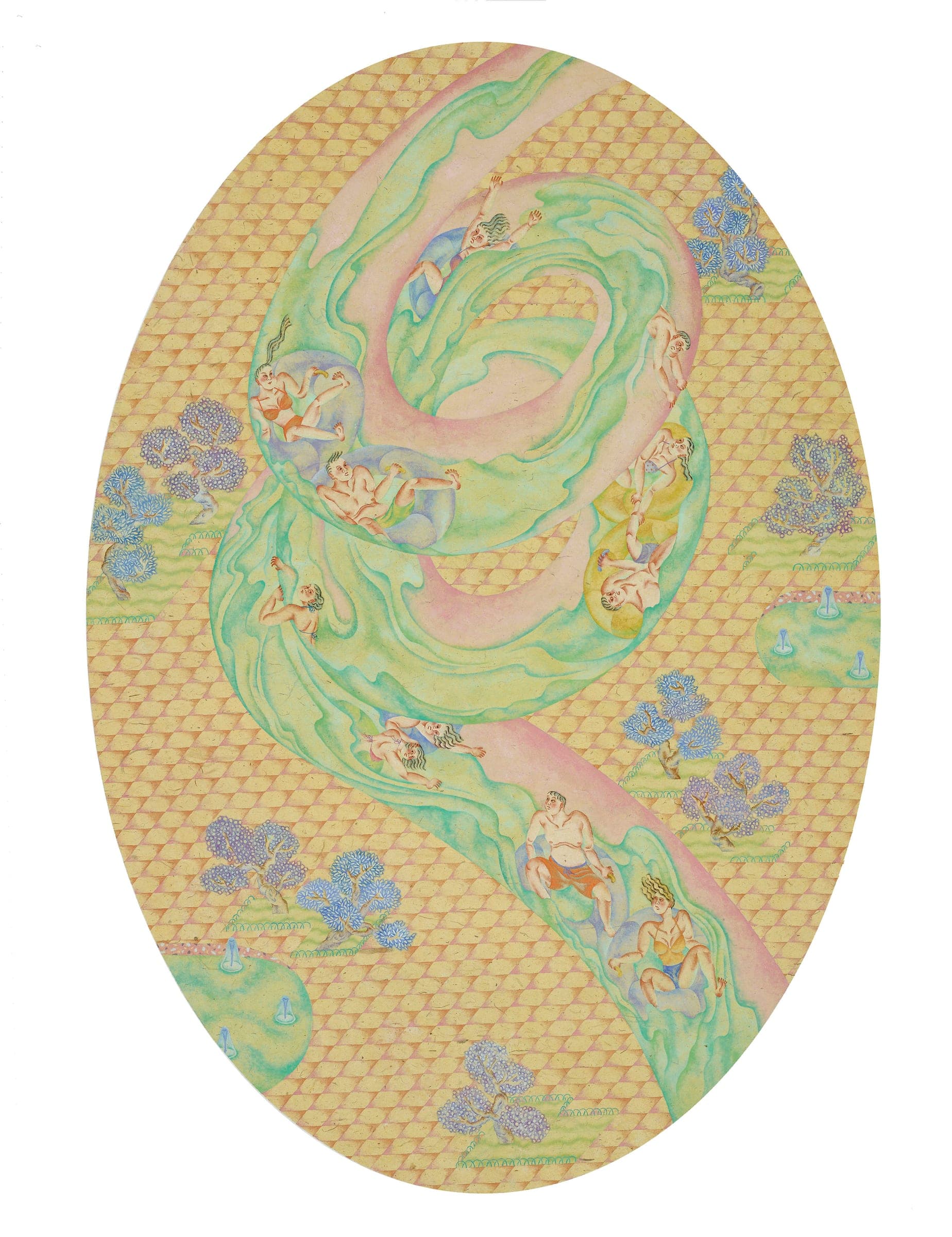
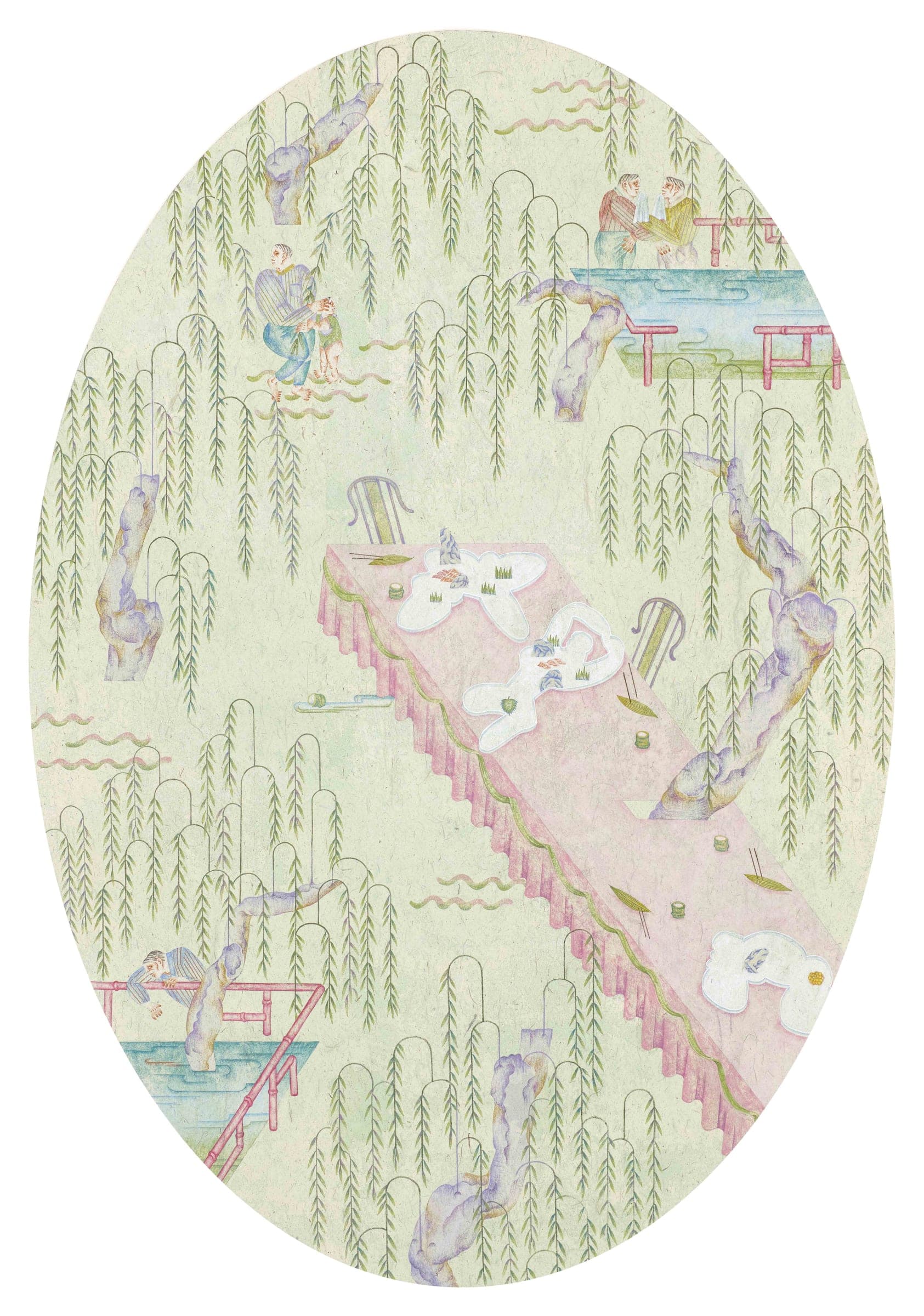
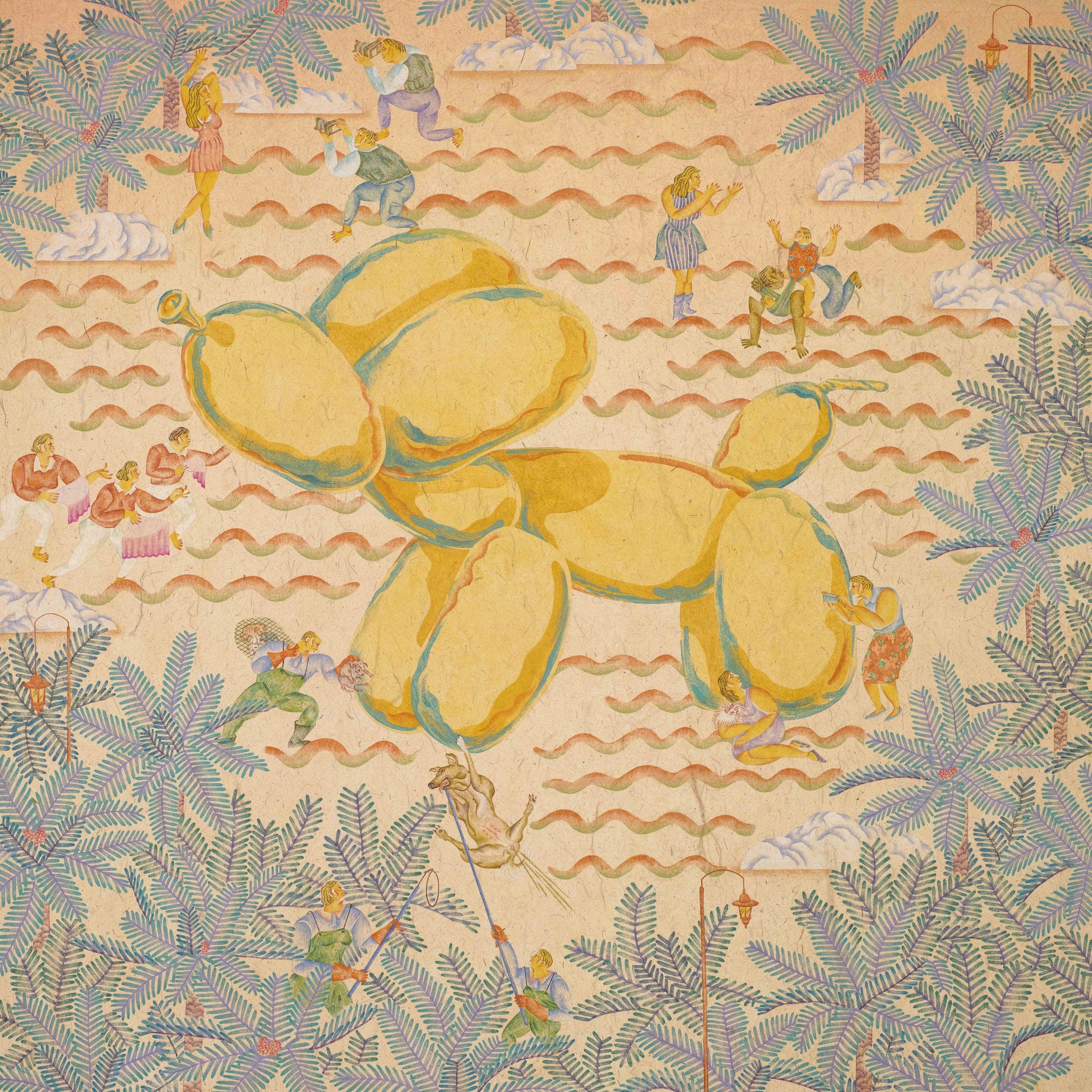
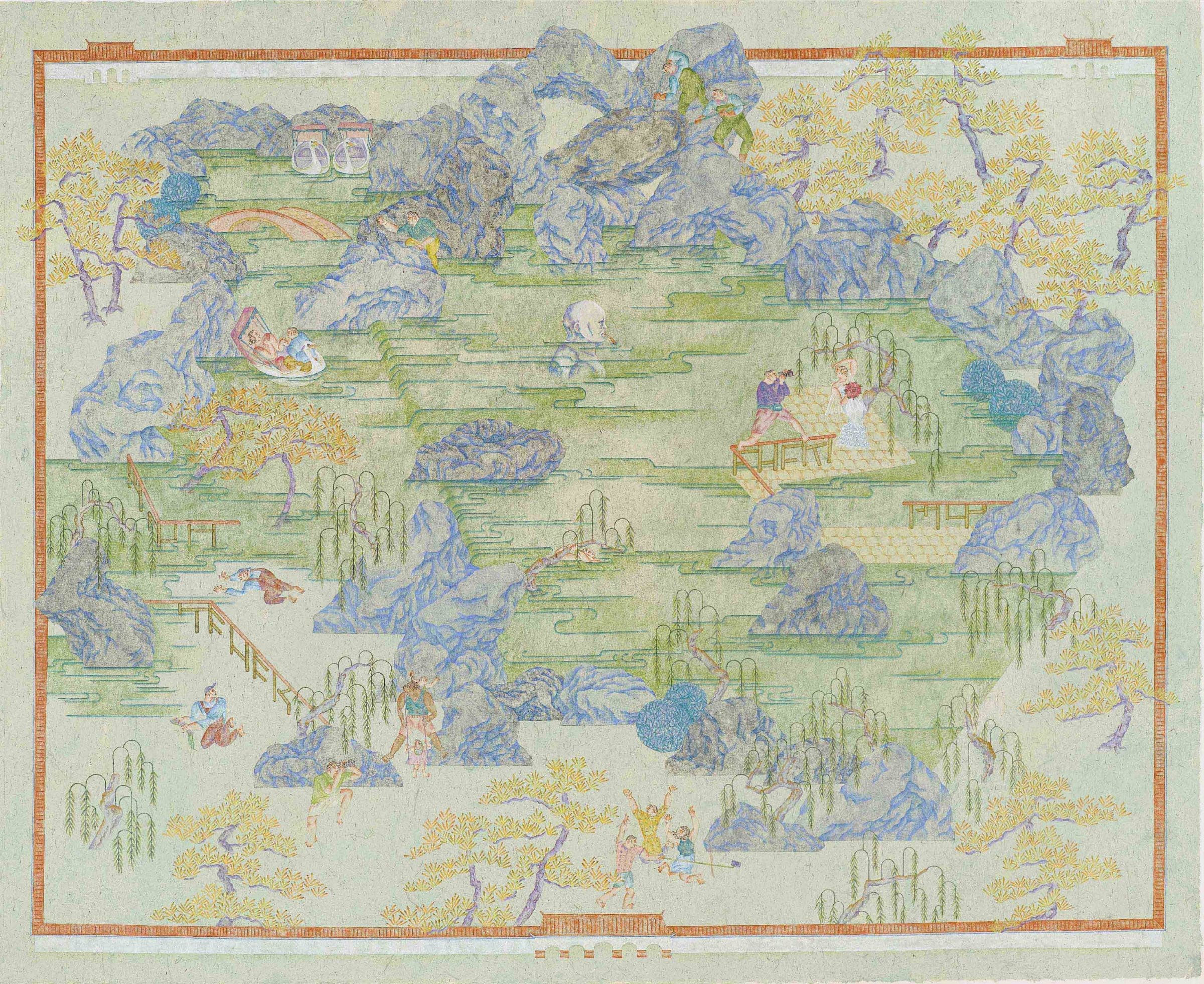
《Forgettable Grief》是顏妤庭早期以新聞、社會事件與日常圖像進入繪畫的重要系列。這些作品多從電視、網路媒體與地方新聞中取材,捕捉那些短暫引發關注,隨後又迅速被遺忘、遮蔽或取代的事件。畫面中的人物、景觀與事件帶有一種混雜的狀態:它們既荒謬、戲劇化,也帶著難以忽視的現實重量。顏妤庭將這些片段重新剪輯、編排,使它們在繪畫中形成一個介於新聞現場、民間傳說與集體記憶之間的圖像劇場。
在畫面結構上,作品多採用俯視視角與近似地圖的全景構圖,將不同時間、地點與事件壓縮在同一個場域之中。人物則以細密、扁平、近似皮影戲的方式散布於畫面,像是被暫時安置在某個劇場、地景或公共現場裡。這些片段彼此之間未必具有明確的因果關係,卻共同構成一種地方性的精神景觀。那些看似偶然的支線、邊角與插曲,逐漸形成一個暫時性的秩序,映照出台灣社會中日常、慾望、傷痛與荒謬並置的狀態。
系列標題《Forgettable Grief》指向一種容易被遺忘的痛感。這些事件曾經被觀看、被討論、被消費,也很快被新的資訊覆蓋。顏妤庭並未試圖替事件留下固定的敘事,而是將其保留在破碎、滑動與不穩定的圖像之中。那些被秒忘的悲傷,在繪畫裡以人物的姿態、場景的細節與敘事的殘影重新浮現,成為一種關於記憶如何形成、如何消散,也如何在觀看中再次被召回的視覺紀錄。
Forgettable Grief is an important early series in which Yen Yu-Ting began to approach painting through news, social events, and images from everyday life. Drawing from television, online media, and local news, the works capture incidents that briefly attracted public attention before quickly being forgotten, obscured, or replaced by new information. The figures, landscapes, and events in these paintings carry a mixed quality: they appear absurd and theatrical, while also bearing a weight that is difficult to ignore. Yen re-edits and rearranges these fragments, allowing them to form an image-theater that exists between news scenes, local folklore, and collective memory.
In terms of composition, the works often adopt an overhead perspective and a panoramic structure close to that of a map. Different times, places, and events are compressed into a single field. The figures are scattered across the image in a dense, flat manner, almost like shadow puppets, as if temporarily placed within a theater, landscape, or public site. These fragments do not necessarily share a clear causal relationship, yet together they form a kind of local psychological landscape. Seemingly accidental subplots, margins, and episodes gradually create a temporary order, reflecting a social reality in Taiwan where the everyday, desire, grief, and absurdity coexist.
The title Forgettable Grief points to a kind of pain that is easily forgotten. These events were once seen, discussed, and consumed, but were soon covered over by new information. Rather than leaving behind a fixed narrative, Yen keeps them within fragmented, shifting, and unstable images. The grief that is forgotten almost instantly resurfaces through the postures of figures, the details of scenes, and the remnants of narrative, becoming a visual record of how memory is formed, how it disappears, and how it can be called back through the act of looking.