Screenshot
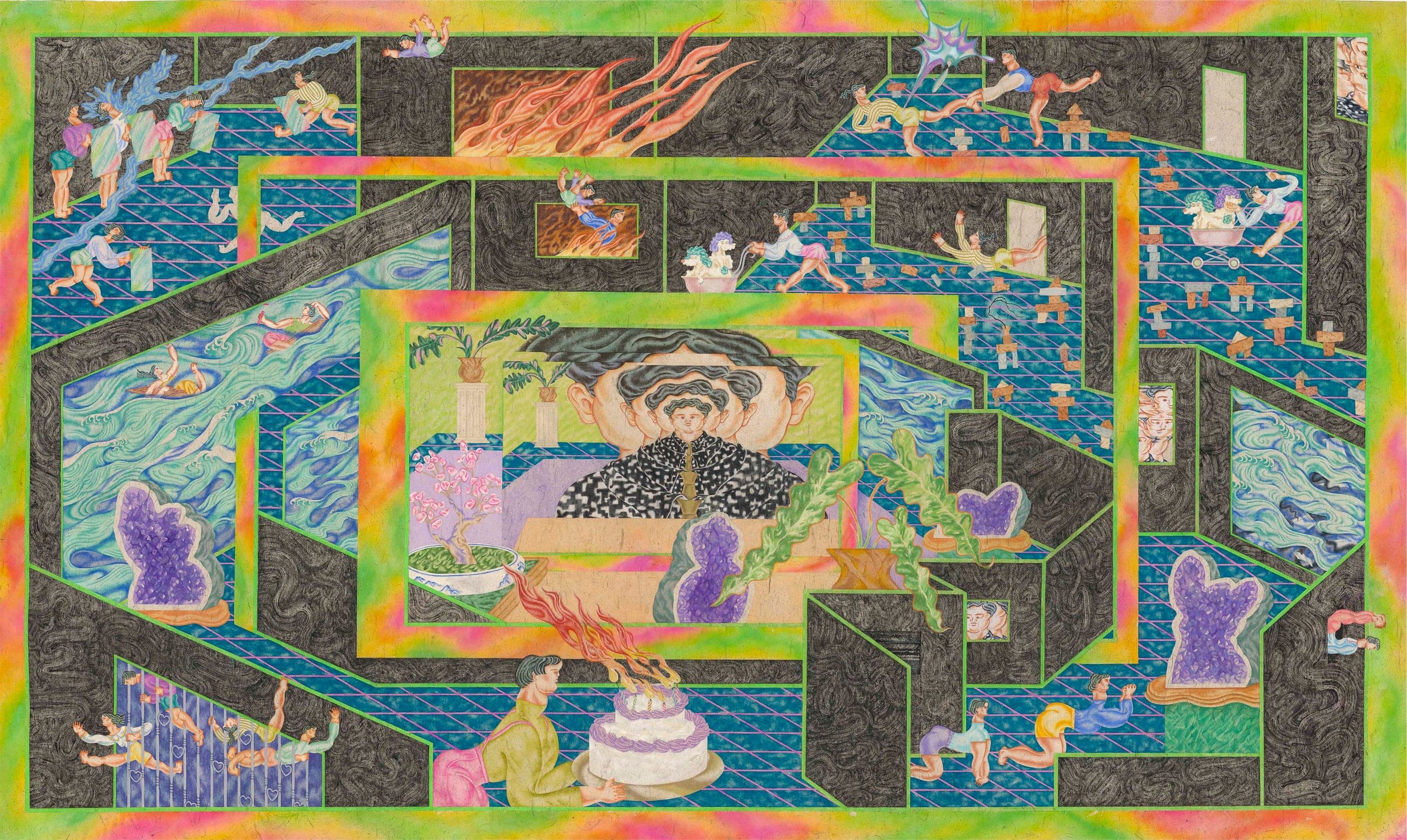
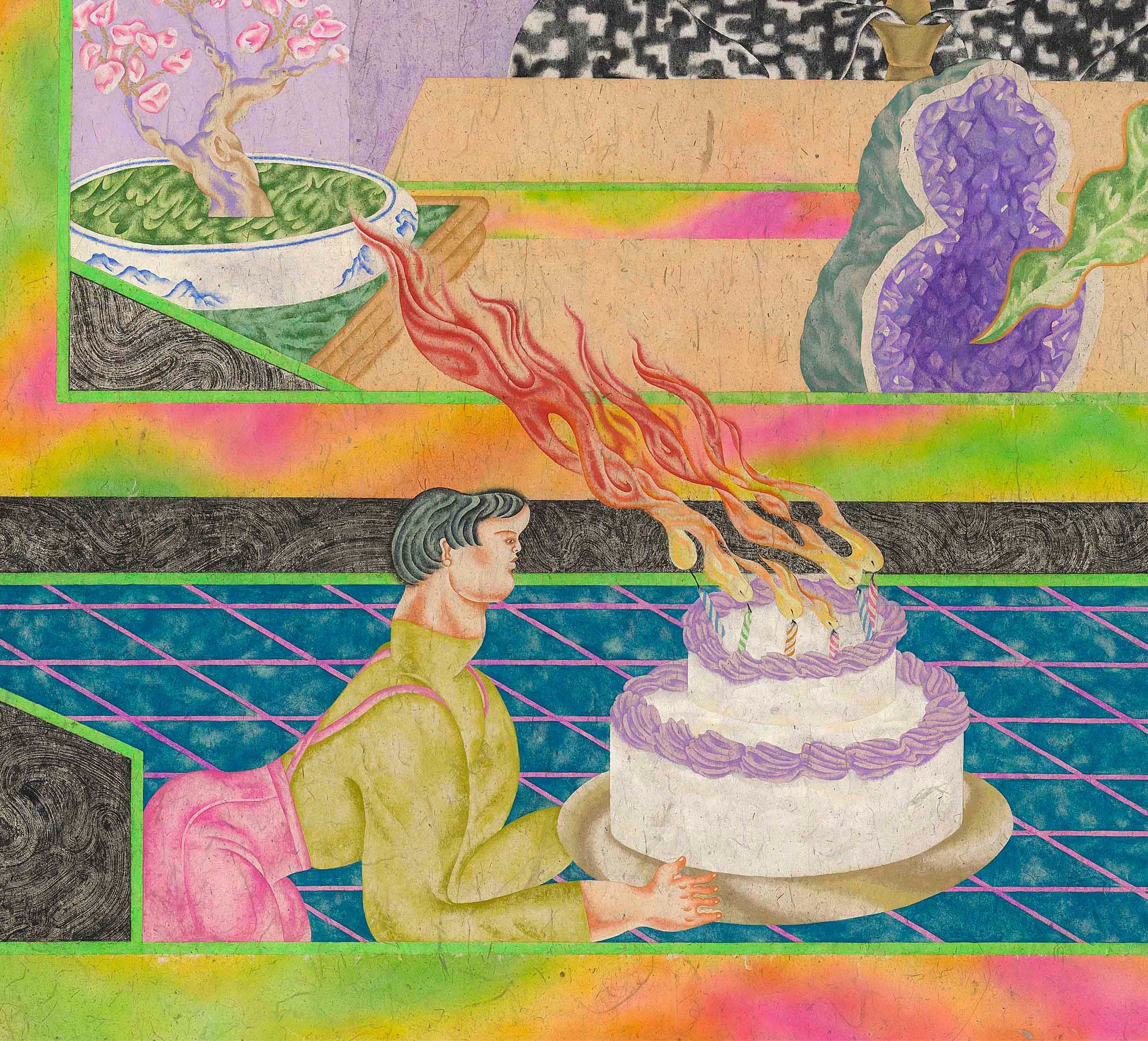
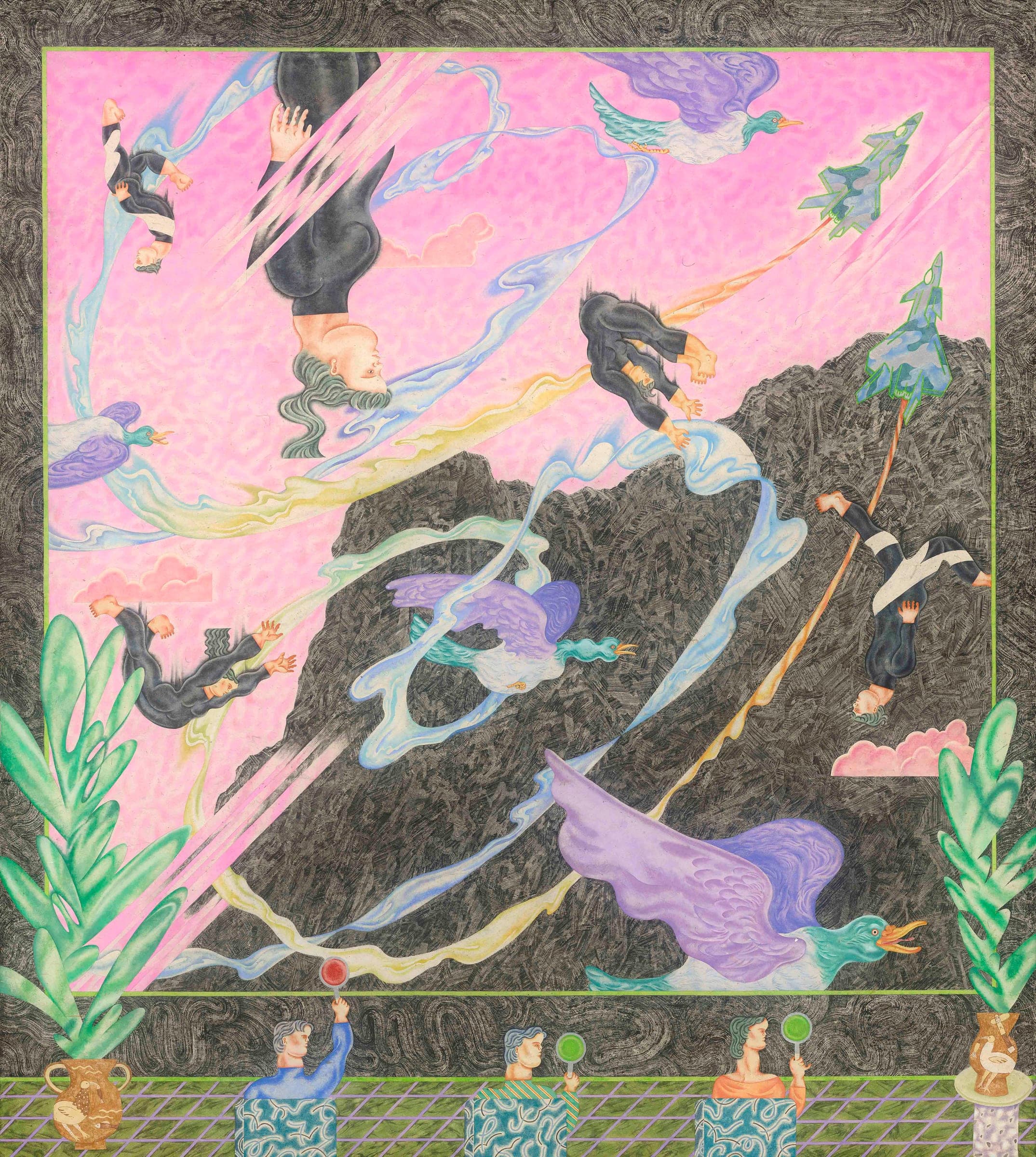
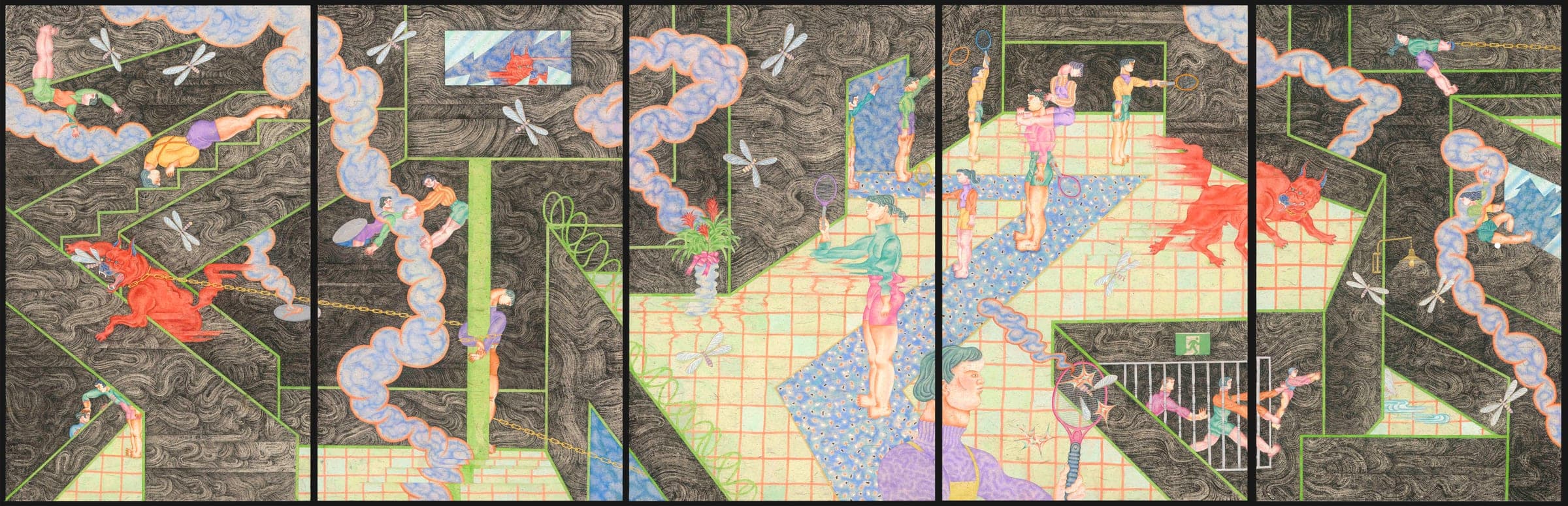
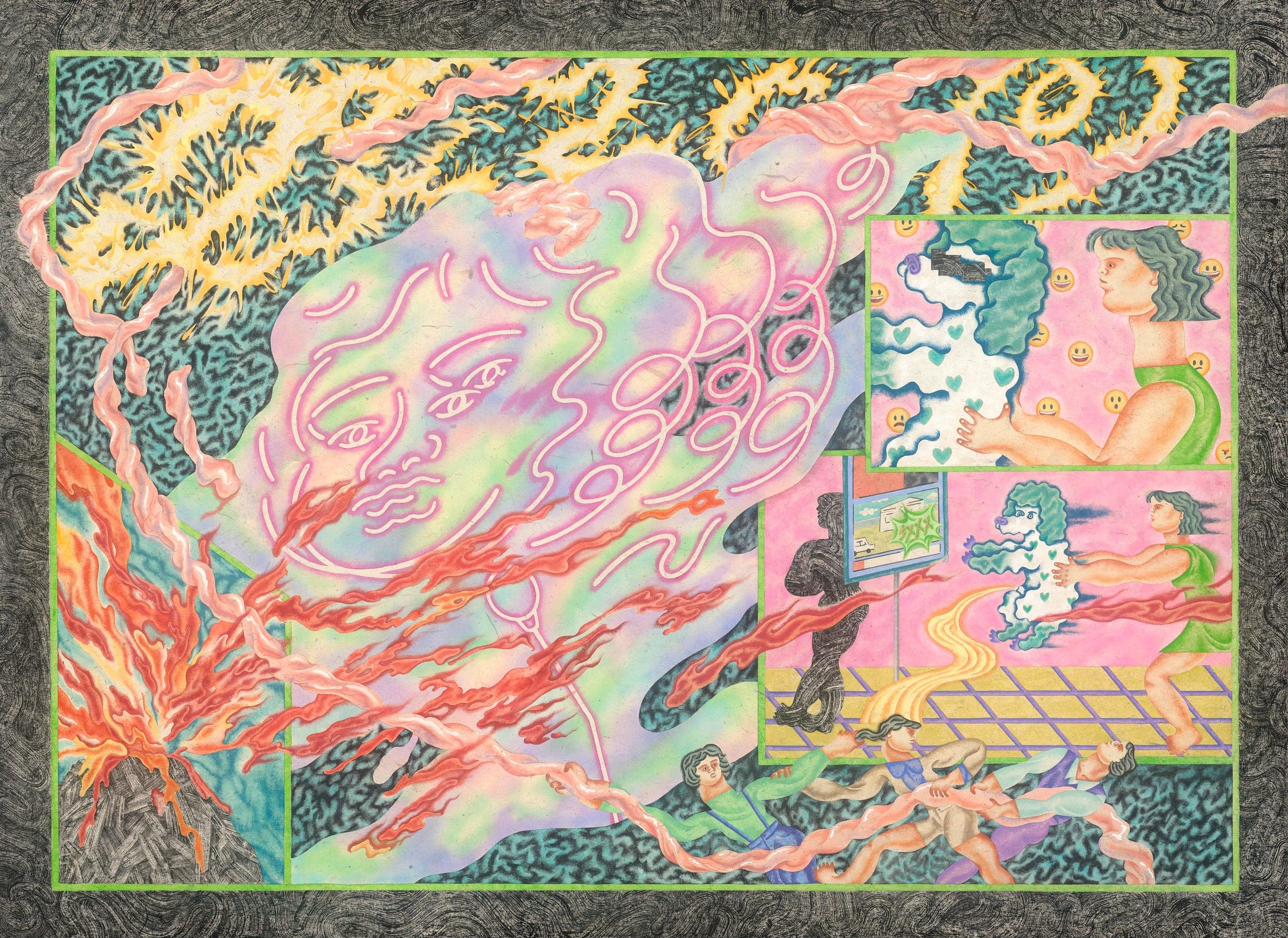
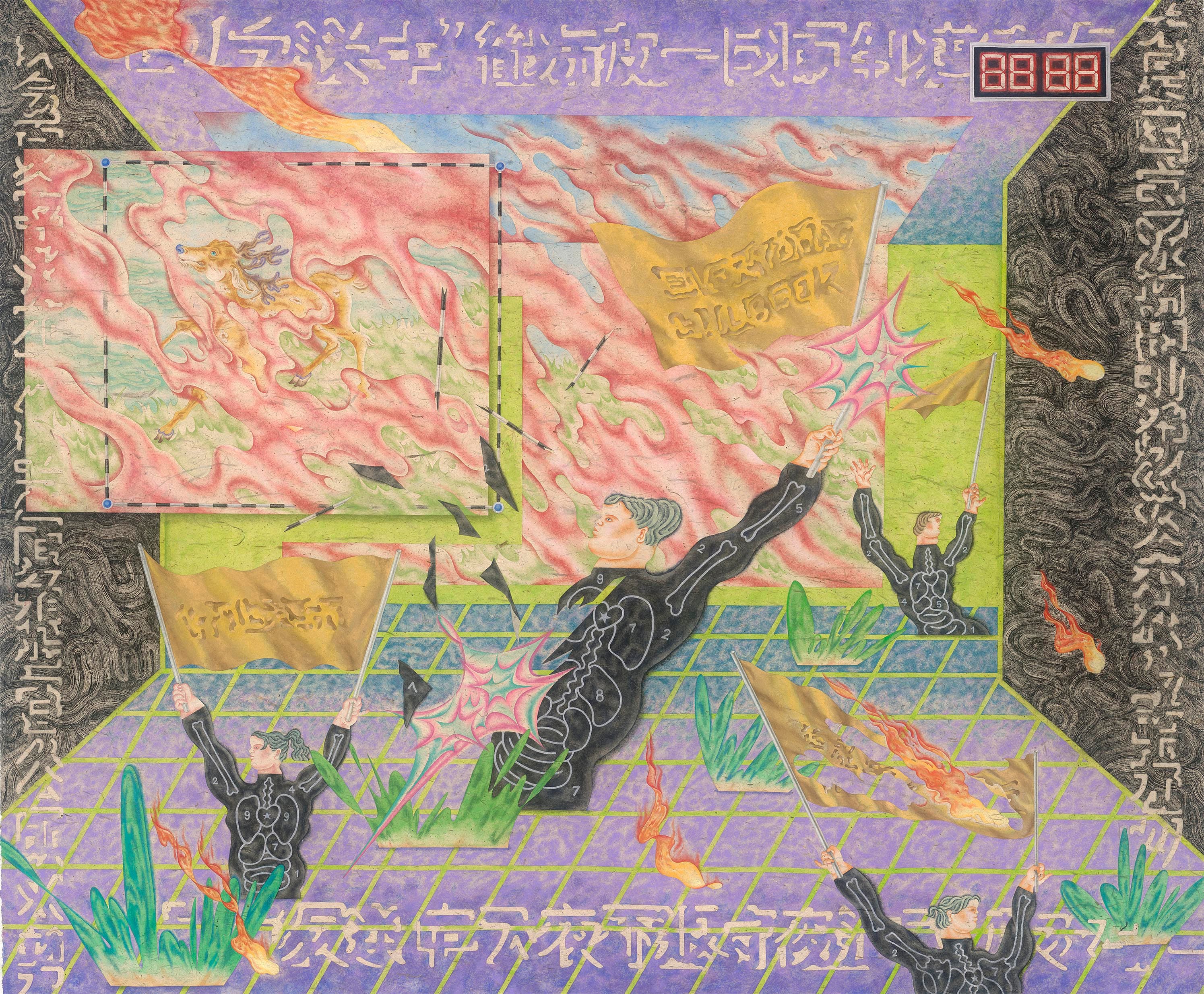
《Screenshot》系列是顏妤庭在膠彩、水墨與皴法之間進行轉換的重要階段。這個系列受到藝術史學者巫鴻對屏風的研究啟發,從「screen」一詞出發,將傳統屏風與當代螢幕、視窗互相對映,思考繪畫如何回應當代人快速切換影像、資訊與時空的觀看經驗。
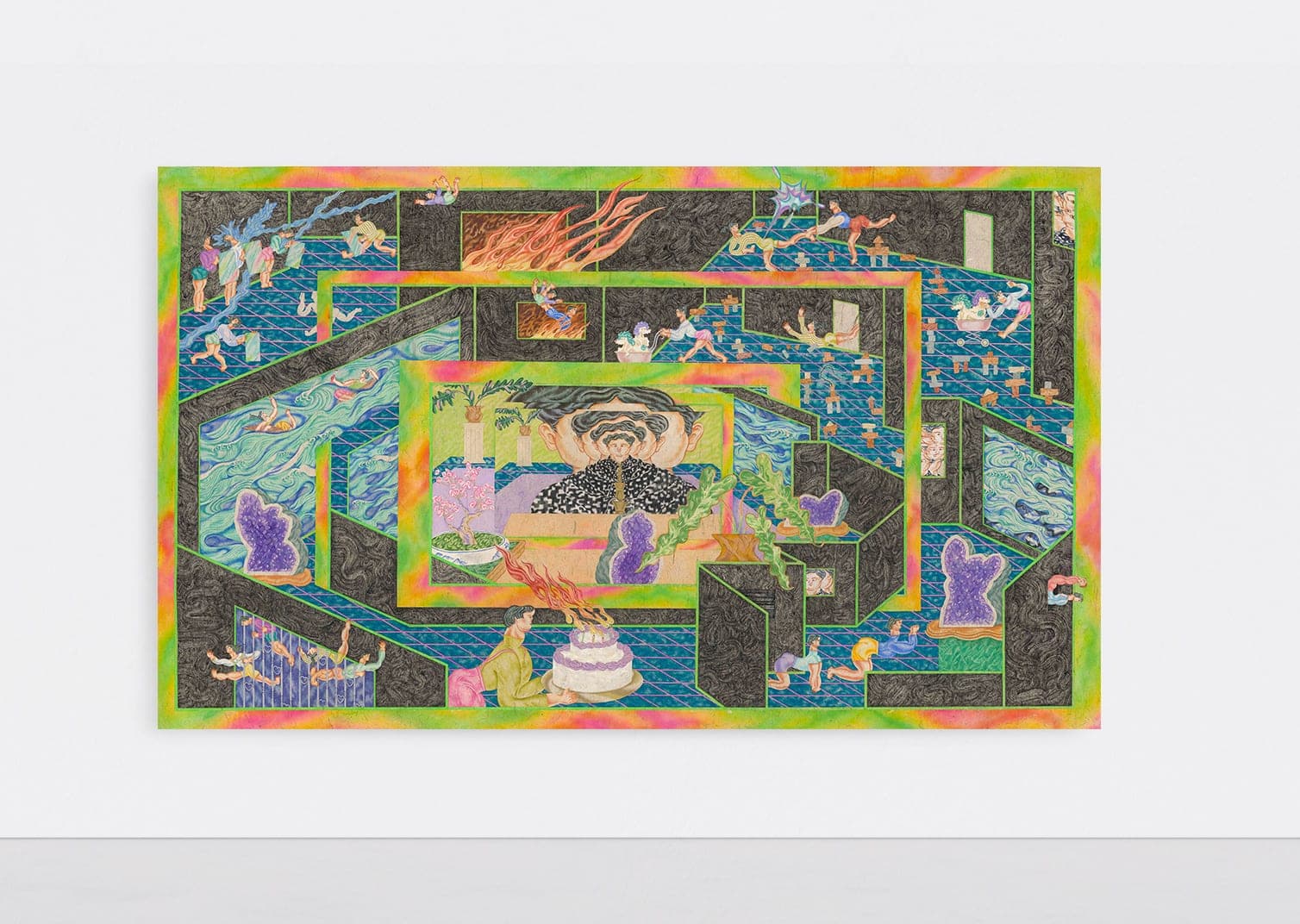
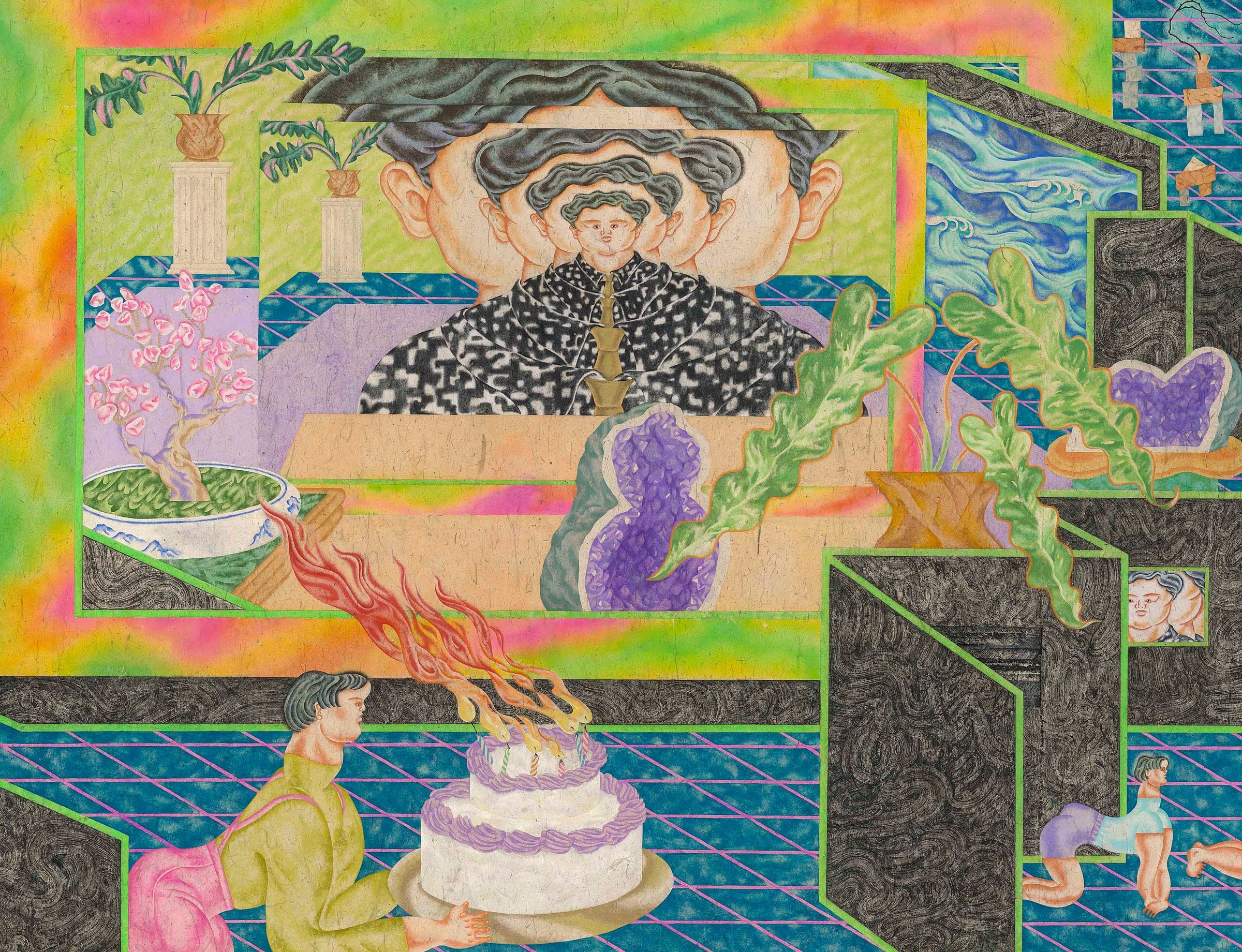
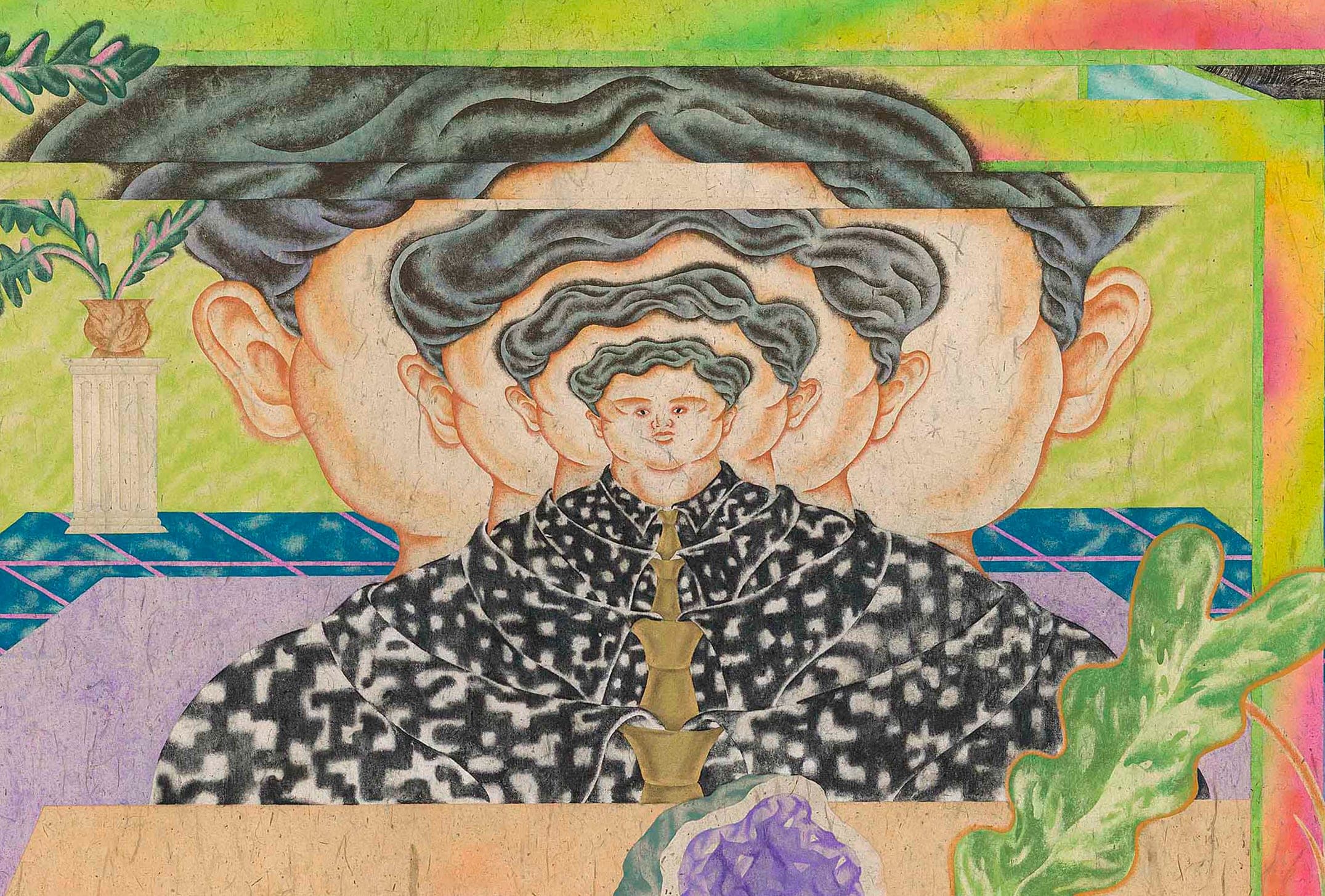
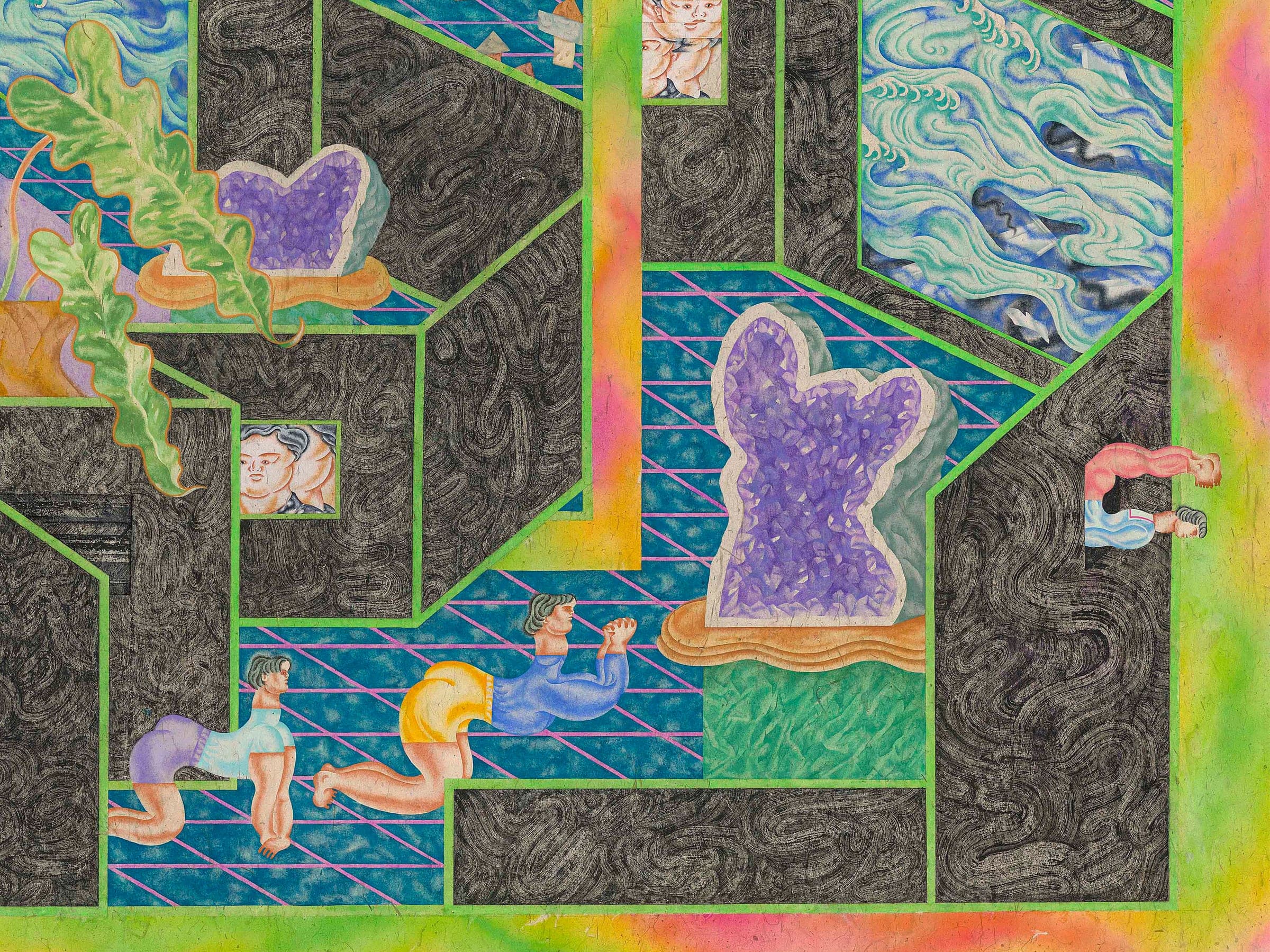
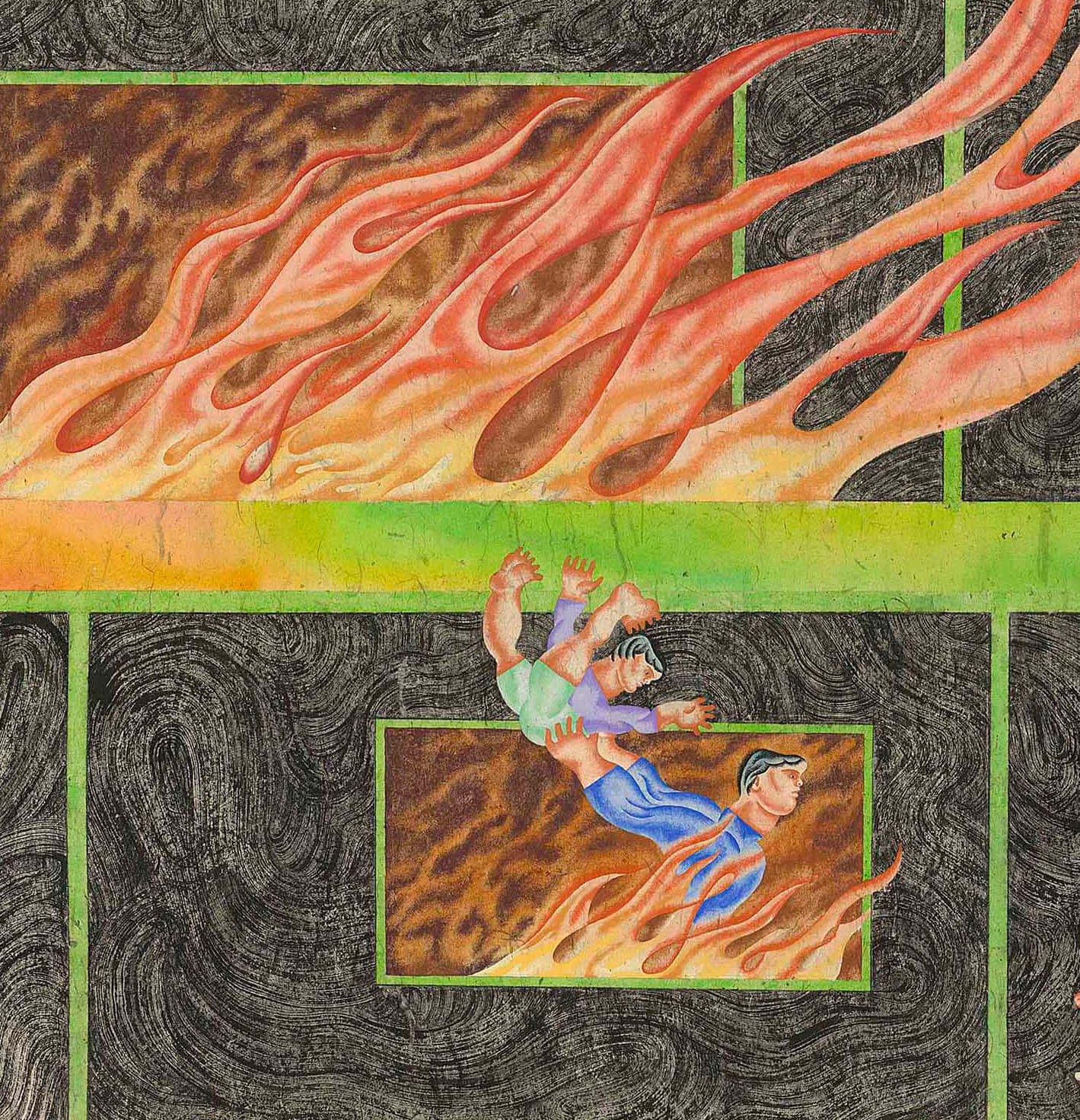
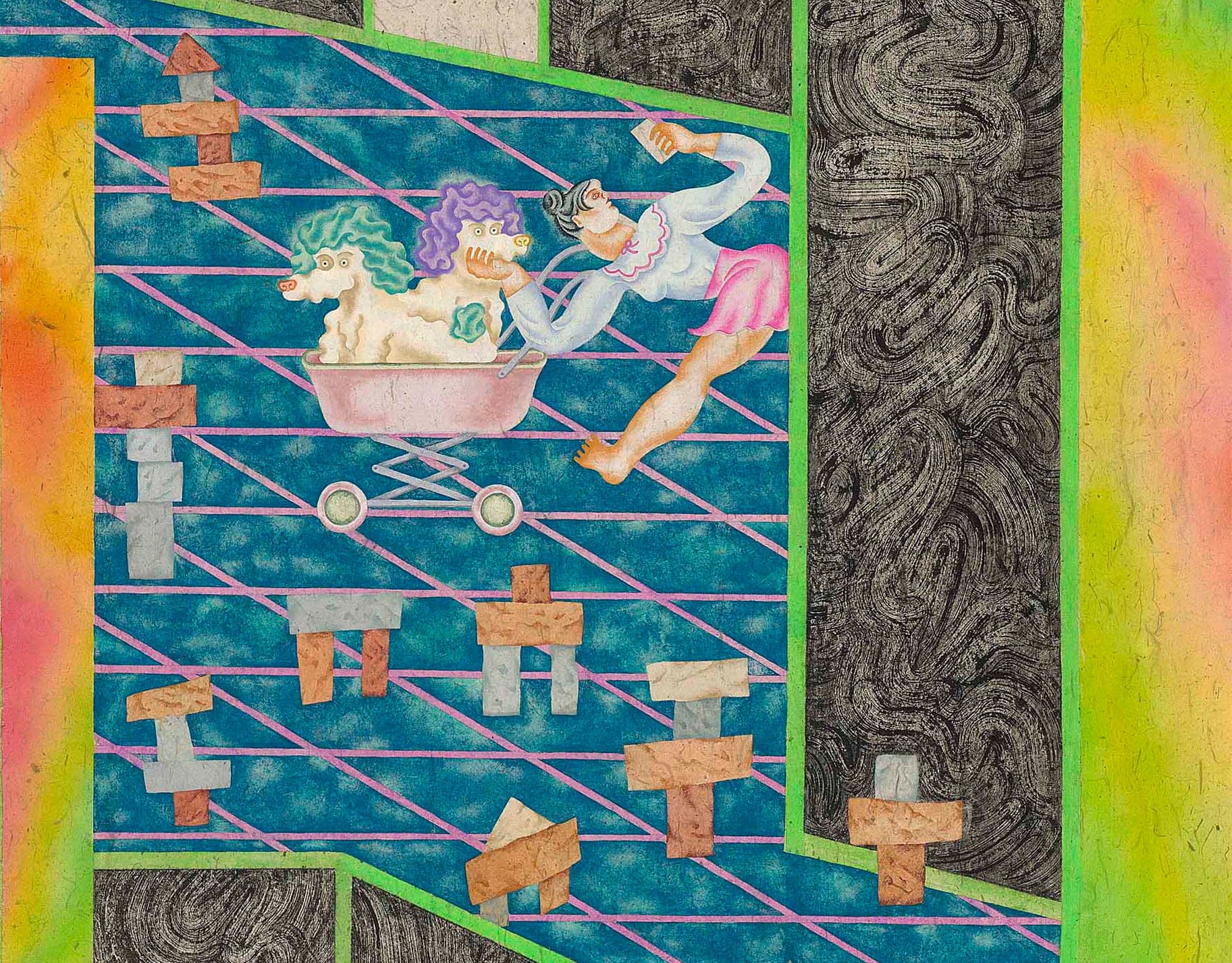
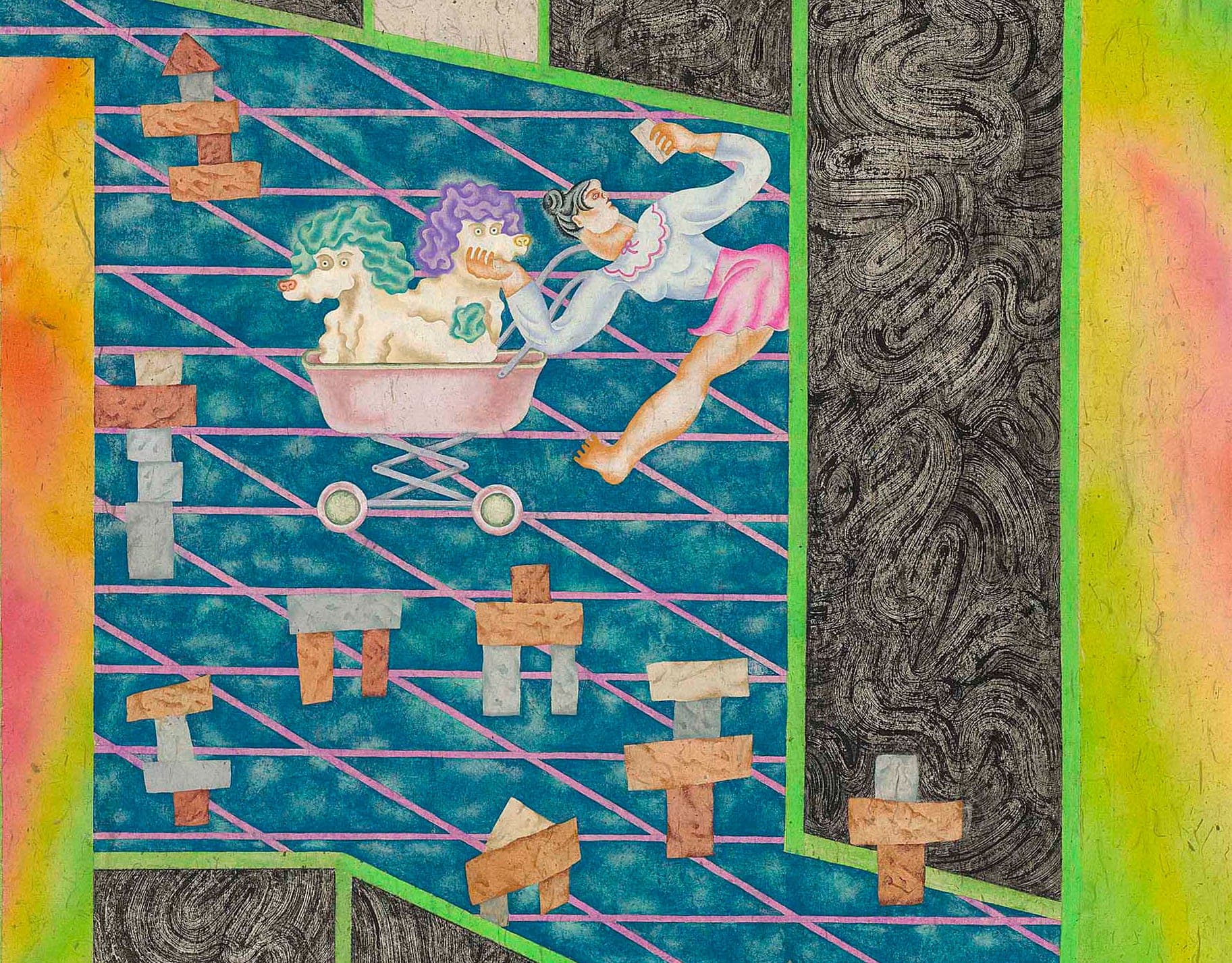
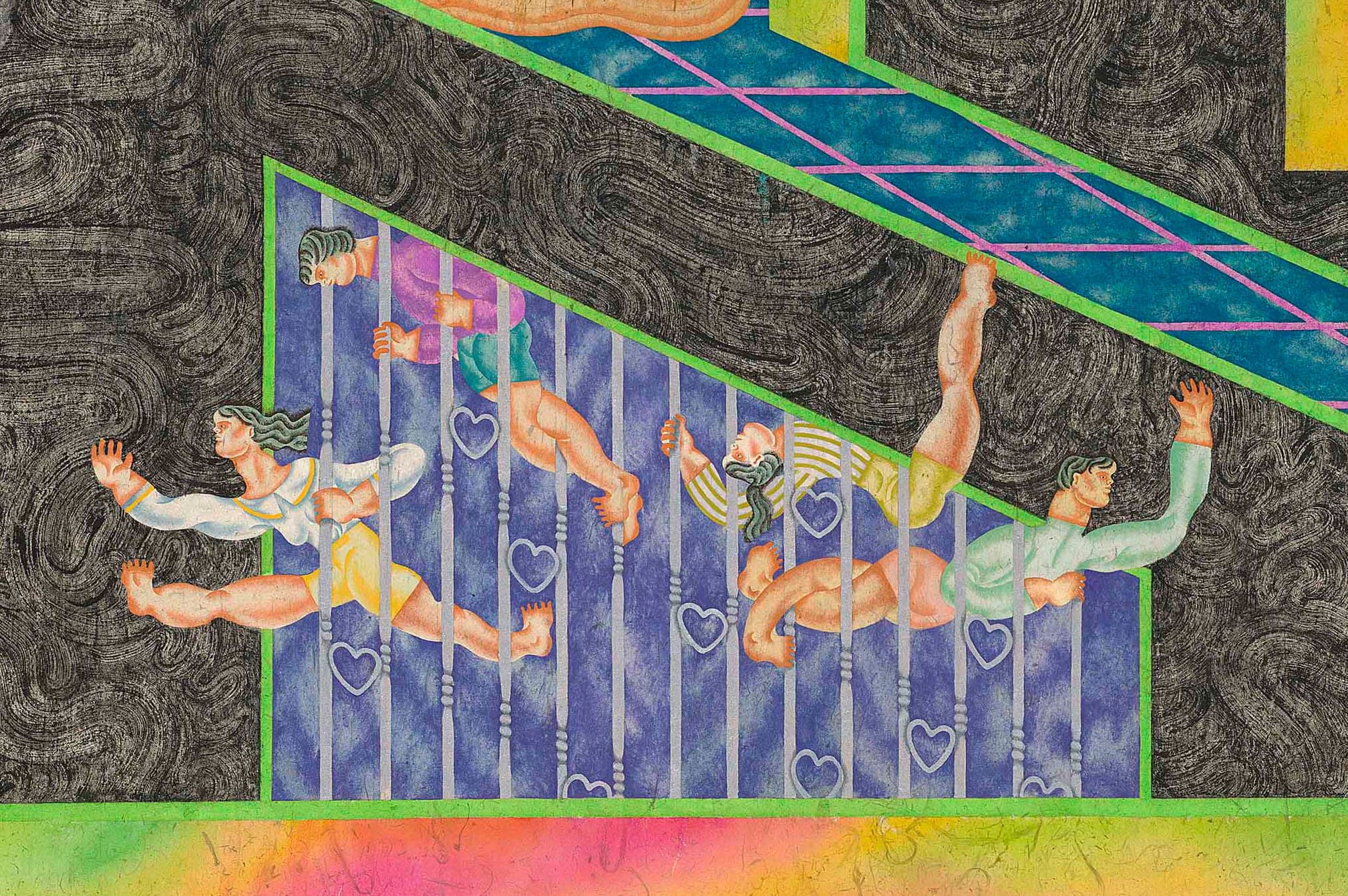
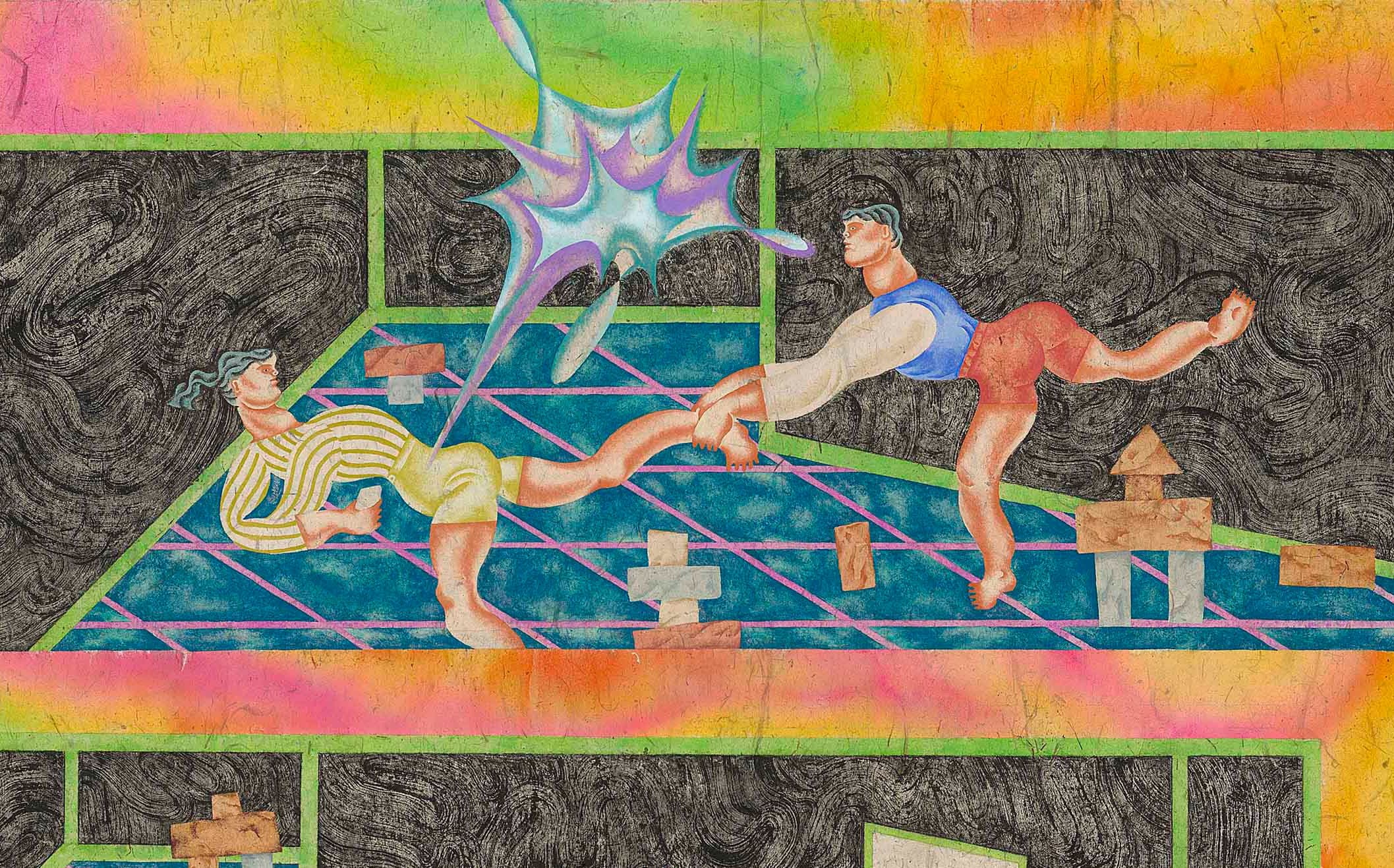
在傳統水墨繪畫中,屏風具有組織空間、分隔視線與轉換時空的功能。到了《Screenshot》中,這樣的結構被轉化為近似螢幕介面的畫面形式:螢光色的邊框、層層交錯的區塊與摺頁般的構圖,使畫面像是多個視窗同時開啟。人物、物件與場景在不同區塊之間穿梭,形成一個難以理清的混亂時空。
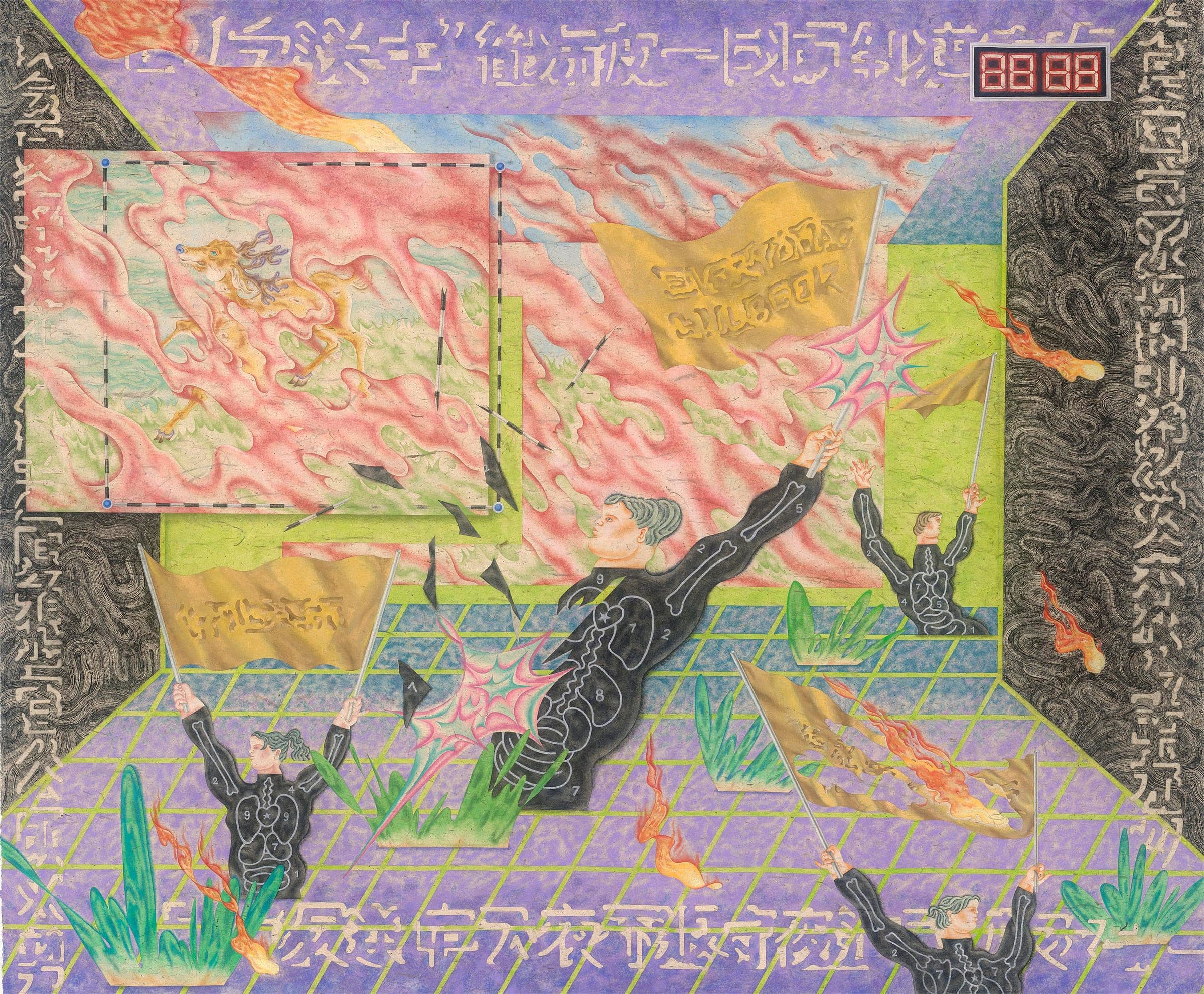
顏妤庭也在這個系列中嘗試將逐漸發展中的皴法,放回早期較熟悉的膠彩繪畫脈絡。新聞圖像、文字與熱門事件被分類、剪輯與重組,成為人物、道具與場景的一部分。那些曾經被觀看與討論的事件,隨著記憶逐漸模糊,也在繪畫過程中產生敘事上的偏移。
《Screenshot》保留了顏妤庭早期作品中較強的敘事性與戲劇感,也開啟了文字、新聞與皴法進入畫面結構的可能。它像是一個介於舊有膠彩語言與後續水墨實驗之間的中間狀態:畫面承載故事,也呈現記憶與資訊在切換、疊加與失序之中的狀態。
The Screenshot series marks an important stage in Yu-Ting Yen's transition between gouache, ink painting, and cunfa. Inspired by art historian Wu Hung's research on screens, the series begins with the word "screen," drawing connections between traditional folding screens and contemporary screens or windows. It considers how painting might respond to the contemporary viewing experience of rapidly switching between images, information, and different senses of time and space.
In traditional ink painting, screens serve to organize space, divide lines of sight, and shift temporal and spatial perspectives. In Screenshot, this structure is transformed into a pictorial form that resembles a screen interface. Fluorescent borders, overlapping sections, and folding-screen-like compositions make the image appear as if multiple windows have been opened at once. Figures, objects, and scenes move through different sections, forming a chaotic time-space that is difficult to fully untangle.
In this series, Yen also attempts to place his gradually developing use of cunfa back into the earlier context of gouache painting, a medium more familiar to him at the time. News images, text, and trending events are categorized, edited, and recombined, becoming part of the figures, props, and scenes. As memories of these once-viewed and discussed events begin to blur, they also undergo narrative shifts through the process of painting.
Screenshot retains the strong sense of narrative and theatricality found in Yen's earlier works, while also opening up the possibility for text, news, and cunfa to enter the structure of the image. It exists as an intermediate state between an earlier gouache-based visual language and the later experiments in ink painting: the image carries stories, while also presenting a state in which memory and information are constantly switching, layering, and falling into disorder.