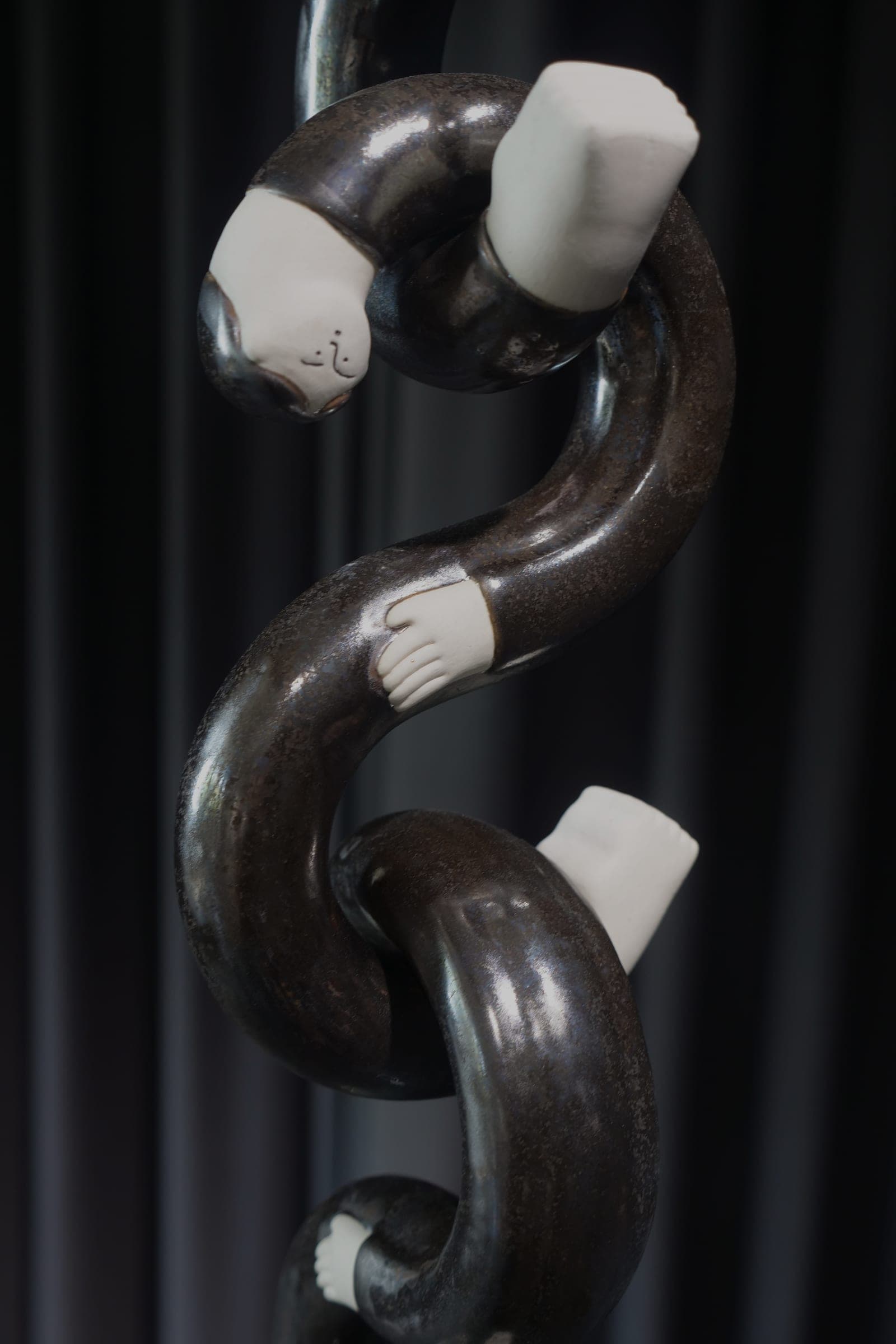
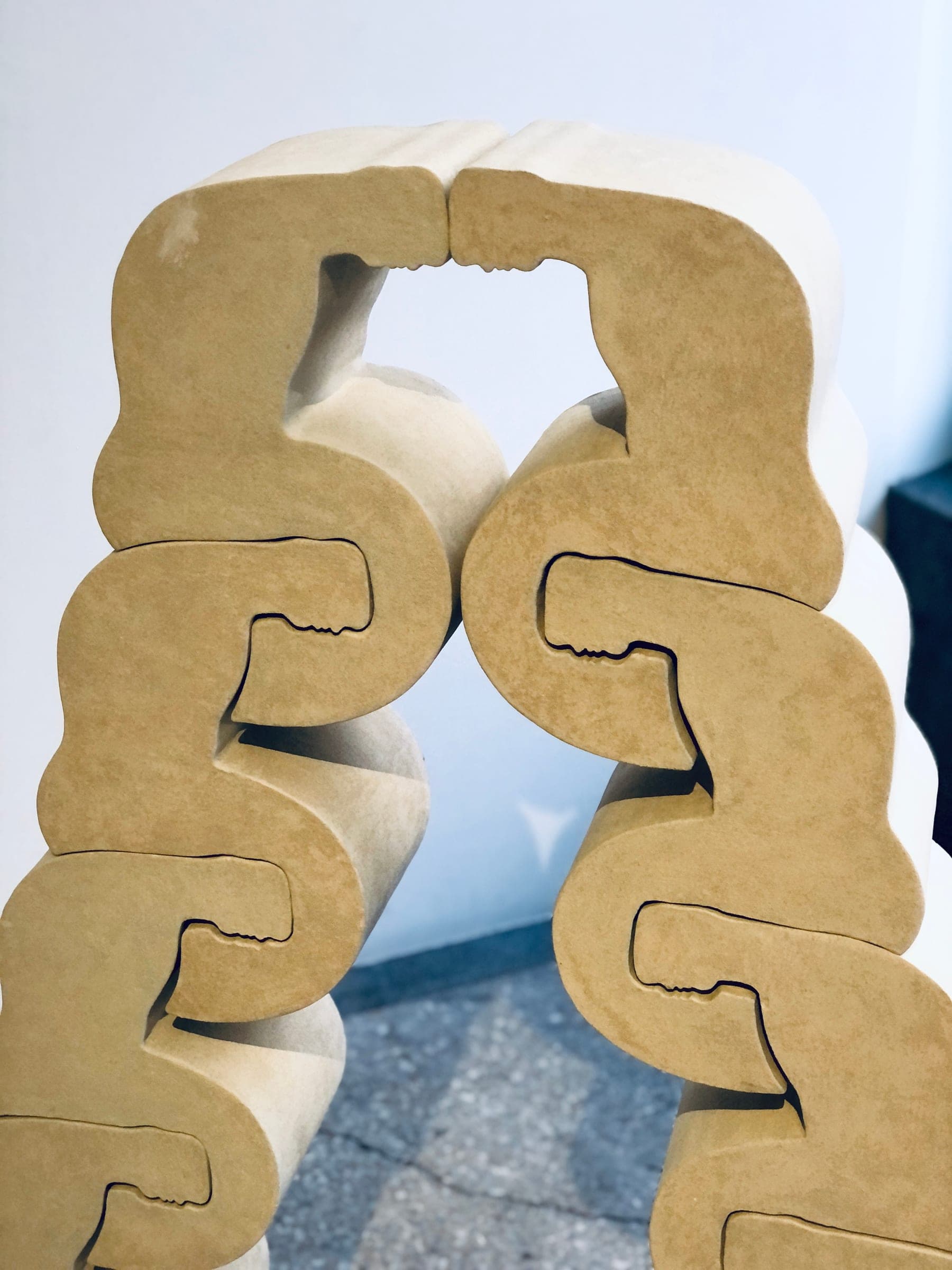
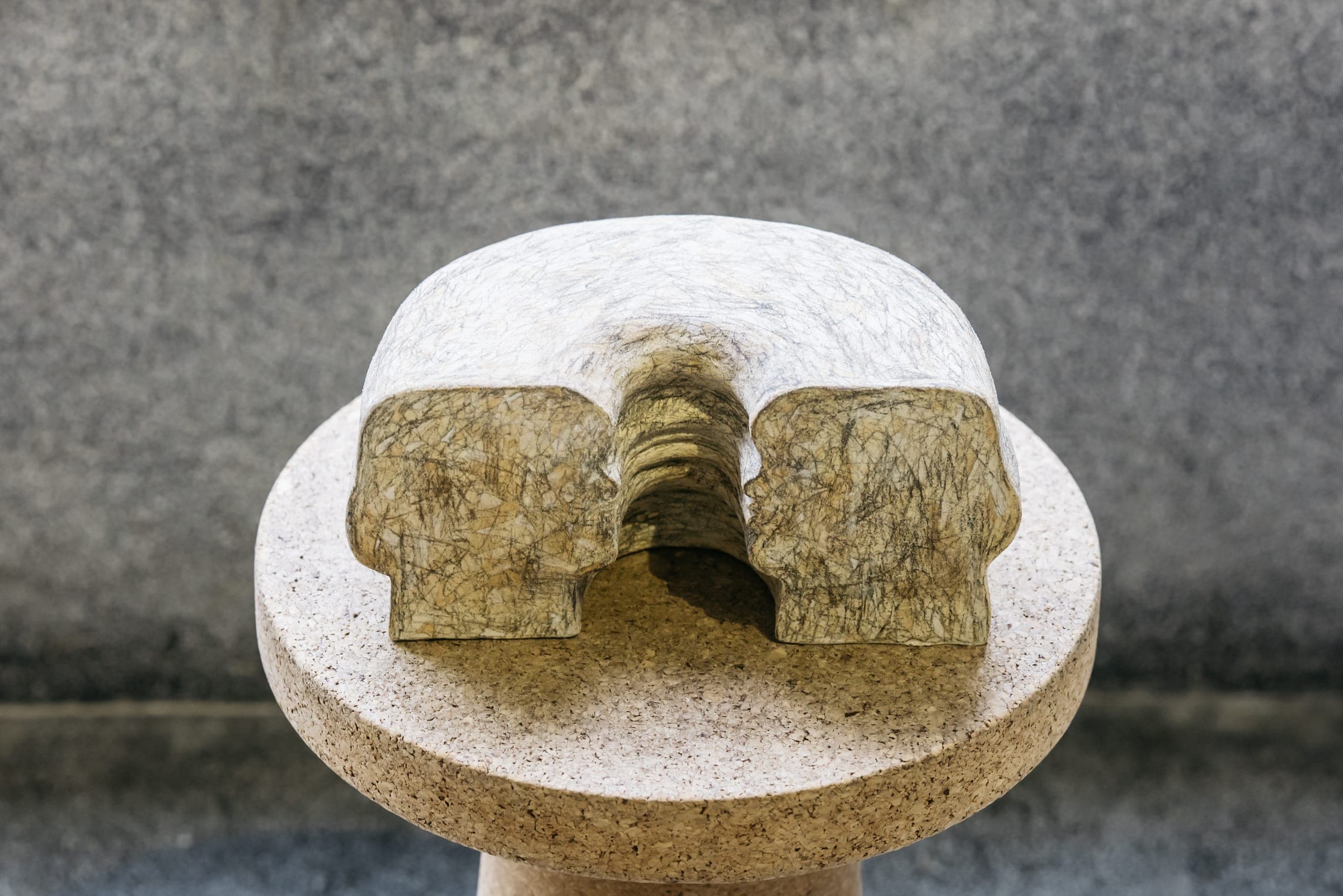
〈鎖鏈〉由多個人形 S 鉤串接而成,這些陶件以頭尾相扣的方式懸掛於空間之中,並依據展場條件,以騰空懸吊或垂落於地面的方式展示。這件作品延續了顏妤庭 2019 年於荷蘭歐洲陶藝中心的創作經驗。他透過 3D 建模、翻模與瓷土灌漿等方式,將陶件轉化為可重複製作與組裝的模組。藉由串接,陶瓷作品不再受限於窯爐尺寸,而是能因應不同空間條件,發展出多種陳設方式與更廣泛的延展可能性。
Chain is composed of multiple human-shaped S-hooks, linked head to tail and suspended in space. Depending on the conditions of each exhibition site, the work may be installed either hanging freely in the air or descending toward the floor. The work extends Yu-Ting Yen's experience at the European Ceramic Work Centre in the Netherlands in 2019. Through 3D modeling, mold-making, and slip casting, Yen transforms ceramic elements into modules that can be repeatedly produced and assembled. Through this method of linking, the ceramic work is no longer limited by the size of the kiln, but can respond to different spatial conditions and develop into various modes of display and expanded forms.
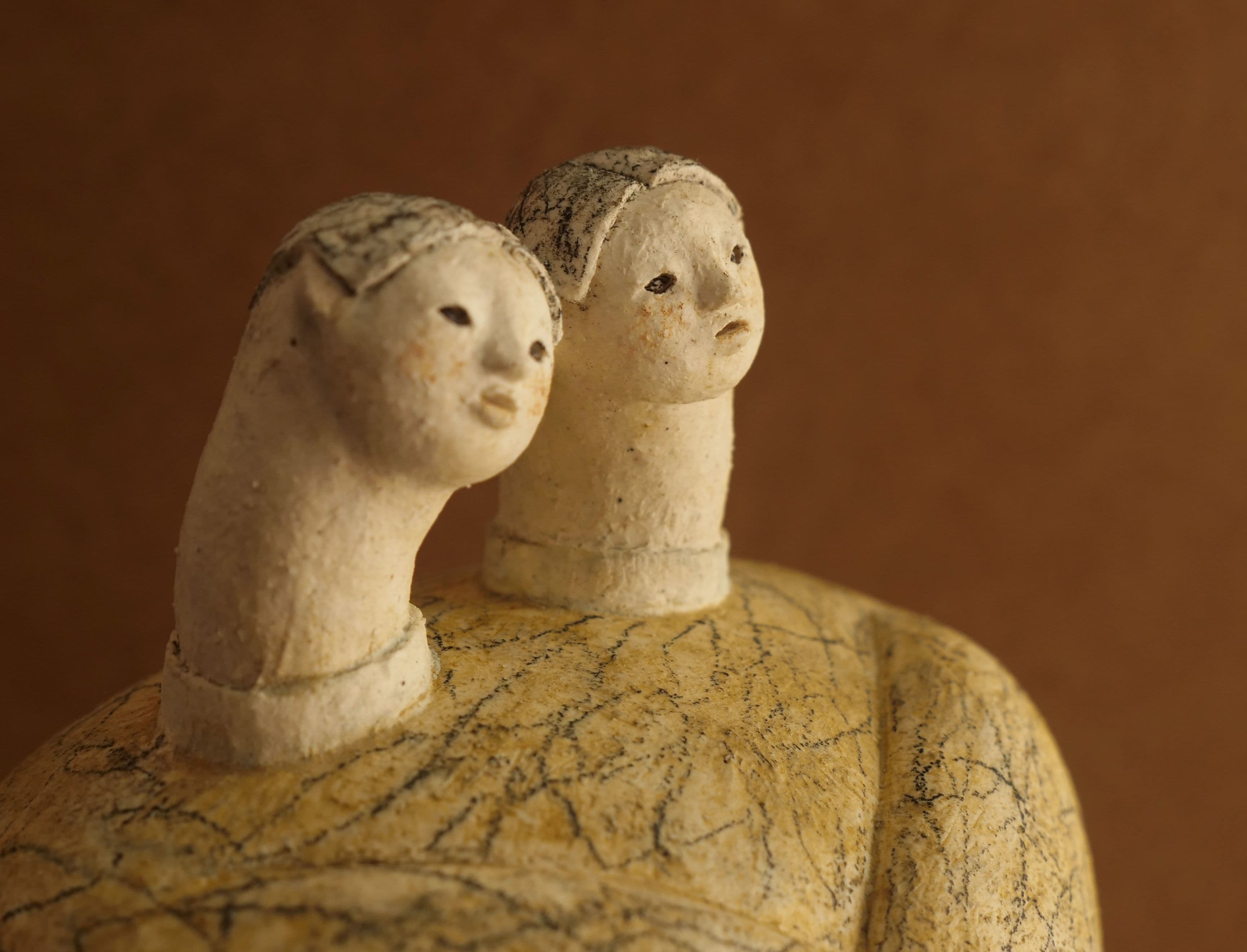
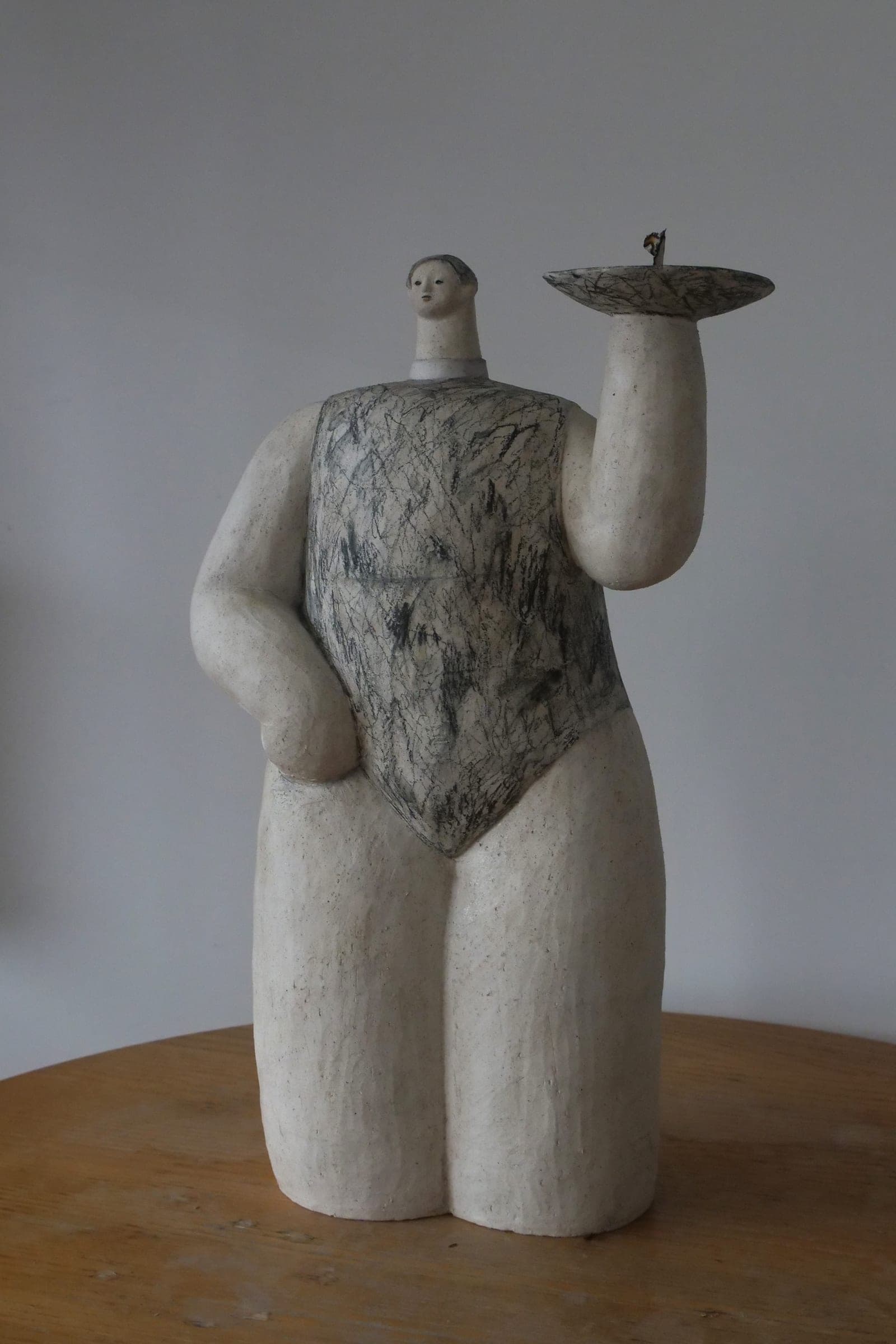
《扭結與疙瘩》以「結 knot」的雙重語意為起點:結既是連接、固定與牽引的方法,也可能指向糾纏、阻塞與難以化解的內在感受。作品以盤繞泥條的方式塑形,讓陶偶在重複堆疊、轉折與接合中逐漸生成。泥土保留手勢、停頓與施力的痕跡,使形體如同情緒與記憶在時間中凝聚出的疙瘩,呈現連結與牽制並存的內在張力。
Knots and Lumps begins with the double meaning of "knot": a knot can be a way of connecting, fixing, and holding things together, while also pointing to entanglement, blockage, and inner feelings that are difficult to resolve. The works are shaped through the coiling of clay strips, allowing the ceramic figures to gradually emerge through repeated stacking, turning, and joining. The clay preserves traces of hand gestures, pauses, and applied pressure, making each form appear like a lump of emotion and memory condensed over time, revealing an inner tension between connection and restraint.
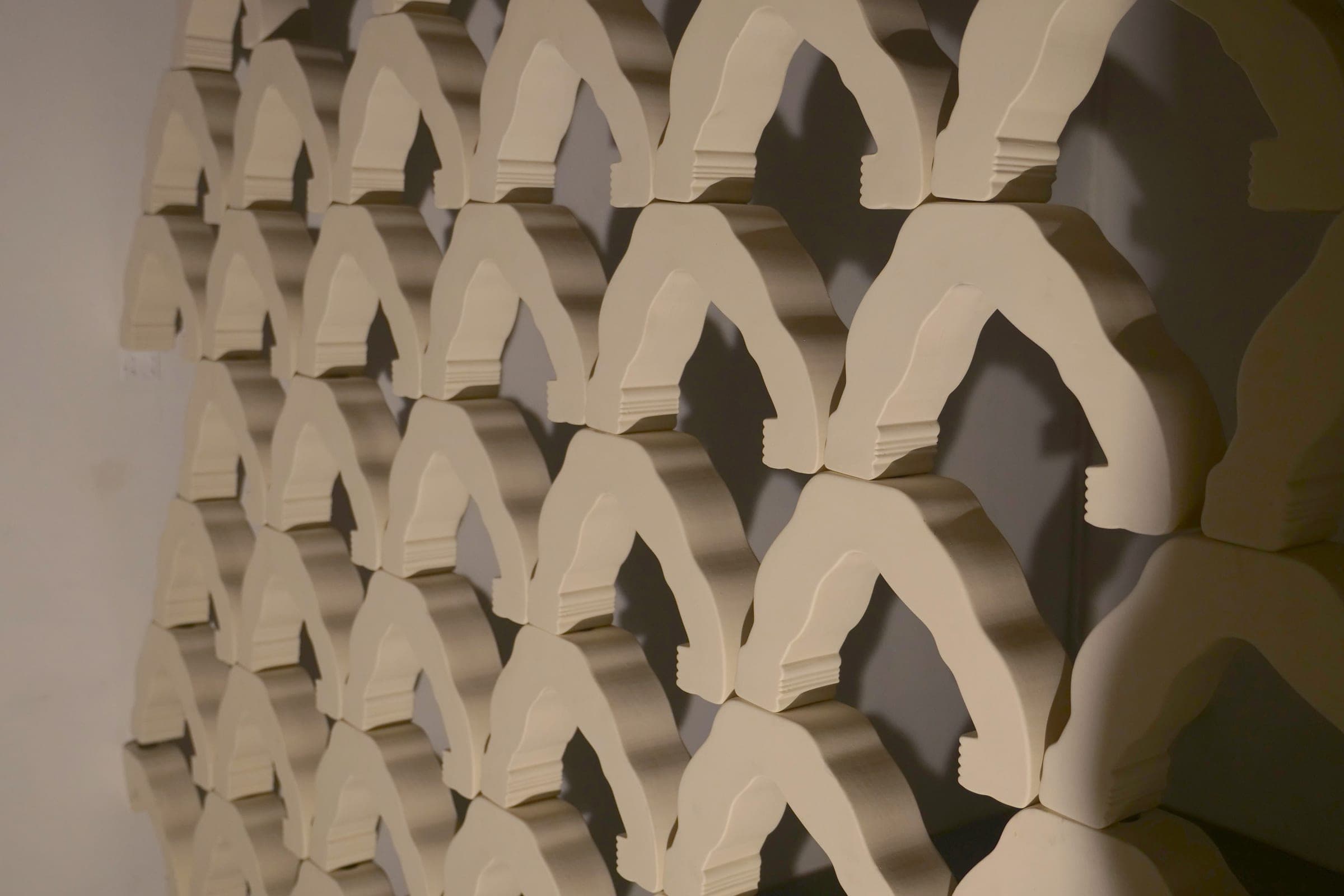
〈圍籬〉由多件彎腰面地的陶瓷人俑反覆堆疊而成,以鐵件支撐成一道圍籬,並透過燈具投射,讓交疊的輪廓在牆面上形成有如層層鐵絲網的陰影。這是顏妤庭首次嘗試的大型陶瓷裝置。他先以 3D 軟體模擬整體結構,再以灌漿技法翻製單元陶件,實驗以疊架的方式撐起中大型尺寸的可能性。單一陶件受限於窯爐尺寸,但透過重複翻製與堆疊,作品得以依展場條件調整長度與高度。
Fence is composed of multiple ceramic figurines, each bent forward with its face toward the ground, stacked repeatedly and held by an iron support to form a fence. A strip lamp casts their overlapping contours onto the wall as a shadow resembling layers of barbed wire. It is Yu-Ting Yen's first large-scale ceramic installation. Yen first simulated the overall structure in 3D software, then produced the individual ceramic units by slip casting, testing whether a medium to large-scale ceramic work could be held up by stacking. A single ceramic element is limited by the size of the kiln, but through repeated casting and stacking the work can be adjusted in length and height according to the conditions of each site.
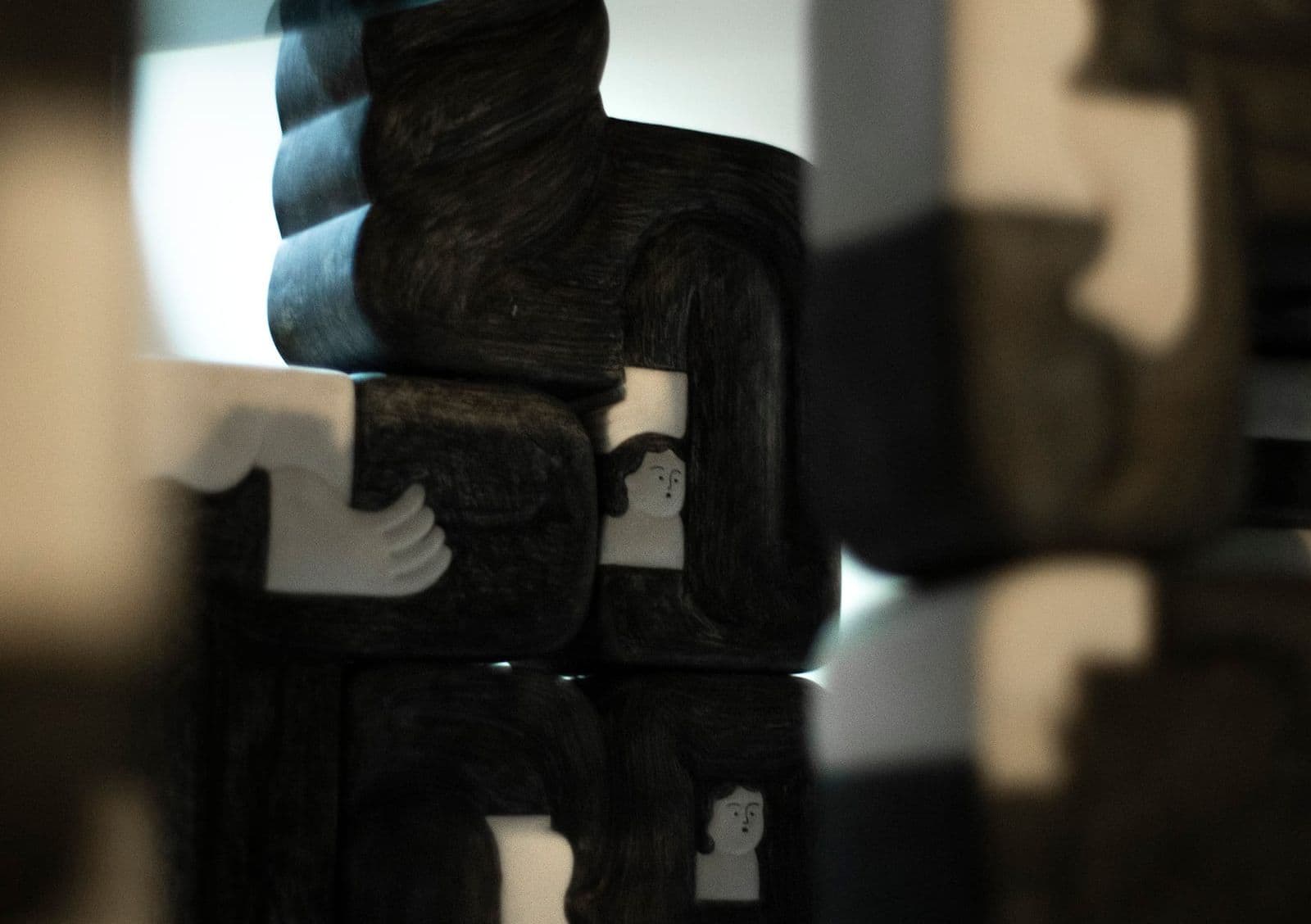
〈Puzzle〉由數件規格一致的陶瓷單元組構而成。這些單元如同俄羅斯方塊般,透過位置的調動、接合與重組,搭建出茶几的本體結構。遠看時,這件作品僅是一座普通的功能性傢俱;然而當你趨近時,便會發現每一個陶瓷單元,皆是四肢拗折的人偶,它們以不符合人體工學的姿態支撐上方的玻璃檯面,如同馱獸般承載重量。
Puzzle is assembled from several ceramic units of identical specification. Like Tetris pieces, these units are shifted, joined, and recombined to build the structural body of a coffee table. Seen from a distance, the work is no more than an ordinary piece of functional furniture; as you come closer, however, each ceramic unit turns out to be a figure with its limbs folded back, holding up the glass tabletop in a posture no ergonomics would allow, carrying the weight like a beast of burden.
〈Stair〉為顏妤庭 2019 年於荷蘭歐洲陶藝中心駐村期間完成的陶瓷雕塑。作品以「階梯」作為基本形象,將建築性的結構語彙轉化為陶瓷的組構方式。階梯原本指向移動、攀升與通往他處的可能,但在作品中,它不再只是具有功能性的物件,而更像是一組被抽離出來的結構體,介於建築模型、家具與雕塑之間。
Stair is a ceramic sculpture created by Yu-Ting Yen in 2019 during her residency at the European Ceramic Work Centre in the Netherlands. Taking the form of a stairway as its point of departure, the work transforms an architectural language of structure into a ceramic mode of construction. While a stairway usually suggests movement, ascent, and the possibility of reaching another place, in this work it is detached from its functional role and becomes a structural form situated between architectural model, furniture, and sculpture.
《無用之家》是顏妤庭首次的陶瓷個展,也是他 2019 年於荷蘭歐洲陶藝中心駐村後,將陶瓷材料與過往繪畫脈絡重新連結的一次階段性發表。過去,他多以水墨與膠彩繪畫處理身體、慾望、人際關係與觀看經驗;而在這個展覽中,原本存在於平面作品中的符號,被轉化為一系列帶有居家物件性格的陶瓷作品。
House of Useless is Yu-Ting Yen's first solo exhibition of ceramics. It marks a stage in his practice following his 2019 residency at the European Ceramic Work Centre in the Netherlands, where he began to reconnect ceramic materials with the visual language of his earlier paintings. In the past, Yen's ink and gouache works often explored the body, desire, interpersonal relationships, and the act of looking. In this exhibition, the symbols that once existed in his two-dimensional works are transformed into a series of ceramic pieces with the character of domestic objects.