圍籬 Fence
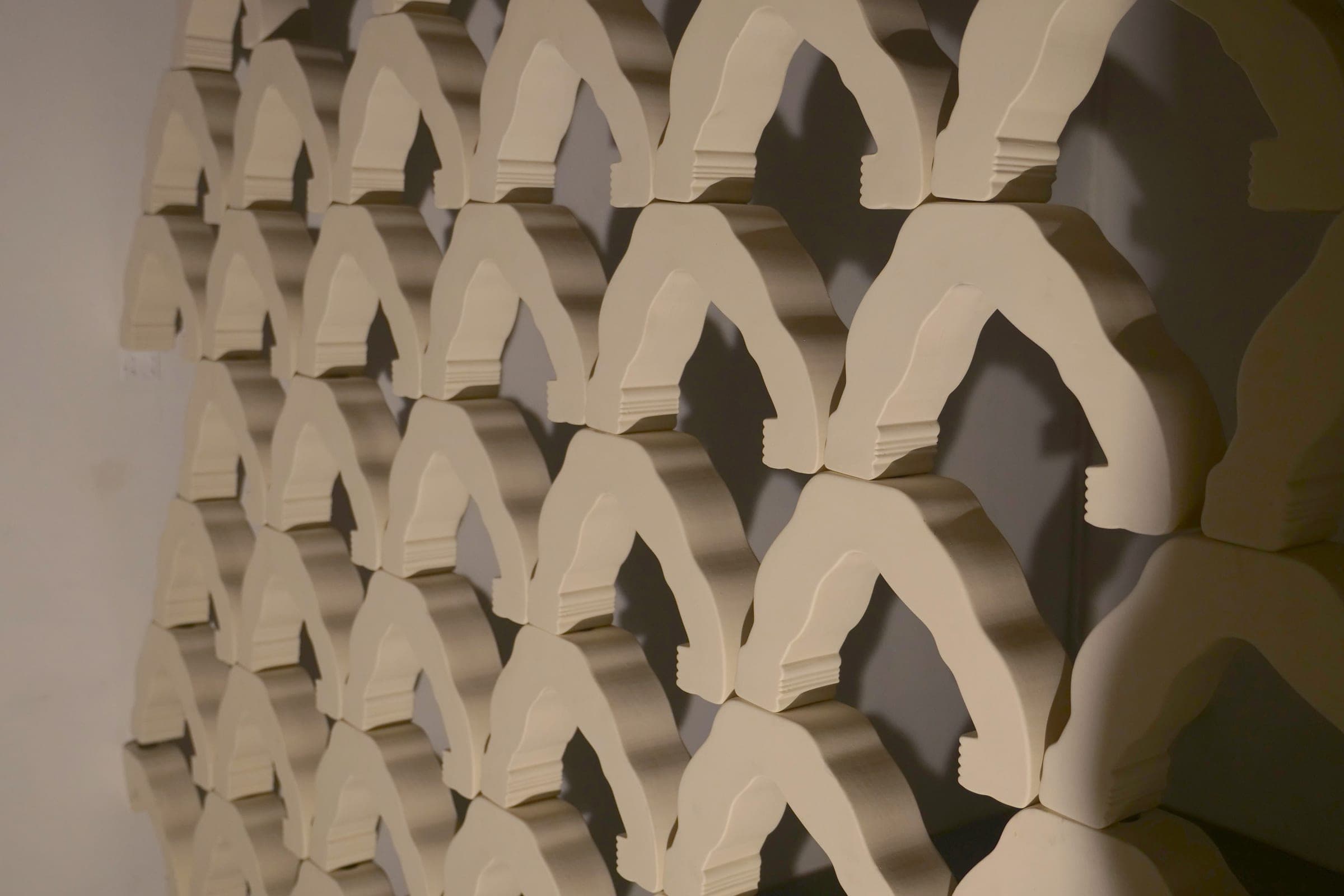
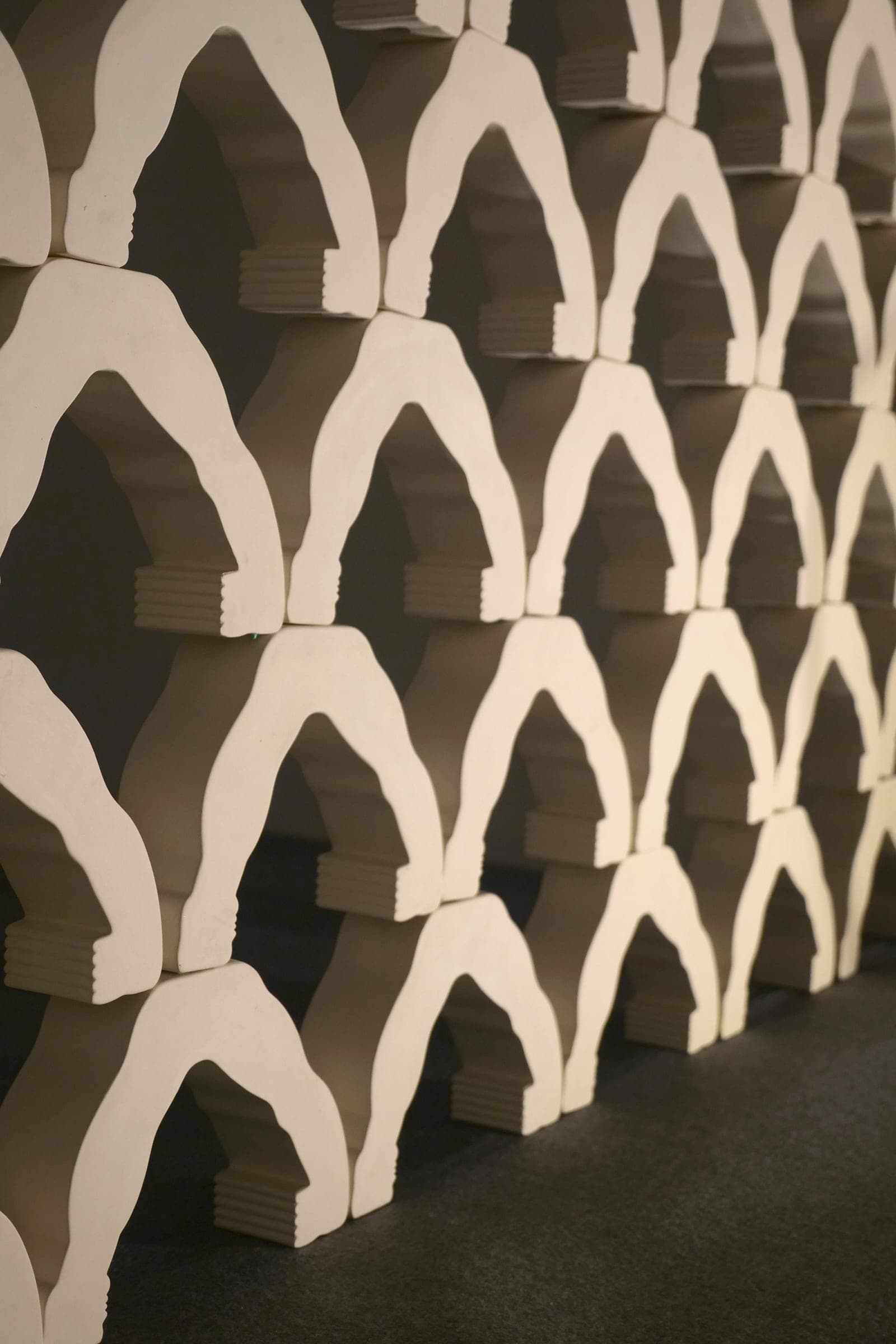
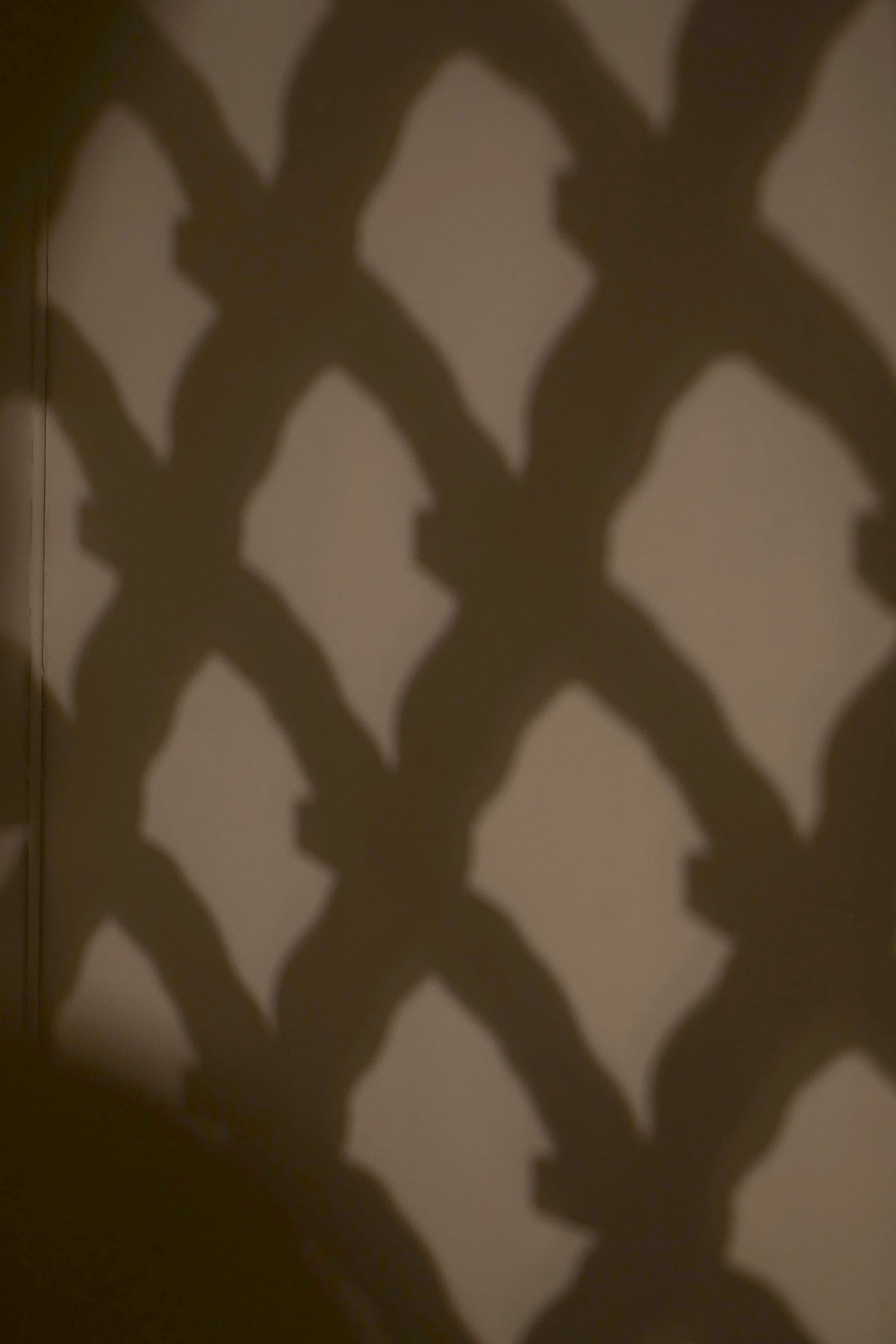
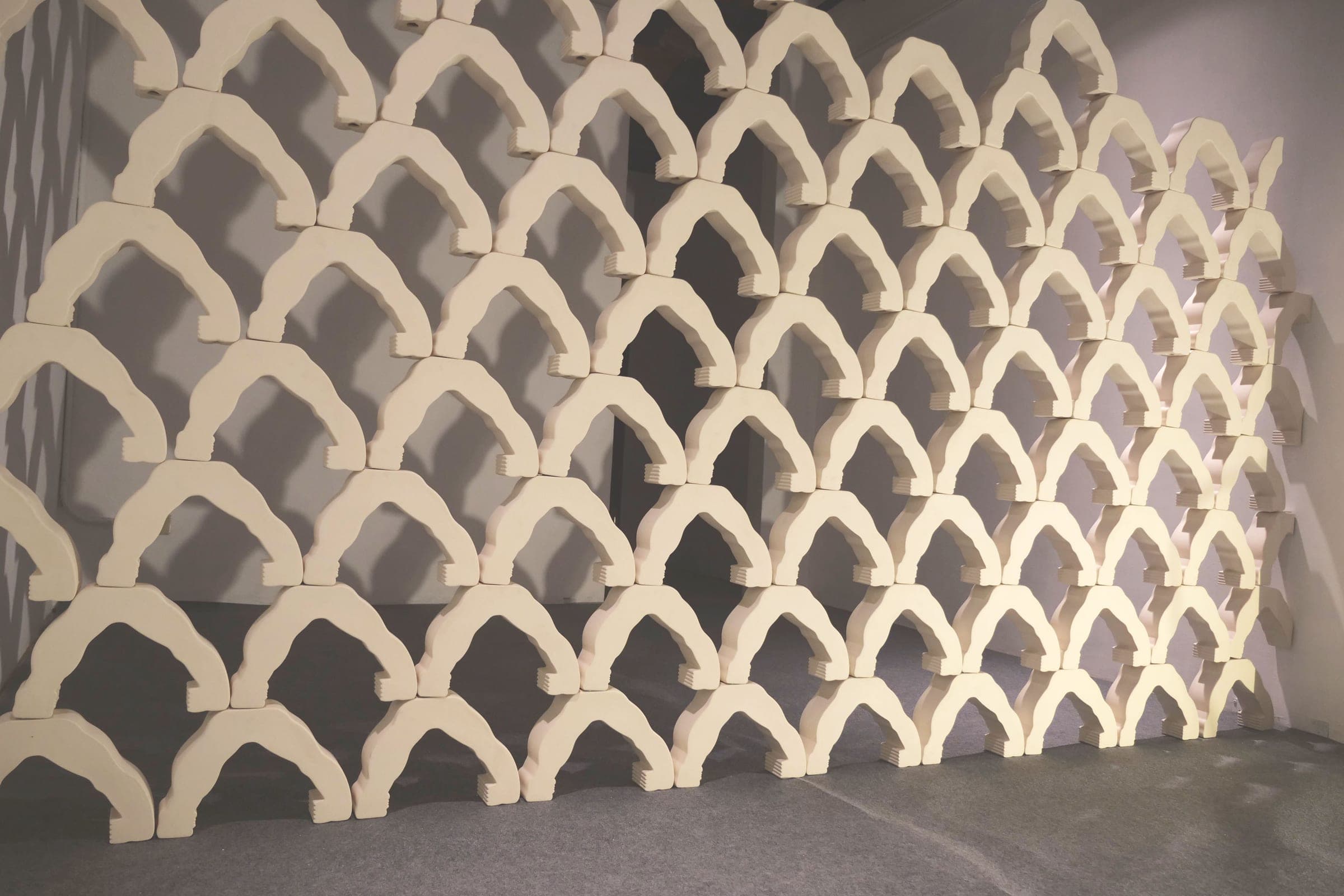
〈圍籬〉由多件彎腰面地的陶瓷人俑反覆堆疊而成,以鐵件支撐成一道圍籬,並透過燈具投射,讓交疊的輪廓在牆面上形成有如層層鐵絲網的陰影。這是顏妤庭首次嘗試的大型陶瓷裝置。他先以 3D 軟體模擬整體結構,再以灌漿技法翻製單元陶件,實驗以疊架的方式撐起中大型尺寸的可能性。單一陶件受限於窯爐尺寸,但透過重複翻製與堆疊,作品得以依展場條件調整長度與高度。
一般而言,圍籬的作用在於阻隔、區分與管束;但在這件作品中,構成圍籬的材料本身就是人。人俑同時是支撐結構的構件,也是被圍起來的對象,兩種位置落在同一道牆上。
這些人俑僅以簡約的線條勾勒輪廓,卻仍可感覺到姿態的僵直與麻木。他們互相堆疊、踩踏,以微妙的平衡維持整體的站立,看似在進行某種難以理解的特技或遊戲。結構看似穩固,卻讓人意識到每一件陶俑都在承接上方的重量,任何一處鬆動都可能使整道圍籬失衡,始終停留在維持秩序與垮塌之間。
Fence is composed of multiple ceramic figurines, each bent forward with its face toward the ground, stacked repeatedly and held by an iron support to form a fence. A strip lamp casts their overlapping contours onto the wall as a shadow resembling layers of barbed wire. It is Yu-Ting Yen's first large-scale ceramic installation. Yen first simulated the overall structure in 3D software, then produced the individual ceramic units by slip casting, testing whether a medium to large-scale ceramic work could be held up by stacking. A single ceramic element is limited by the size of the kiln, but through repeated casting and stacking the work can be adjusted in length and height according to the conditions of each site.
In general, a fence serves to block, divide, and restrain. In this work, however, the material the fence is built from is the human figure itself. The figurines are at once the components that hold the structure up and the figures being fenced in; both positions fall within the same wall.
The figurines are rendered in simple outlines, yet the stiffness and numbness of their postures remains perceptible. They stack and tread on one another, holding the whole upright in a precarious balance, as if performing some acrobatic act or game that cannot quite be understood. The structure appears stable, but it also makes viewers aware that each figurine bears the weight of those above it; any loosening could throw the entire fence off balance, leaving it suspended between holding order and collapse.